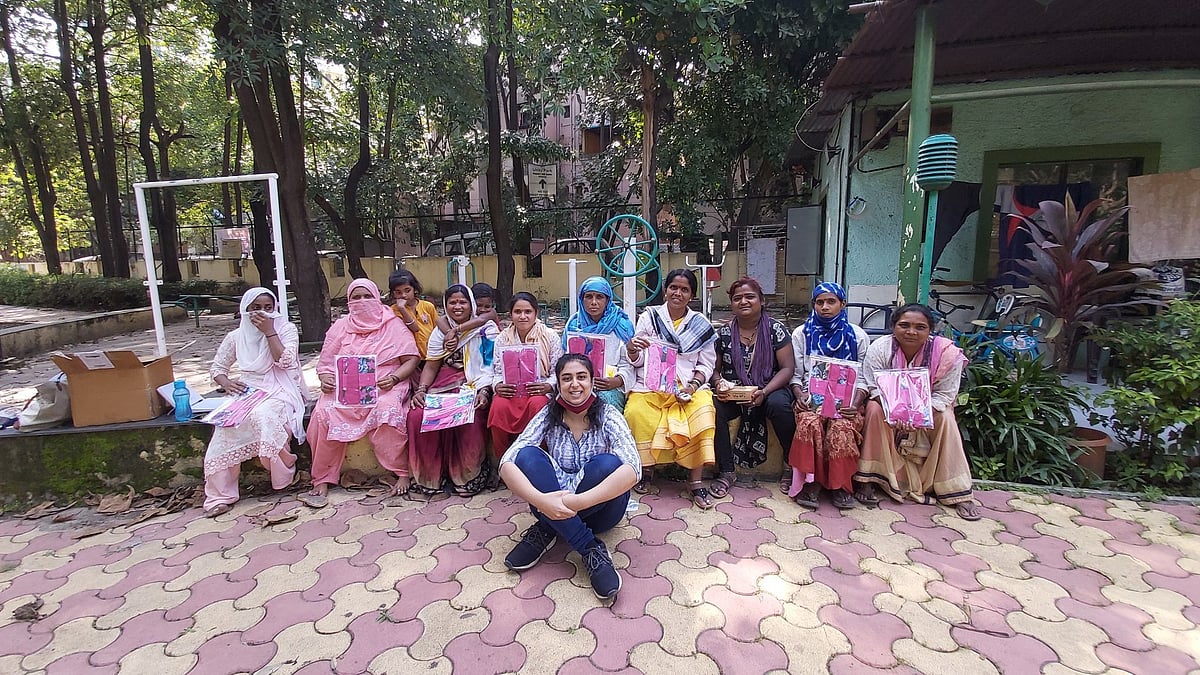
In a country where menstruation remains shrouded in stigma and silence, one woman's journey from environmental awareness to menstrual health advocacy is creating a change. Radhika Dhingra’s Badlaav NGO, founded in 2019, began with sanitary waste management but has evolved into addressing period poverty, environmental sustainability and comprehensive sexuality education.
The Personal Awakening
Badlaav’s journey started with concerns about the large volume of sanitary waste generated daily, which later evolved into convincing people to switch towards sustainable products.
“Coming from an Environmental Science background, I had all the knowledge and resources, but I was still not using sustainable products such as menstrual cups, cloth pads, period panties, and menstrual discs, so I started with myself,” Dhingra said.
Badlaav then began educating communities, especially in slum areas, about safe and sustainable practices. “We started with the underprivileged women in the slums. The awareness programmes also shed light on addressing the taboos, stigma and misinformation regarding periods,” she added.
Environmental Cost of Disposable Pads
Dhingra analysed the danger of single-use sanitary pads and sought a sustainable solution. “A typical sanitary pad is quite helpful during periods, but it contains plastic and chemicals that do not decompose and take around 450-800 years to degrade. However, modern cloth pads can be reused and last for almost three years, so a sustainable alternative,” she stated.
Moreover, it’s more effective, and the cleaning process is also simple. “Compared to normal sanitary pads, cloth pads absorb better and also stay intact for maximum comfort. One can just soak it in normal or cold water and wash it to make it ready for the next cycle,” Dhingra added.
Addressing ‘Period Poverty’
India has a considerable presence of ‘period poverty’- the lack of access to menstrual products and sanitation facilities, causing health issues. “A typical sanitary pad must be used for a maximum of six hours, but due to ‘period poverty’, it’s overused for maybe ten hours or more, leading to rashes and bacterial infection. This can be prevented by switching to sustainable alternatives,” Dhingra explained.
The impact extends beyond health. “While working with the women sugarcane cutters in Baramati, we witnessed that many of them had undergone a hysterectomy, a surgical procedure to remove the uterus, so that they would not miss their job. And even those facing periods are not able to access toilets or private spaces to change their pads, causing diseases,” Dhingra said.
Breaking Menstrual Taboos
Period taboos like viewing menstruation as impure, leading to exclusion from religious places, kitchens, social events, and prohibitions on touching food (especially pickles), holy items due to beliefs about contamination, bad luck, or evil spirits, are still prevalent in India.
“I believe that through dialogue we can address these taboos. In Badlaav, we have conversations with people, and there we initiate the change in thinking. It is difficult to bring a complete change, but at least we’re able to nudge. Also, in nuclear families nowadays, the lack of manpower itself does away with the taboos,” Dhingra said.

Educating Next Generation
To make a long-lasting change, Badlaav educates school children and engages at the community level as well. Dhingra’s work has now expanded to include spreading awareness among children about the menstrual cycle and sexuality education.
“Especially boys, while watching movies, get exposed to the menstrual pad concept, but usually don’t have the holistic knowledge about its utility and the associated menstrual cycle. So through Badlaav we’re attempting to bridge this void,” explained Dhingra.
“Currently, there are girls who are around just eight years old facing menarche, so we approach schools and talk with kids about the changes happening within their bodies and their effects on mental and physical well-being. These conversations help them learn the right way to handle periods and, in a way, fight taboos,” she said, stating that during this process, boys are also sensitised.
“Through the comprehensive sexuality education, a 12-session curriculum plan, we educate them about menstruation and related products, healthy relationships, consents, and exposure and addiction to media and pornography, masturbation, wet dreams, and others. Through this, we make them realise the unrealistic elements, and it is important as they regulate one’s personal relations, study, and daily life chores,” she said.
Implementation Challenges
Badlaav, through its outreach programme, witnessed that schools still do not cover sex education holistically. “Let alone ZP schools, even international boards leave out important aspects of sex education in their curriculum. Even access in schools depends largely on the teachers and their perspective towards this topic. And at times parents are also resistant to letting us sensitise their kids on sex education,” Dhingra said.
“Even when we compare Western countries, which are more open to sex education, in India, sex is still largely considered taboo. We are from the land of Kamasutra and are the most populated, yet we are not acknowledging the importance of discussing it,” she explained.
“Expression of love is not normalised in our country, but things are changing gradually, and conversation with kids about menstrual health in an age-appropriate way and scientifically is helping the activity be successful and engaging,” Dhingra added.
Way Forward
Badlaav seeks to enlarge the understanding of sex education. “Sex education is not just about sex, but the bodily changes that are taking place since puberty; it’s about menstruation, consent, and healthy relationships, among other aspects. And it is important as it makes people more sensitive, empathetic, and more understanding, making them a good human being,” Dhingra concluded.

