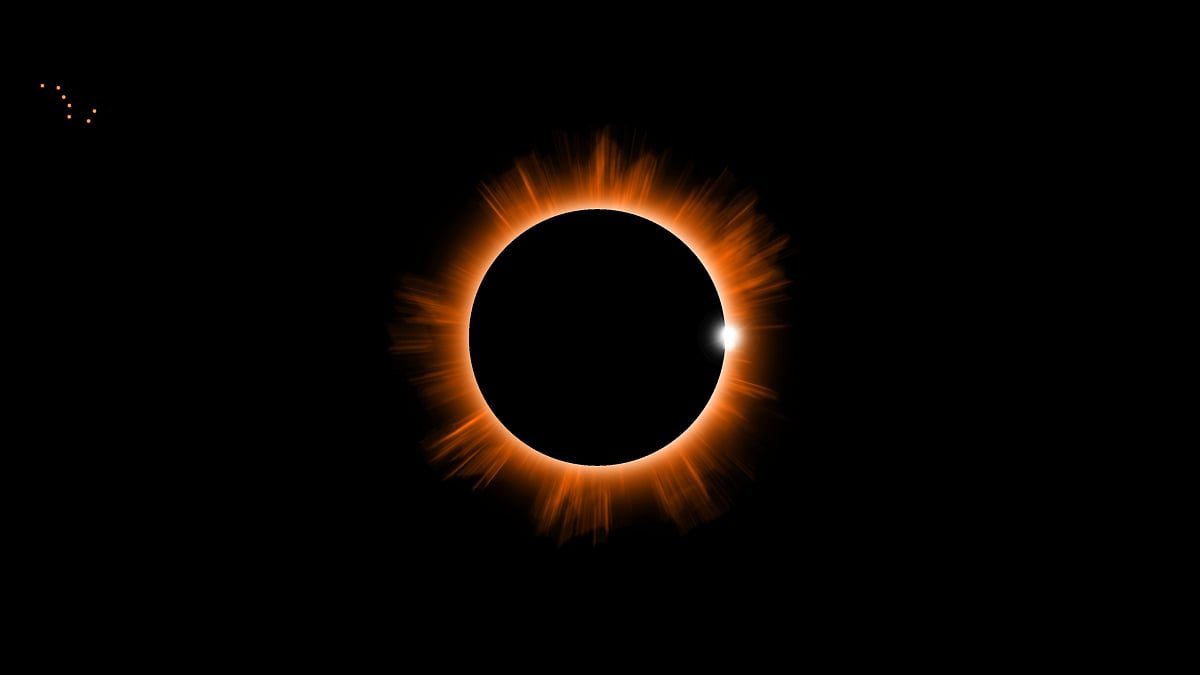
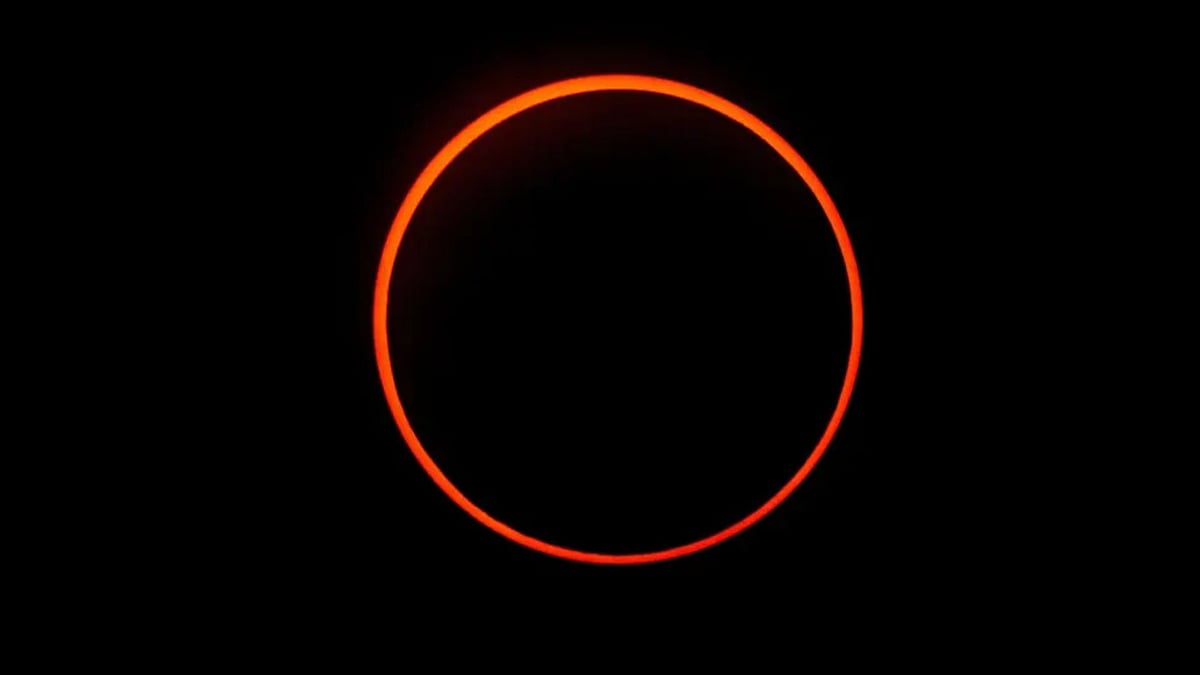
As the celestial stage sets for 2026, skywatchers around the globe are abuzz about the year's first solar eclipse, or Surya Grahan, occurring on February 17. This event will be a dramatic annular eclipse, famously known as the "Ring of Fire," where the Moon aligns perfectly between the Earth and Sun but appears slightly smaller, leaving a glowing ring visible around the Sun's edges. While this rare sight promises a breathtaking show for some parts of the world, here's what India needs to know.
Surya Grahan 2026 time in India
The annular solar eclipse will take place on Tuesday, February 17, 2026. According to Indian Standard Time (IST), the eclipse begins at 3:26 pm and ends at 7:57 pm, lasting about 4 hours and 31 minutes.
Notably, this eclipse coincides with Phalguna Amavasya, which starts at 5:34 pm on February 16 and ends at 5:30 pm on February 17, as stated by Drik Panchang. Traditionally a day of religious significance, Amavasya is observed with fasting and prayers by many Hindu devotees.




No Sutak Kaal as Solar Eclipse won't be visible in India
However, there's a key detail for those in India: the eclipse will not be visible from anywhere in the country, so there is no risk of direct exposure to its effects. As a result, the Sutak Kaal, a period during which certain rituals and activities are avoided due to the eclipse, is not applicable for this event in India.

Astronomically, a solar eclipse forms when the Moon passes between the Earth and the Sun, partially or fully blocking sunlight. In an annular eclipse, the Moon doesn’t fully cover the Sun, creating the iconic “Ring of Fire” effect.