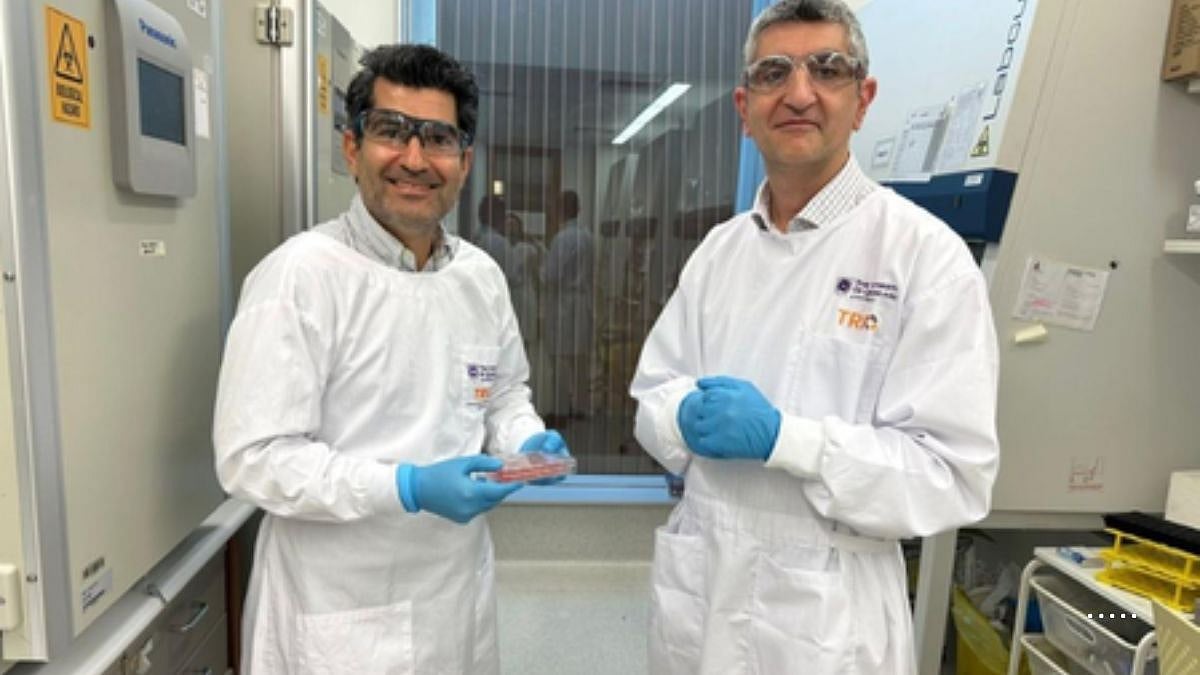
Sydney: In a first, a team of Australian scientists has grown the world's first fully functioning lab-made human skin with its own blood supply. The advance may pave the way for better treatment of skin diseases, burns, and grafts.
The team from the University of Queensland used stem cells to create a replica of the human skin, which had blood vessels, capillaries, hair follicles, nerves, tissue layers, and immune cells.
"This is the most life-like skin model that's been developed anywhere in the world and will allow us to study diseases and test treatments more accurately," said lead researcher Abbas Shafiee, a tissue engineering and regenerative medicine scientist from UQ's Frazer Institute.
“Until now, scientists have been limited in how we study skin diseases and develop new therapies.

“But with a skin model like this, that closely mimics real human skin, we will be able to study diseases more closely, test treatments, and develop new therapies more effectively,” Shafiee said.
He explained that recent advancements in stem cells enabled them to engineer 3-dimensional skin lab models. The team took human skin cells and reprogrammed them into stem cells -- which can be turned into any type of cell in the body.
These stem cells were placed in petri dishes, which then grew into mini versions of skin, called skin organoids.
“We then used the same stem cells to create tiny blood vessels and added these to the growing skin,” the scientist said.

“It developed just like natural human skin, with layers, hair follicles, pigmentation, appendage patterning, nerves, and most importantly, its own blood supply,” Shafiee said, in the research published in Wiley Advanced Healthcare Materials.
The skin model, which took six years to develop, can help improve grafts and treatments for inflammatory and genetic skin disorders like psoriasis, atopic dermatitis, and scleroderma, said co-author Professor Kiarash Khosrotehrani from UQ's Frazer Institute.
“Skin disorders can be difficult to treat, and it’s a real breakthrough to be able to provide hope for people living with chronic conditions.”
(Except for the headline, this article has not been edited by FPJ's editorial team and is auto-generated from an agency feed.)

