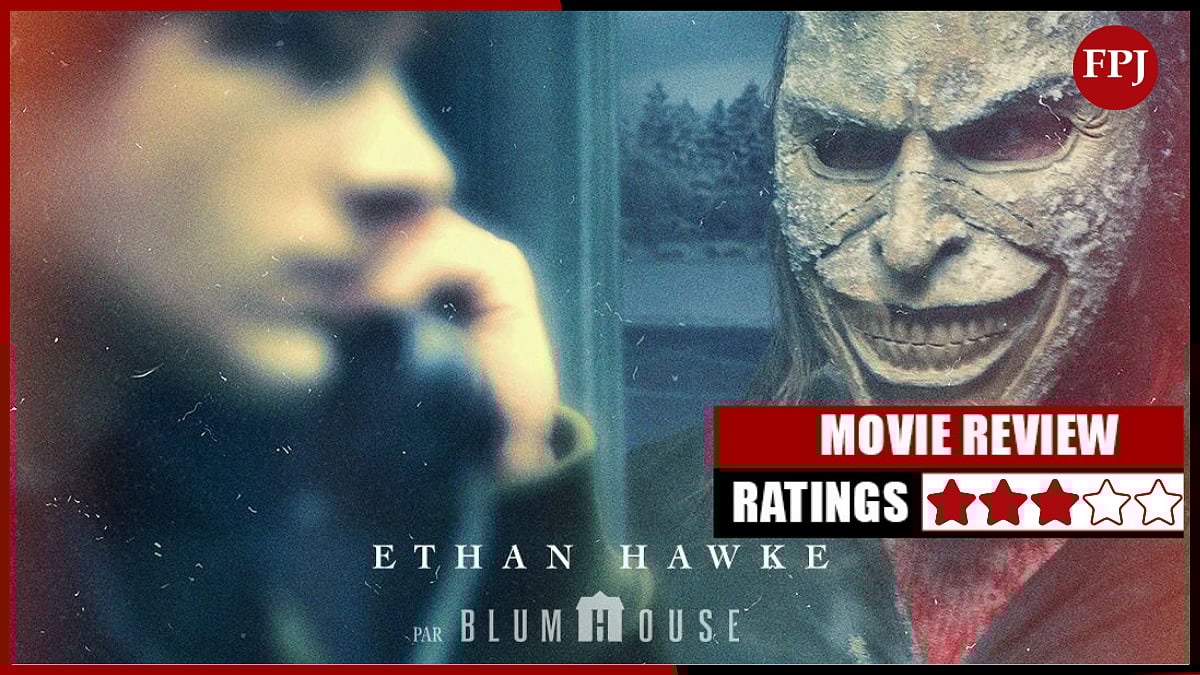
Title: Black Phone 2
Director: Scott Derrickson,
Cast: Ethan Hawke, Mason Thames, Madeleine McGraw, Demian Bichir, Miguel Mora
Where to watch: In theatres.
Rating: ***
Scott Derrickson’s Black Phone 2 brings back not just its masked villain but also the 1980s horror vibe, with its creaky charm, moral undertones, and icy terror. The story begins four years after Finney Blake’s escape from the Grabber, showing that death, like the phone, still has a dial tone. A snow-blanketed Christian camp sets an atmospheric stage, but Derrickson’s focus on mood often chokes the plot. Lost between Catholic symbols, childhood trauma, and dream logic, the film forgets to scare. It aims for depth, but the connection often falters.
Still, there’s a perverse joy in seeing Derrickson play with horror’s visual grammar: the Super-8 hallucinations, the echo of A Nightmare on Elm Street, the spectral phone booth framed against white desolation. This is a horror film that prioritizes ghosts, guilt, and grainy film stock over coherent plotting. Yet, for all its erratic narrative choices, the film never feels lazy; it feels haunted by ambition.
Actors’ Performance
Mason Thames returns as Finney, no longer the timid child but a simmering young man scarred by the past. His transformation from victim to vengeful survivor lends the film some backbone. Madeleine McGraw, however, steals the show as Gwen. Her psychic torment is rendered with an intensity that’s both tender and terrifying. McGraw gives the supernatural a human face, grounding Derrickson’s frostbitten fables in real emotion.
Ethan Hawke’s Grabber, now part Freddy Krueger, part televangelist nightmare, is deliciously menacing but underused. His presence hovers more like an idea than a character, a ghost haunting his own legacy. Demian Bichir, as the camp’s caretaker, adds warmth and quiet gravity, though his role feels more like a sermon than a subplot. The ensemble works hard to make Derrickson’s spiritual allegory feel lived-in, even when the script’s theology flirts with melodrama.

Music and Aesthetics
If storytelling stumbles, the film’s sound and style almost make up for it. Atticus Derrickson’s score hums like a choir trapped in a freezer: atonal, eerie, and curiously sacred. The sound design transforms snow crunches into heartbeats and wind howls into whispered confessions. Visually, cinematographer Par M. Ekberg captures the cold as both punishment and poetry. The recurring Super-8 sequences, mimicking cursed home movies, inject nostalgia with nausea. Derrickson’s aesthetic control is impeccable; even when the plot meanders, the imagery never loses focus.
FPJ Verdict
Black Phone 2 is a chilling, uneven sermon about sin, survival, and the dead refusing to hang up. It’s more moral parable than horror, more atmosphere than adrenaline. For fans of Derrickson’s eerie craftsmanship and Hawke’s mask-wearing menace, the film offers enough to warrant a call back. But those expecting relentless terror may find the line goes dead halfway through.
Overall, visually haunting but narratively tangled, the film delivers ghostly chills over genuine scares. It’s a stylish, uneven sequel that whispers more than it screams. Watch, but don’t expect nightmares.

