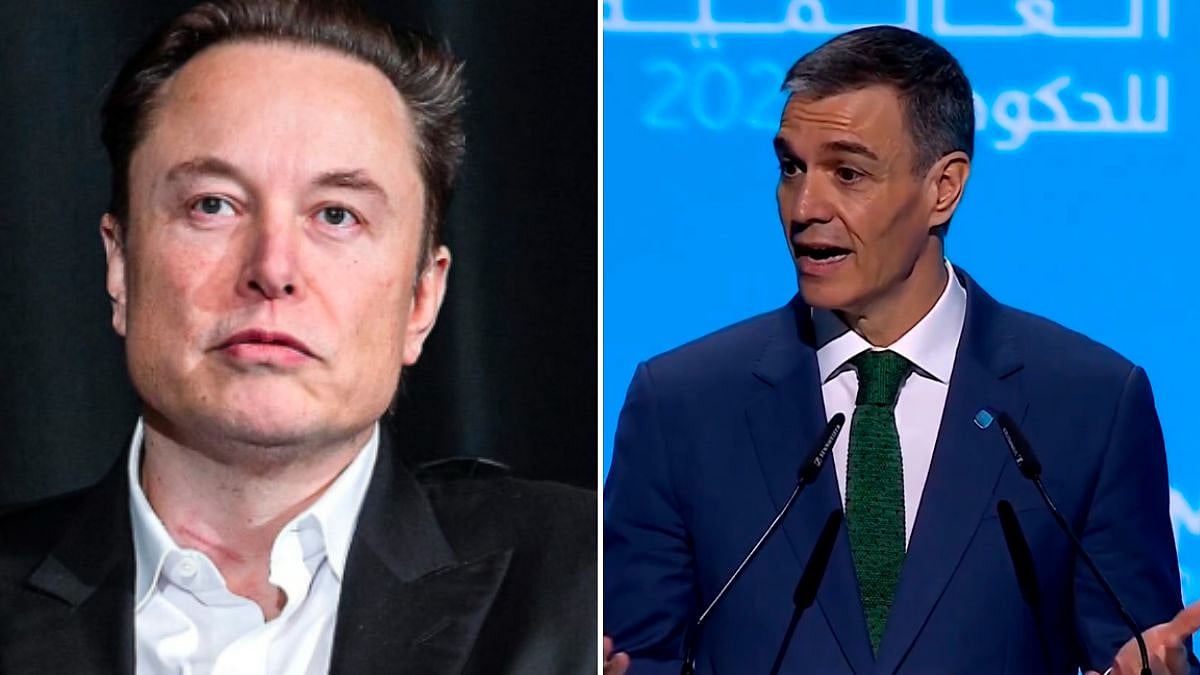
Spain’s plan to restrict children’s access to social media has triggered a sharp public clash between Prime Minister Pedro Sánchez and tech billionaire Elon Musk, as European governments harden their stance against online harms facing minors.
Spain Pushes Back Against the ‘Digital Wild West’
Spain is preparing a series of measures that include banning social media use for children under 16, with Prime Minister Pedro Sánchez warning that urgent action is needed to protect young people from online dangers. Speaking at the World Governments Summit in Dubai, Sánchez described social media as a lawless space.
“Our children are exposed to a space they were never meant to navigate alone … We will no longer accept that,” Sánchez said. “We will protect them from the digital wild west.”
He went further, calling social media a “failed state where laws are ignored and crimes are tolerated,” and said the government would hold tech companies accountable for hateful and harmful content. The proposed ban would be introduced through changes to an existing bill on digital protection for minors currently being debated in parliament.
According to an Ipsos poll on education published in August last year, about 82% of people in Spain believe children under 14 should be banned from social media, up from 73% in 2024.
Musk’s Angry Response and Disinformation Claims
The proposal has drawn personal attacks from Elon Musk, the owner of X. Sánchez criticised Musk for using the platform to “amplify disinformation” over Spain’s recent decision to regularise 500,000 undocumented workers and asylum seekers, noting that Musk himself is a migrant.
Musk responded angrily on X, writing: “Dirty Sánchez is a tyrant and a traitor to the people of Spain.” About an hour and a half later, he escalated his criticism, posting: “Sánchez is the true fascist totalitarian.”
Sánchez said Spanish prosecutors would explore ways to investigate possible legal infractions by Musk’s Grok AI chatbot, as well as by TikTok and Instagram, part of Meta. The debate has intensified following public outcry over reports that Grok generated non-consensual sexual images, including of minors.
Representatives of Google, TikTok, Snapchat and Meta did not immediately respond to requests for comment on Spain’s proposed measures.
Europe Moves Toward Tougher Regulation
Spain’s proposal comes as attitudes across Europe harden against social media’s impact on children. Greece is close to announcing a similar ban for children under 15, according to a senior government source. France has legislation moving through parliament to ban social media for children under 15, while Britain is also considering comparable measures. Australia became the first country to prohibit access to such platforms for children under 16 in December.

Sánchez said Spain is working with five other European countries, described as a “coalition of the digitally willing”, to coordinate and enforce cross-border regulation, with their first meeting expected in the coming days. “We know that this is a battle that far exceeds the boundaries of any country,” he said.
Child welfare groups have welcomed the move. Diana Diaz, director of the ANAR Foundation for at-risk children and adolescents, said the regulation would give parents clearer backing to set limits and ease social pressure on children worried about missing out.
However, there is no unanimous agreement among experts. Jose Cesar Perales, a professor in experimental psychology at the University of Granada, said there is still debate over whether social media definitively harms adolescent development and mental wellbeing.

