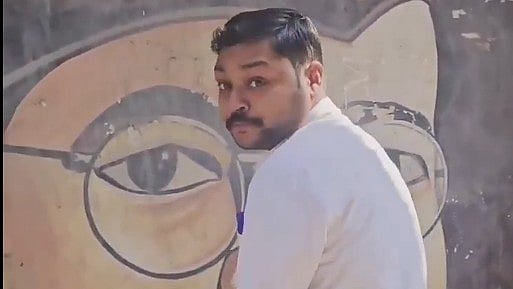
A video from Bihar has ignited widespread anger on social media after a man was allegedly caught urinating on a wall bearing a portrait of Subhas Chandra Bose, popularly known as Netaji. The disturbing clip has once again pushed conversations about civic sense, respect for national icons, and public accountability into the spotlight.
Viral video triggers outrage online
The footage reportedly first appeared on Instagram through a page titled “Bikers of Bihar” before rapidly circulating on X and other platforms. In the video, a man recording the incident confronts another individual who appears to be relieving himself against a wall displaying Netaji’s portrait.
When questioned, the accused allegedly claims he did not notice the image and walks away, seemingly brushing off the seriousness of the situation. The original post highlighted the importance of respecting public spaces and urged people to adopt responsible behaviour in everyday life.
As the clip gained momentum online, reactions poured in within hours, turning the incident into a nationwide talking point.
Social media demands accountability
Users across platforms strongly condemned the act, calling it disrespectful and offensive, particularly because it involved a revered freedom fighter. Many demanded strict legal action, arguing that insulting national icons or defacing public property should carry serious consequences.
Some commentators used the episode to highlight a larger problem: the lack of civic awareness in public spaces. From littering and vandalism to misuse of public infrastructure, several users noted that such incidents reflect a broader social issue.
Others pointed out that portraits and statues of historical figures are often poorly maintained, making them vulnerable to neglect and damage. The debate quickly evolved from outrage over one act to a larger discussion about public behaviour and social responsibility in India.
Netaji remains one of India’s most respected leaders in the freedom struggle. He founded and led the Indian National Army (INA), challenging British rule during World War II. His powerful call, “Give me blood, and I will give you freedom,” continues to inspire generations.
Given his legacy and contribution to India’s independence movement, any perceived insult toward him tends to evoke strong emotional responses. Public sentiment around national heroes often intensifies rapidly on social media, where content spreads within minutes.
Legal and civic implications
Acts involving defacement of public property can attract legal consequences under Indian law, including penalties related to vandalism or public nuisance. However, beyond legal enforcement, many online users stressed the importance of cultivating civic discipline and social awareness at a grassroots level.
The incident has renewed calls for stricter monitoring of public spaces and stronger implementation of cleanliness and heritage protection initiatives.

