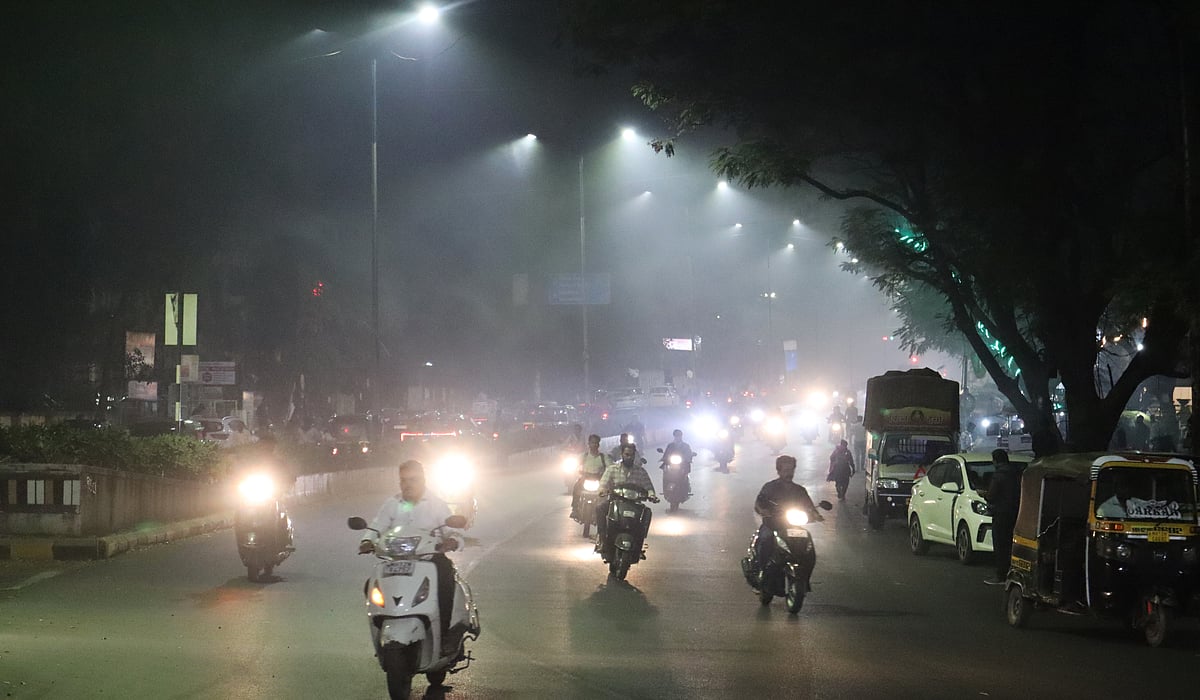
Pune’s air quality has taken a hit this winter, slipping into the poor category from moderate. The deteriorating air quality has been flagged by the Maharashtra Pollution Control Board (MPCB), which has directed the Pune Municipal Corporation (PMC) to take immediate and effective measures to curb air pollution across the city.
The regional office of the MPCB in Pune stated that data from Continuous Ambient Air Quality Monitoring Stations shows Pune’s Air Quality Index (AQI) has been ranging from moderate to poor levels in recent months.
The air quality data is monitored by the MPCB and published on the Central Pollution Control Board (CPCB) website as well as the SAMEER mobile application.
.jpg)
According to an MPCB report, the deterioration in air quality is primarily due to road dust, ongoing construction activities, increased vehicular movement, open burning of waste, and other local pollution sources.
What is considered Poor AQI?
As per the National Air Quality Index framework, AQI levels between 101 and 200 fall under the moderate category and may cause breathing discomfort to people with lung and heart diseases, children, and older adults. AQI levels between 201 and 300 are classified as poor and can lead to breathing discomfort even for the general population during prolonged exposure.
According to the MPCB, monthly AQI averages for Pune during 2025 show fluctuations, with certain areas consistently recording values that indicate breathing discomfort on prolonged exposure. Monitoring stations such as Katraj, the University area, and other parts of the city have reported AQI levels touching the higher end of the moderate range, occasionally nearing poor conditions.

The MPCB has requested the Municipal Commissioner to issue necessary directions to all concerned departments of the PMC. The civic body has been asked to strictly implement the air pollution mitigation guidelines issued by the Ministry of Environment, Forest and Climate Change (MoEF&CC) in October 2023 under Section 31A of the Air (Prevention and Control of Pollution) Act, 1981.
The board has emphasised the need for coordinated action to control dust emissions, regulate construction activities, prevent open waste burning, and manage traffic-related pollution to improve the city’s air quality. The MPCB has also instructed its Sub-Regional Office in Pune to verify and submit a compliance report on the actions taken by the municipal corporation.
The issue of worsening air quality has become a growing concern for Pune residents, especially during the winter months, and the MPCB’s directive places the onus on civic authorities to ensure timely and effective pollution control measures.
