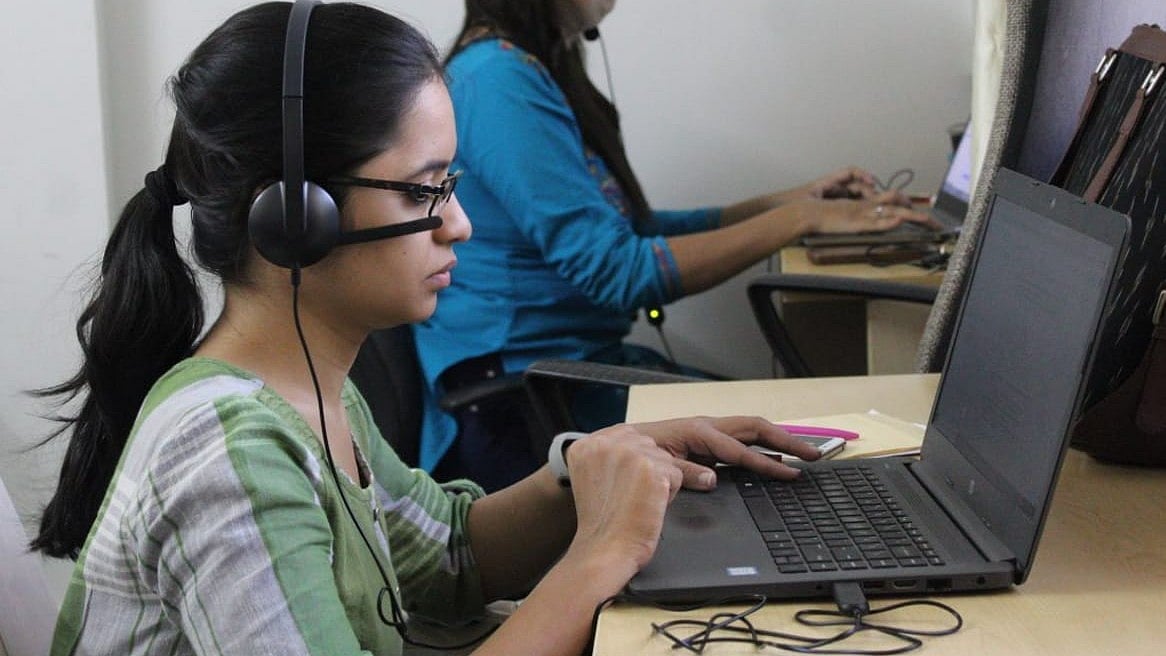
In a society where mental health struggles are often overlooked as weakness or hidden behind closed doors, one NGO has been revolutionising how people access emotional support. For nearly two decades, Pune's Muktaa Charitable Foundation has been on a mission to normalise conversations around mental health, addiction and HIV/AIDS, offering help to those who need it the most, completely free of cost.
A vision born from compassion
Muktaa was founded in 2005 by seven volunteers in an attempt to address the rising mental health issues in India.
The inspiration was simple: to create a free, confidential platform where people can express their insecurities and emotional issues without fear of judgment. Today, the foundation has evolved into a strong support system, with around 65 per cent of its helpline callers being male, a demographic often reluctant to seek help.
Understanding Mental Health Stigma
For Dr Rupa Agarwal, Founder Trustee of Muktaa, the biggest challenge begins with making people believe that mental health is real. “There are many misconceptions, like there’s no such thing as mental health, it’s a disorder of rich people, it’s a sign of weakness, and it can be addressed just by changing one’s mood or engaging in some interesting activity,” explained Agarwal.
These misbeliefs prevent people from seeking help during a mental health crisis. “In cases of viral diseases, people usually visit a doctor if the symptoms prevail for two or three days. However, if someone is facing emotional turmoil, has lost the drive, and is experiencing depressive moods, we have observed that rarely any of their aides recommend counselling. It is still considered something to hide or be ashamed of,” Agarwal said.
.jpg)
The Muktaa Helpline
Acknowledging the urgent need for accessible mental health support, Muktaa launched its mental health helpline in 2022. Through this service, trained counsellors provide 45-minute sessions free of cost, offering tailor-made solutions. It also features a callback facility.
So far, the helpline has handled over three lakh life-changing phone calls. “The majority of issues raised during helpline calls are domestic violence and relationship issues, which are not only limited to life partners but also include parent-child and sibling relationships,” Agarwal said.
Spectrum of Mental Health
Mental health exists on a scale, much like physical illness, which can turn severe if left untreated. “There’s a spectrum that spans from eustress to distress. Some amount of stress is necessary for planning well, focusing and executing tasks. During this phase, even our support system, such as family members, friends and others, plays a crucial role in achieving goals,” said Agarwal.
“However, one must be aware of the threshold and the journey from healthy stress towards distress, anxiety and depression. Identifying this transition is tricky,” she added.
Recognising Warning Signs
Unlike physical ailments that can be easily diagnosed with medical instruments, mental health issues require nuanced observation. “When it comes to mental health, objective symptoms take time to surface. But through subjective analysis, behavioural changes such as increased sensitivity to routine activities, disturbed sleep, loss of appetite and others can be assessed as indicators of deteriorating emotional wellbeing,” Agarwal said.
“If the primary symptoms are not taken care of, the issue can become serious, leading to hopelessness and the beginning of suicidal thoughts.”
Power of Dialogue
Muktaa’s approach relies on a simple tool: conversation. “Hopelessness, suicidal thoughts and loneliness in critical situations can be addressed through dialogue with one’s support system. All one needs is a conversation that offers help and hope during emotional setbacks. If we are able to convince the concerned person, things start to improve,” Agarwal said.

Muktaa Foundation emphasises professional counselling, where individuals can open up before a non-biased party with assured confidentiality. Counsellors empower people to choose from available solutions and, when necessary, recommend medication.
“Mental health issues must be seen holistically. In psychosomatic disorders, physical illness is caused or worsened by psychological factors such as stress, anxiety or depression, indicating a clear link,” she added.
SHALA -- Beyond Books
Since 2015, Muktaa has been reaching students through its SHALA programme. Using UNICEF and WHO modules on life skills education, it has interacted with over 8,000 students from various schools in and around Pune. The sessions cover crucial topics including drug awareness, addiction, physical changes and interpersonal relationships.
“Through these sessions, we encourage students to prepare a mental health wellness box similar to a first-aid box, containing their favourite things, like perfumes, chocolates, motivational thoughts and other items that bring comfort,” Agarwal said.
Fighting HIV
Since 1997, Muktaa has been working to spread awareness about HIV. “Through our Samwad HIV helpline, people are educated about the do’s and don’ts, preventive measures are promoted, and curative care counselling is provided to those in need,” Agarwal said.
Addressing Addiction
Since 2015, Muktaa has also been fighting the stigma attached to addiction. “Addiction is highly stigmatised, primarily because it is perceived as a moral weakness or character flaw rather than a complex brain disorder. Through our helpline, people are able to speak up, and during counselling we constructively guide them and make them aware of the risk of relapse,” Agarwal stated.

For severe cases, patients are advised to visit a psychiatrist in person and are further assisted through NGO referral networks.
Growing Impact
“The response has been very encouraging. We receive around 400 helpline calls a month, of which 50 per cent are repeat callers. Not just from Maharashtra and Bihar, but callers from different countries are now reaching out to Muktaa for counselling,” Agarwal said.
With celebrities like Virat Kohli, Deepika Padukone and others speaking openly about emotional well-being, Agarwal feels optimistic that the importance of mental health is gaining visibility and that people are gradually beginning to take it seriously.

