Pune: Since the end of last year, the human-wildlife conflicts have been an issue of great concern for the residents of Pune District. Working on those lines, the Maharashtra Forest Department in Pune has formed a “Wildlife Quick Rescue Team’ empowered to prevent human-wildlife conflict. With greater resources than before at hand, it has become easier for the forest personnel to safely handle and monitor the diverse wildlife in and around Pune.
The primary cause of human–wildlife conflict in the rural belts of Pune district is the growing leopard menace. With the wild cat’s population seemingly beyond control and its physical agility making it difficult for humans to restrain, leopard sightings in human-inhabited areas peaked during November and December 2025. During this period, reports of leopard sightings in and around Pune emerged almost daily.
Wildlife being an integral part of nature, animals are heading towards human habitats recently due to factors like forest fires, shrinking forest cover and the search for food. This problem is particularly severe in the Junnar and Ambegaon tehsils of Pune District. The state’s forest department has already implemented various measures here in coordination with the district administration.
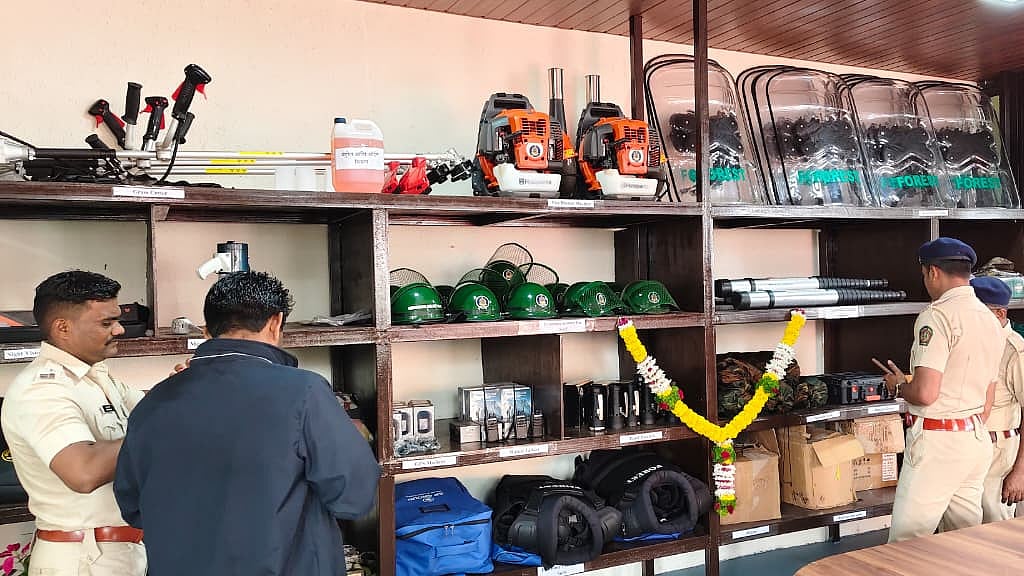
Now, three other forest ranges of Vadgaon, Shirota, and Paud in Mulshi and Maval tehsils are being reinforced with state-of-the-art equipment. Vadgaon Maval has been designated as the hub for these three ranges. Infrastructure has been prepared here, including cages and nets for capturing animals, as well as high-tech cameras to monitor their movements.
If a leopard or any other animal is spotted in a residential area, this team will immediately arrange for cages and rescue operations. This special squad and the advanced equipment have been officially inaugurated since the start of this month, officials announced on Sunday.

Speaking about this, Pune Forest Circle’s Conservator of Forests Ashish Thakare said, “Conflict between humans and wildlife is on the rise. We must be prepared to face such situations at any time. This is why the ‘Wildlife Quick Rescue Team’ has been established and provided with state-of-the-art tools. While we have trap cameras to track animal movements, we are continuously taking measures to handle the situation in a more modern and efficient manner.”
Modern Equipment Added to the Rescue Team’s Fleet
The Forest Department has provided a large quantity of material for the safety and operation of this team:
- Safety Gear: 92 polycarbonate shields, 184 protective helmets, 92 batons, 42 pairs of boots, and three full-body protection suits.
- Monitoring Technology: 10 trap cameras, two night-vision binoculars, 15 GPS machines, five walkie-talkies, and 100 memory cards.
- Rescue Gear: 12 leopard trap cages, 28 snake-catching kits, 25 throw nets, two animal-catching nets, 24 air guns, and five anti-bite hand gloves.
- Other Utilities: 19 grass cutters, 10 portable tents, 1016 batteries, four ladders, two megaphones, and two blower machines.
Here Are The Uses Of This Equipment:
The Forest Department has supplied extensive equipment to strengthen the safety, monitoring, and rescue capabilities of wildlife response teams. Safety gear such as polycarbonate shields, helmets, boots, batons, and full-body protection suits is used to protect personnel during risky operations and crowd management, reducing the chances of injury during close encounters with wild animals.
Monitoring technology helps track and assess animal movement in human-dominated areas. Trap cameras and night-vision binoculars are used to monitor wildlife activity, especially after dark. GPS devices assist in accurately mapping sightings and coordinating teams, while walkie-talkies ensure constant communication. Memory cards are used to store footage and data for analysis and documentation.
Rescue gear is crucial for humane animal capture. Leopard trap cages, snake-catching kits, nets, air guns for tranquillisation, and anti-bite gloves enable trained staff to safely restrain or relocate animals while minimising harm to both humans and wildlife.
Other utilities support field operations. Grass cutters clear dense vegetation, tents provide shelter during prolonged missions, batteries power devices, ladders aid access to elevated areas, megaphones help control crowds, and blower machines are used to flush animals from hiding spots, ensuring smoother and more effective rescue operations.

