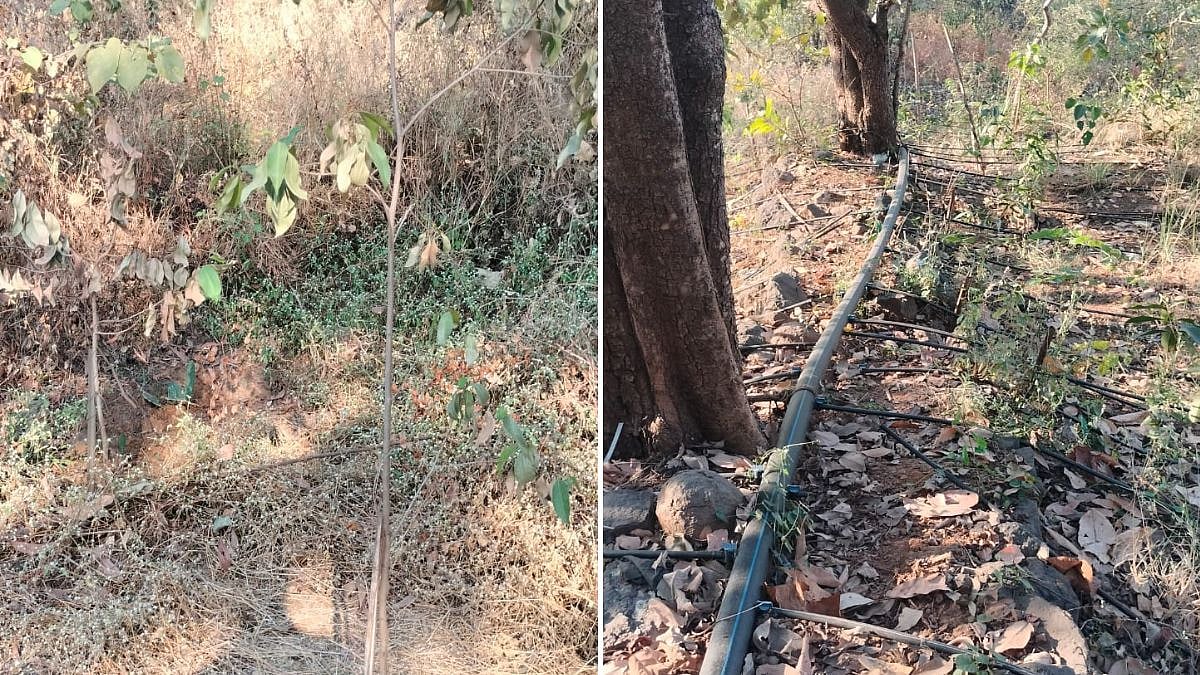
Mumbai: A large-scale three-tier tree plantation project carried out at Parsik Hill in Belapur under the Maharashtra government’s Majhi Vasundhara Abhiyan has come under sharp criticism after most of the saplings were found dried or wilting due to lack of post-monsoon care.
Citizen Groups Raise Alarm on Policy Failures
According to citizen groups, while the plantation drive earned publicity and campaign points, regular watering, monitoring and maintenance reportedly stopped after the monsoon season ended.
“If crores of rupees are spent and yet environmental conservation goals are not met, it clearly reflects a failure of policy. The civic body must answer a basic question—how many of the trees it claims to plant every year are actually alive today,” said Sudhir Dani, founder of Sajag Nagrik Manch.
A recent on-ground inspection has revealed that a majority of the saplings have dried up, while several others are on the verge of dying due to water scarcity. The development has raised serious questions about the effectiveness and sincerity of the civic body’s plantation and environmental conservation initiatives.
Three-Tier Plantation Model Implemented
Under the three-tier plantation model, around 7,500 trees, 5,000 shrubs and 16,000 vetiver (khus) grass plants—totalling nearly 15,000 saplings were planted to green the Parsik Hill area. Native species such as karanj, jamun, tamarind, shisham, mulberry, drumstick, mahogany, amla and bamboo were included, along with shrubs like lantana, kaner and bougainvillea.
The project also involved installation of drip irrigation systems, water tanks and engineering measures aimed at soil conservation and landslide prevention, all funded through CSR contributions.
Despite the infrastructure in place, citizen body Sajag Nagrik Manch has alleged that the absence of sustained maintenance led to the present condition of the plantation.

Garden Department Shifts Responsibility
The forum has also questioned NMMC’s annual claims of planting lakhs of trees, stating that there is little visible increase in green cover across the city. Parsik Hill, they say, is only one among several examples of neglected plantation sites.
According to the forum, the Garden Department has attempted to distance itself from responsibility by stating that maintenance of the plantation lies with the implementing agency since the project was executed through CSR funds. Activists, however, argue that long-term protection of urban green spaces ultimately rests with the civic administration.
Sajag Nagrik Manch has put forth several demands, including an immediate joint and transparent inspection of the entire Parsik Hill plantation project, urgent restoration of water supply and scientific maintenance for surviving saplings, mandatory post-plantation maintenance for a minimum of three years with clearly defined accountability and finally public disclosure of a “live tree survival audit” instead of only plantation figures.
To get details on exclusive and budget-friendly property deals in Mumbai & surrounding regions, do visit: https://budgetproperties.in/

