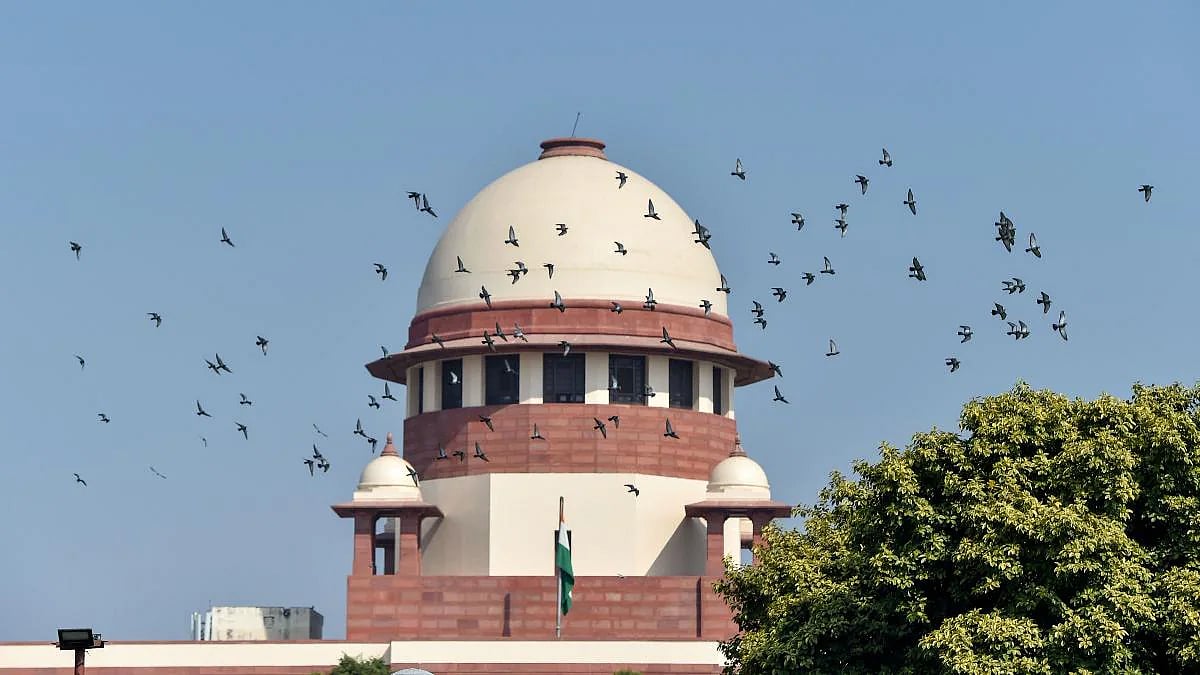
New Delhi: The Supreme Court on Tuesday (December 9) ruled that an employee who resigns from service is not entitled to pensionary benefits under the Central Civil Services (Pension) Rules, holding that resignation results in forfeiture of past service. “The only inescapable conclusion is that on resignation by the employee, his past service stood forfeited. Hence, he will not be entitled to any pension,” a Bench of Justices Rajesh Bindal and Manmohan observed, while denying pension to the legal heirs of a deceased Delhi Transport Corporation (DTC) employee who had resigned after nearly 30 years of service, Live Law reports.
The appeal was filed by the legal heirs of a former DTC conductor appointed in 1985, who resigned from service in 2014 after working for almost three decades. His resignation was accepted by the competent authority, and though he later sought to withdraw it, the request was rejected, making the resignation final. The appellants argued that the resignation letter should be treated as voluntary retirement and not resignation, which would entitle the employee to pensionary benefits.

Rejecting this contention, the Court held that resignation and voluntary retirement are “distinct concepts,” and that resignation leads to forfeiture of the entire past service, making the employee ineligible for pension. Justice Bindal, who authored the judgment, referred to Rule 26 of the Central Civil Services (Pension) Rules, 1972, which applies to DTC employees. “A perusal of Rule 26 of the 1972 Rules clearly shows resignation from service entails forfeiture of past service,” the Court said.
The Bench noted that the deceased employee had resigned on August 7, 2014, his resignation was accepted on September 19, 2014, and his request to withdraw the resignation was rejected on April 28, 2015. “Meaning thereby, it is clear that the deceased employee had resigned from service and his withdrawal from resignation was not accepted,” the Court observed. The employee had earlier approached the Central Administrative Tribunal after being denied retirement benefits such as pension, gratuity, and leave encashment.

The Tribunal upheld the denial of pension but allowed provident fund benefits. The Delhi High Court subsequently upheld the Tribunal’s decision, prompting the appeal before the Supreme Court. Before the apex court, the appellants claimed that pension, gratuity, and leave encashment were wrongly denied. Partly allowing the appeal, the Supreme Court held that the legal heirs were entitled to gratuity and leave encashment, but upheld the denial of pensionary benefits.
The Court also relied on its earlier ruling in BSES Yamuna Power Limited v. Ghanshyam Chand Sharma and another(2020) 3 SCC 346, which held that employees who resign are not entitled to pensionary benefits available to those who opt for voluntary retirement. Rejecting the argument that completion of nearly 30 years of service entitled the employee to pension under Rule 48-A of the Pension Rules, the Court said that the provision applies only in cases of voluntary retirement.
It noted that Rule 48-A requires an employee to give at least three months’ prior notice to seek voluntary retirement, and only then does the right to pension arise. Emphasising the distinction, the Court said that while voluntary retirement mandates prior notice, the absence of such notice renders the act a resignation and not retirement, thereby disentitling the employee from pensionary benefits.

