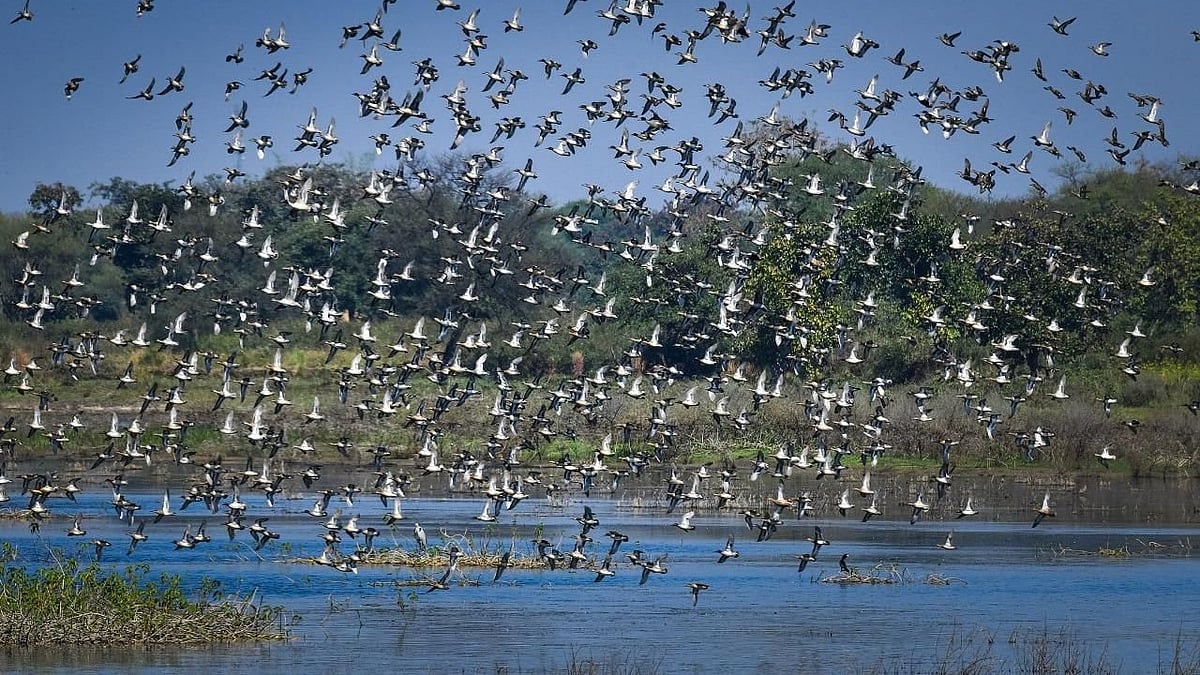
Delhi: India has strengthened its commitment to environmental conservation with the inclusion of Siliserh Lake and Kopra Reservoir in the list of Ramsar Sites, taking the country’s total number of internationally recognised wetlands to 96. This development highlights India’s growing focus on protecting ecologically sensitive wetlands that play a vital role in biodiversity conservation, water security, and climate resilience.
Siliserh Lake
Siliserh Lake, located in Rajasthan’s Alwar district, is a freshwater lake nestled amid the Aravalli hills. The lake was originally constructed in the 19th century as a water source; the lake has evolved into a crucial wetland ecosystem. It supports a wide variety of resident and migratory birds, aquatic plants, and fish species. During winter, Siliserh Lake becomes an important stopover for migratory birds, making it a key site for avian biodiversity in the region. The wetland also helps recharge groundwater and supports local livelihoods through eco-tourism and fishing activities.
Kopra Reservoir
Kopra Reservoir, situated in Chhattisgarh, is another ecologically significant wetland now recognised under the Ramsar Convention. The reservoir plays a critical role in sustaining regional biodiversity by providing habitat for aquatic species, waterbirds, and surrounding flora and fauna. Apart from its ecological value, Kopra Reservoir contributes to irrigation, flood moderation, and water availability for nearby communities, underlining the close link between wetland conservation and human well-being.

What is Ramsar Sites?
Ramsar Sites are wetlands of international importance that are designated under the Ramsar Convention on Wetlands. The Ramsar Convention is named after the city in Iran where it was signed in 1971. These sites were designed to conserve biodiversity, water resources, and support waterfowl. It also encourages scientific research, better governance, and community participation in protecting these fragile ecosystems.

