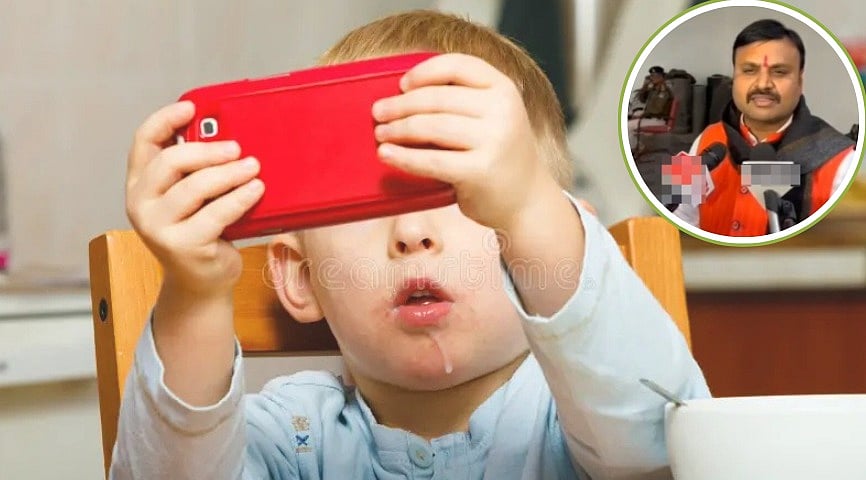
Jabalpur (Madhya Pradesh): Jabalpur MLA Abhilash Pandey on Friday urged the MP government to take strong and immediate steps to control the fast-growing mobile and internet addiction among children and teens.
Speaking to the media person after the Winter Session of the Assembly, Pandey said that this addiction is no longer a small issue but a nationwide problem affecting almost every home.
The MLA urged the government to:
Launch a statewide awareness campaign promoting No-Gadget Zones
Issue a strict advisory on mobile use among children
Consider a law if needed to control digital addiction
Start joint awareness programmes through schools, anganwadis and families
Watch the video below :
He highlighted that the situation has become alarming, as many children do not eat food without watching a mobile screen.
He explained that continuous exposure to reels, gaming and fast, colourful videos triggers constant dopamine release in the brain, giving quick pleasure and making children dependent on digital content.
Pandey raised a serious health concern, saying “myopia is gripping more children now”, and referred to an AIIMS report showing a sharp rise in eye-number cases among kids. In Delhi, myopia cases increased from 7% in 2001 to 21% in 2021, and the condition, once common in 18–20-year-olds, is now appearing in children as young as 10–12 years.
He added that 87% Indians use gadgets and 83% children aged 10–14 are now using mobile phones, much higher than the global average of 76%.
Pandey warned that children are not playing outdoors, family communication is decreasing, and issues like irritation, loneliness and depression are rising rapidly.
He said that creating ‘No-Gadget Zones’ at home, as advised by Prime Minister Narendra Modi in Mann Ki Baat, is now extremely important.
Giving an example, he shared how he once saw a three-year-old child being fed on a train only after being shown a mobile phone, saying this reflects the reality of many Indian households today.
He cautioned that if this issue is ignored today, it may lead to a major social and health crisis for the next generation. The minister acknowledged the seriousness of the problem and assured suitable action.

