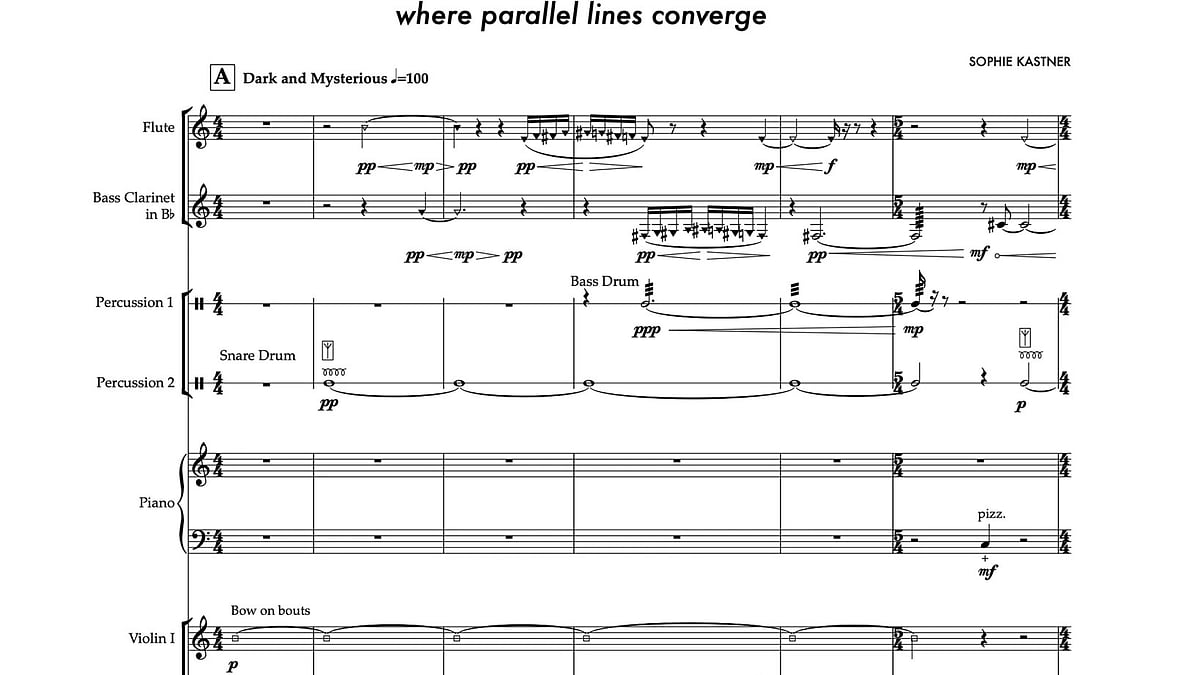
In their latest project, NASA has made space noises playable. NASA, in its statement, said that the project was achieved with the assistance of music composer Sophie Kastner. The space agency released an image of music notes made with Kastner's assistance, explaining that the data acquired by its telescopes has become the foundation of original music that people can play. Sonification is a procedure that converts data from telescopes into notes and sound.
NASA's sound collection
NASA has a collection of similar sounds that it has collected over the years and has made available on its website as a sonification playlist. With the latest project, listeners will experience the data through their sense of hearing rather than viewing it as visuals, as is more commonly done with astronomical data.
Sophie Kastner's musical composition is titled 'Where Parallel Lines Converge.' According to NASA, Kastner said, "It's similar to writing a fictional story based on real facts. We're taking data from space that has been translated into sound and giving it a new and human twist."




Kastner explained that she chose to focus on a small area of the NASA image as 'small vignettes' to make it more playable for people.
Scientists used Webb and Chandra Xray data
The project's data is a compilation of noises taken from a small area near the heart of our Milky Way galaxy, which contains a supermassive black hole. To gain the data, NASA used the Chandra X-ray Observatory, Hubble Space Telescope, and the now-retired Spitzer Space Telescope.
Kimberly Arcand, Chandra visualisation and emerging technologies scientist said, "We've been working with these X-ray, visible, and infrared data for years. We took a big step by translating these data into sound, and now, with Sophie, we're trying something completely new for us all."
According to Arcand, "This is just another way for humans to interact with the night sky just as they have throughout recorded history. We are using different tools, but the concept of being inspired by the heavens to make art remains the same." NASA has made the sonification available on their website for other musicians to try.