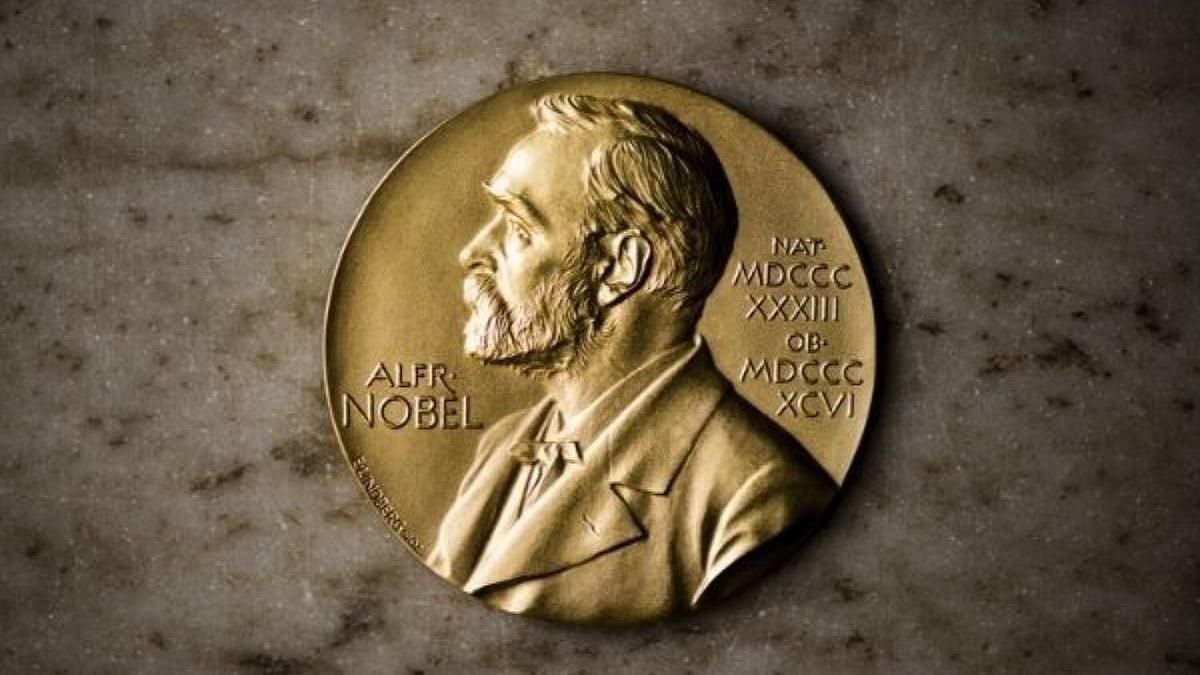
Alfred Nobel, also known as Alfred Bernhard Nobel, was a Swedish chemist, inventor, engineer, and businessman. He is known for inventing the Nobel Peace Prize. Mr Alfred was born into the prominent Nobel family in Stockholm, the capital of Sweden. Nobel Peace Prize day is celebrated every year on December 10. The day honours the founder of the Nobel Peace Prize, who died on December 10.
The Nobel is an annual award for those who have done the most for the fraternity and abolition of war in favor of peace in the world. The Nobel Peace Prize is one of the five Nobel Prizes that were established by Alfred Nobel. He was from Sweden, who was also an industrialist, inventor, and armaments manufacturer.
Who was Alfred Nobel?
Alfred was a very enthusiastic person who always loved to learn new things and was always keen towards studies, especially inclined towards Chemistry and languages. His curiosity made him learn numerous languages, including Swedish, English, Italian, Russian, and French. Mastering these languages through private tutoring generated curiosity in him to write poetry in English and manage his international explosive business. He worked alongside his father, who was interested in the explosive properties of nitroglycerin, an invention that later became Nobel's central invention.
Alfred Nobel: A man behind revolutionary invention of Dynamite
Alfred Nobel's most famous invention includes inventing Dynamite in 1867, but his other inventions include a blasting gelatin, a more powerful form of Dynamite, also known as jelly. It is an explosive material consisting of collodion-cotton (a type of nitrocellulose or guncotton) dissolved in either nitroglycerine or nitroglycol and mixed with wood pulp and saltpeter (sodium nitrate or potassium nitrate). He also invented Ballistite, A type of smokeless powder and the first double-base propellant. Later, the Italian army adopted and replaced it with black powder ammunition, or simply gunpowder. His invention of the blasting cap revolutionized mining and construction, but it also led to tragic deaths when countries and people used it for wars and battles.

Alfred Nobel Death Anniversary | File
Nobel's work on Synthetics
Apart from explosives, Albert also invested in other inventions, and one of his extraordinary inventions was an invention of artificial silk. He explored using cellulose nitrate to create artificial materials. Albert was not only a scientist but also a businessman who held 355 patents, including processes of making synthetic rubber, leather, and artificial silk.
Nobel found his Dynamite invention destructive
It is believed that Nobel actually found Dynamite so destructive that he eventually regretted inventing it. This is the reason that, upon his death in 1896, he bequeathed a significant portion of his wealth (approximately $265 million today) to establish what are now referred to as the Nobel Prizes. In his will, he expressly mentioned that these prizes were to be awarded to" the greatest benefit to humankind."
Interesting facts about Alfred Nobel
Alfred Nobel built over 100 factories and transformed his family's Bofors firm into a leading arms producer.
Nobel was never married and had no children.
If you are familiar with the periodic table, the synthetic element Nobelium, a synthetic chemical element which has the symbol No and atomic number 102, is named in honour of Alfred Nobel.
He was an entrepreneur, engineer, and philanthropist who also wrote poetry and drama.
Before his death, Nobel wrote the play Nemesis, based on the story of a 16th-century.

