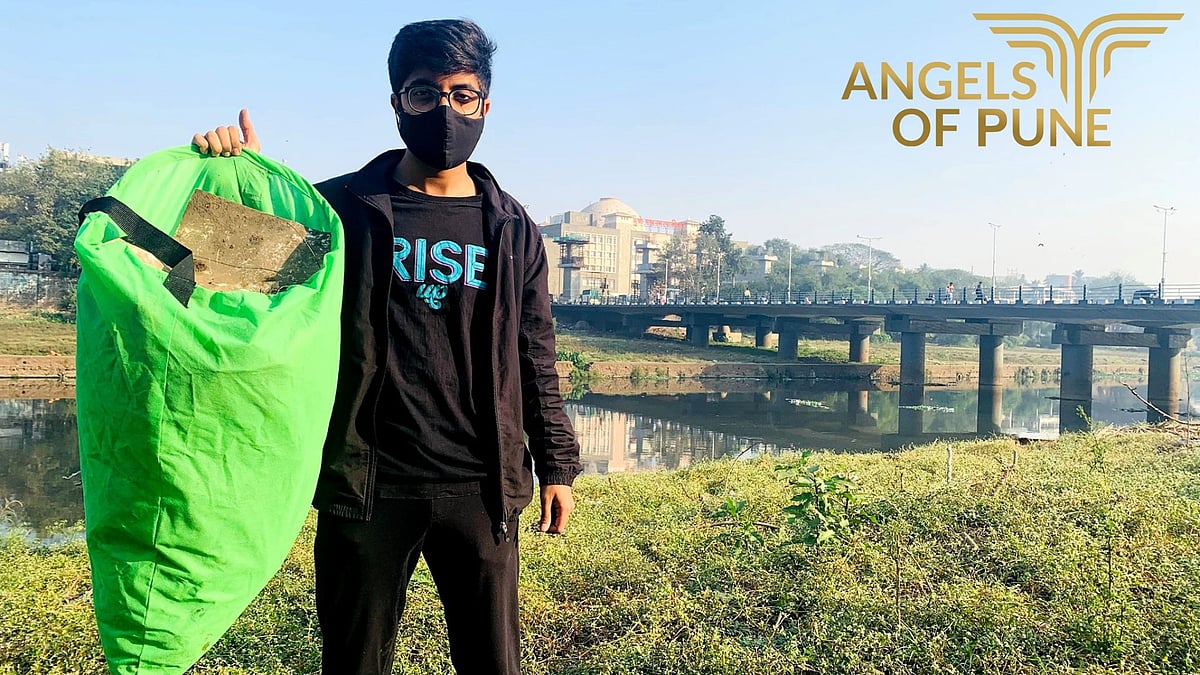
When Vivek Gurav came to Pune in 2013 to pursue computer engineering, the sight of the Mula-Mutha left him stunned. They were filled with garbage, nothing like the clean Panchaganga, Krishna and Warna rivers near Gurav’s hometown of Jaysingpur in Kolhapur.
Today, that shock has transformed into a plogging movement that has attracted over one lakh volunteers, cleared 9,500 tonnes of waste across cleanup drives and spread to over 30 cities in India and abroad.
A graduate from the University of Bristol, Gurav continues to plog in the United Kingdom, but his journey began with a simple question from his parents: “Do you want to become a kachrawala (waste picker)?”
Battling Opposition
Though Gurav is now a public figure and a noted environmentalist, the beginning wasn’t easy. “My father was a temple priest, and my mother a primary school teacher. So they questioned how I could be a kachrawala. ‘Do you want to become Gadge Baba (an Indian mendicant-saint and social reformer)?’” Gurav said. His reply was simple: “Why not?”
“Even my colleagues’ parents didn’t support it, and our college administration was also against continuing it as a daily activity,” Gurav added.
Despite opposition from his near and dear ones, Gurav was determined and was inspired to start plogging after watching the disheartening sight of garbage in Pune's water bodies, while comparing it with his clean hometown rivers.
After discovering the Swedish concept of plogging (jogging + plocka upp/pick up) online, he saw a solution and considered plogging a practical way to combine fitness with environmental action and mobilise youth for change.
Rivers as sewers
After enrolling in a Computer Engineering course at MIT College in Pune's Alandi, Gurav went to visit historical places like Shaniwar Wada and came across the polluted Mula-Mutha rivers. “I was confused when I was told that the littered, canal-like channels were actually rivers. The same was the case with the Indrayani river near my college,” he said.
“Then we decided to take this challenge and started working to clean rivers as a group of over 400 students named ‘Visionary Fighters,’” Gurav added. Meanwhile, he further learned about the plogging concept while working as a youth advocate associated with the Swedish Embassy.
Though Gurav had been associated with waste-picking drives since 2013, he didn’t exclusively classify their project as ‘plogging’ initially. But in 2019, when Prime Minister Narendra Modi learned about this concept and launched a dedicated program by clubbing the Swachh Bharat Mission and the Fit India Movement, ‘Pune Ploggers’ was officially born.
The work of collecting trash was further enhanced with waste being upcycled, recycled, or safely disposed of, so that it doesn’t return to the riversides or other public places.
Dignifying ‘Dirty Work’: A Mindset Overhaul
Initially, Gurav and his team of ploggers used to face inconvenience from civic authorities. “When we used to collect the garbage and ask the civic officials to pick it up, we faced reluctance. But things gradually changed, and they began to cooperate in disposing of the collected waste,” he said.
Gurav went a step further to understand why people litter in the first place. “We realised that the waste problem will only be solved when people understand how much effort it takes to clean waste-piled-up public spaces. Through plogging, we made people experience what it feels like to collect our own littered waste,” Gurav explained, adding that those we call ‘Kachrawala’ are actually ‘Safaiwala’ (cleaner).
And this activity has been effective. “We have worked with over one lakh ploggers, and I assure you that none of them have thrown waste in the open afterwards. This root cause is getting addressed through plogging,” he said.
“Moreover, our society doesn’t treat sanitation workers with dignity. So when well-qualified people from diverse backgrounds engage in collecting trash, the stigma dissolves,” he added.

Beyond Cleanup
To reduce waste making its way to landfills and reduce plastic waste generation, Gurav insists on segregating wet and dry waste at the source -- our homes. “In terms of foul smell from landfills, the wet waste is most troublesome. One must try to compost it at home and must replace daily-use plastic products with sustainable alternatives such as bamboo toothbrushes, cloth bags, and others,” he explained.
The success of Pune Ploggers has reached over 30 cities such as Mumbai, Kolkata, Delhi, Chennai, and locations abroad as well, where local communities actively participate in cleaning their surroundings.
Moreover, impressed with his work, Gurav was honoured with the UK Prime Minister's ‘Points of Light Award’ in 2022.

The Road Ahead
To give the ‘Pune Ploggers’ a structured form, Gurav is planning to register the community as ‘Plogging Plus Foundation’ and address larger issues like climate change through awareness programs in schools, platforms like ‘Climate Ki Baat,’ ‘Plog Yatra,’ and other initiatives.

