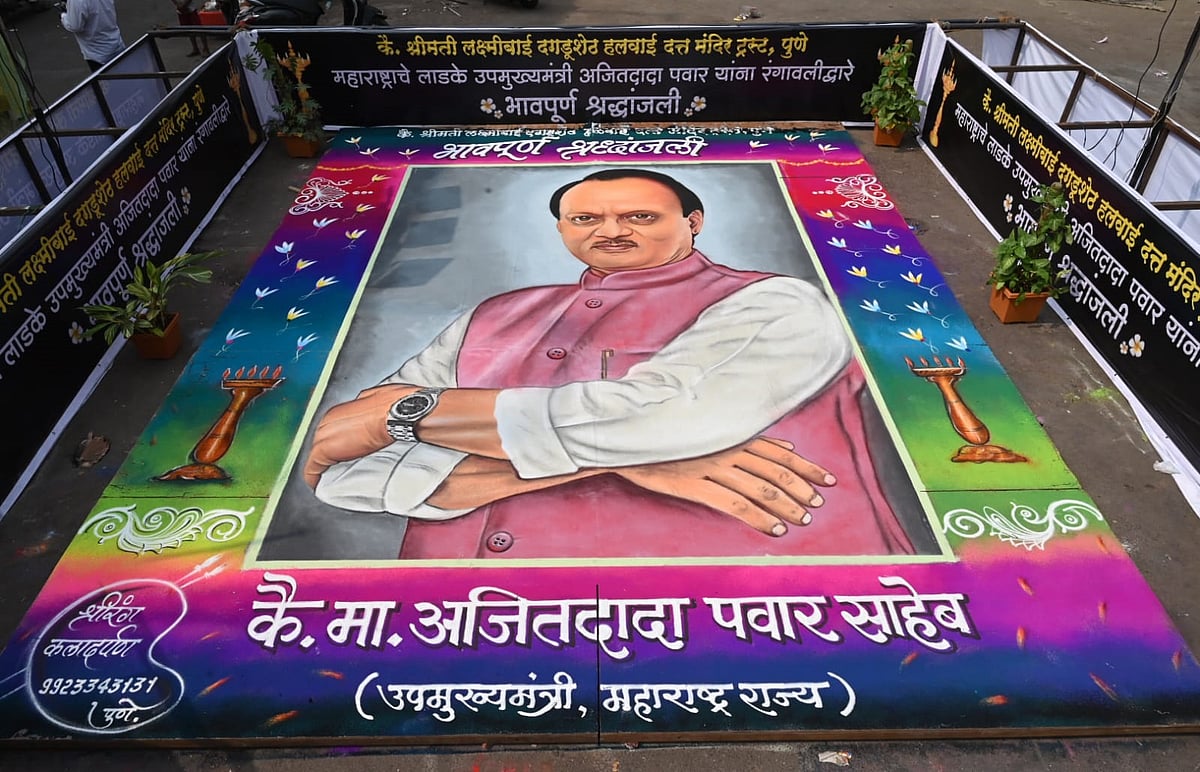
Pimpri-Chinchwad: Bharatiya Janata Party (BJP) Bhosari MLA Mahesh Landge has strongly demanded that a grand memorial be erected in the premises of the new Pimpri-Chinchwad Municipal Corporation (PCMC) administrative building in memory of the late Deputy Chief Minister Ajit Pawar.
MLA Mahesh Landge, who was embroiled in a verbal spat with the late Deputy Chief Minister over the PCMC elections just weeks before his death, has since chosen to put the disagreement behind him following Pawar’s passing and remember the leader for the positive moments they shared.
His stance had, in fact, begun to change after the elections, when he acknowledged that Pawar had always played a vital role in the development of Maharashtra.
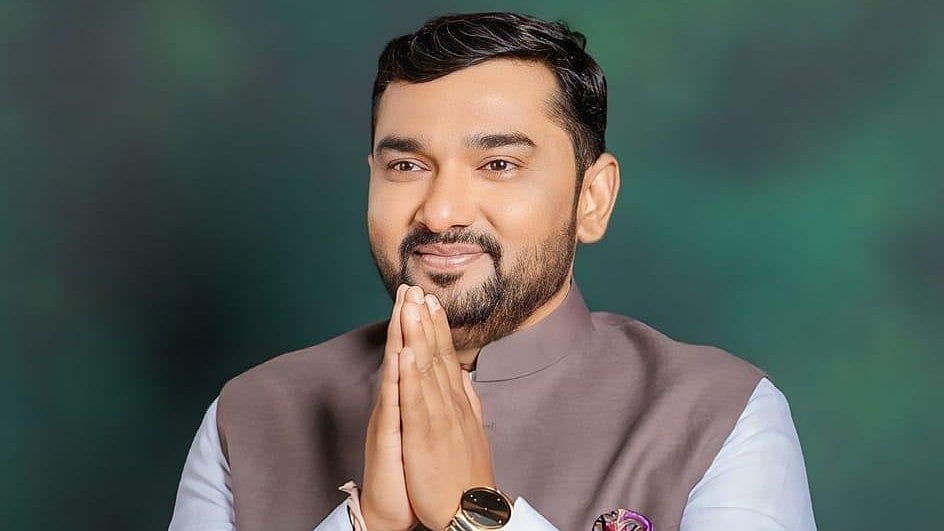
After Pawar’s death on Wednesday in a plane crash, Landge submitted a detailed memorandum regarding the memorial to PCMC Commissioner Shravan Hardikar on Friday.
The construction of the main building of the new administrative complex is currently underway on approximately 8.65 acres of a 33.86-acre plot located opposite D-Mart in Chinchwad.
In the future, the entire administrative operations of the PCMC will be conducted from this location. Against this backdrop, MLA Landge has proposed that a memorial featuring a full-sized bronze statue of the late Ajit Pawar be established within these premises.
MLA Landge noted that the late Ajit Pawar accelerated the comprehensive development of Maharashtra during his tenure as Deputy Chief Minister and Finance Minister. Through infrastructure, urban services, administrative decisiveness, and development-oriented policies, he gave the state a distinct identity.
MLA Landge said, “The untimely demise of such a leader is a great loss to Maharashtra, and it is the need of the hour to preserve his legacy. Therefore, a proposal for the memorial must be approved in the very first General Body meeting of the newly elected corporators as a tribute from the citizens of Pimpri-Chinchwad. Furthermore, he suggested that a portrait of Ajit Pawar be immediately installed in the current PCMC building premises.”
'Ajit Srishti': A Vision of Maharashtra’s Development
The proposal includes naming the auditorium in the new administrative building as the 'Ajit Dada Pawar Sabhagruh' and creating 'Pimpri-Chinchwad Ajit Srishti', a concept highlighting the city's development journey from its inception to future planning.

"Ajit Dada dreamt of making this city number one in terms of development. We have resolved to make honest efforts to fulfil that dream. This memorial will serve as an inspiration for public service for future generations and will be a true tribute to him," MLA Landge expressed.
"At every stage of Maharashtra's developmental journey, we benefited from Ajit Dada Pawar's visionary leadership. Preserving his work and thoughts is not just an emotion but a responsibility for us, citizens of Pimpri-Chinchwad. I am confident that the PCMC will take a positive decision regarding this, and we will follow up on this matter consistently," said MLA Mahesh Landge.
Ajit Pawar & Pimpri-Chinchwad’s Close Bond
It's no secret that the late Ajit Pawar and the city of Pimpri-Chinchwad had a close bond. Several times, he referred to Pimpri-Chinchwad as his ‘karmabhumi’ (land of work) and Baramati as his janmabhumi (land of birth).
Ajit Pawar's political career began in Pimpri-Chinchwad. He first contested the Baramati Lok Sabha constituency in 1992, which included Pimpri-Chinchwad at the time. Under his leadership, the Nationalist Congress Party (NCP) held absolute power in the Pimpri-Chinchwad Municipal Corporation (PCMC) for 15 consecutive years. During this period, he made special efforts for the holistic development of the city.
By conducting in-depth studies of future urban needs, Ajit Pawar prepared a comprehensive development plan, identifying core infrastructure issues. He also studied how to strengthen public transport for seamless connectivity, which included high-quality roads, increasing the public bus fleet, and providing alternative transport routes. Furthermore, he ensured that modernisation did not harm the city’s environment.
Development gained momentum when PCMC received Rs 2,600 crore under the Jawaharlal Nehru National Urban Renewal Mission (JNNURM). These funds were utilised for solid waste management, roads, bus transport, water supply, drainage, and slum rehabilitation. He decided to establish the Pune International Exhibition and Convention Centre on 200 acres in Moshi.

Additionally, a Central Business District (CBD) project is taking shape on 33 acres along the Mumbai-Pune Highway. He proposed that 50% of this trade centre be for offices, 30% for retail, and 20% for entertainment. The iconic Science Park is also a part of this vision.
Guided by Pawar, PCMC adopted modern systems like e-governance for online bill payments. Several public welfare projects were built under his leadership, including housing for the poor via JNNURM and the Nigdi Ota Scheme. Roads, flyovers, grade separators, and gardens were developed, alongside large hospitals and other utility projects.
Projects like the Bhakti-Shakti Garden, the Mumbai-Pune road widening, railway flyovers, and the Acharya Atre Auditorium were brought to life. To honour the late Prof. Ramkrishna More, the Chinchwad auditorium was named after him. The Metro project also progressed rapidly under Dada’s influence. Schemes were implemented for workers, athletes, students, senior citizens, the industrial sector, and women.
For women, he initiated interest-free loans of Rs 15,000 – Rs 20,000 through self-help groups for home businesses, distributed sewing machines, and started training courses for driving and computers.

Ajit Pawar & Pimpri-Chinchwad
- Ajit Pawar shared a deep personal and political bond with Pimpri-Chinchwad, often calling it his karmabhumi (land of work).
- His political journey gained momentum in the city as he became an MP from Baramati in 1991. At that time, Pimpri-Chinchwad was part of the Baramati Lok Sabha Constituency.
- Pimpri-Chinchwad became a stronghold of the NCP under his leadership, and he enjoyed a dominant run over the city from the 1990s to 2017.
- For 15 years, PCMC witnessed uninterrupted governance focused on planned and sustainable urban growth.
- Pawar pushed long-term infrastructure planning, strengthening roads, public transport, and connectivity while balancing environmental concerns.
- Major development projects were accelerated with Rs 2,600 crore funding under the Jawaharlal Nehru National Urban Renewal Mission (JNNURM).
- Landmark initiatives such as the Exhibition and Convention Centre, CBD project, Metro expansion, and civic modernisation took shape during his influence.
- Welfare-centric governance remained a focus, with schemes for the poor, workers, women, students, senior citizens, and the industrial sector.
- His vision left a lasting imprint on Pimpri-Chinchwad’s urban, social, and economic landscape.

