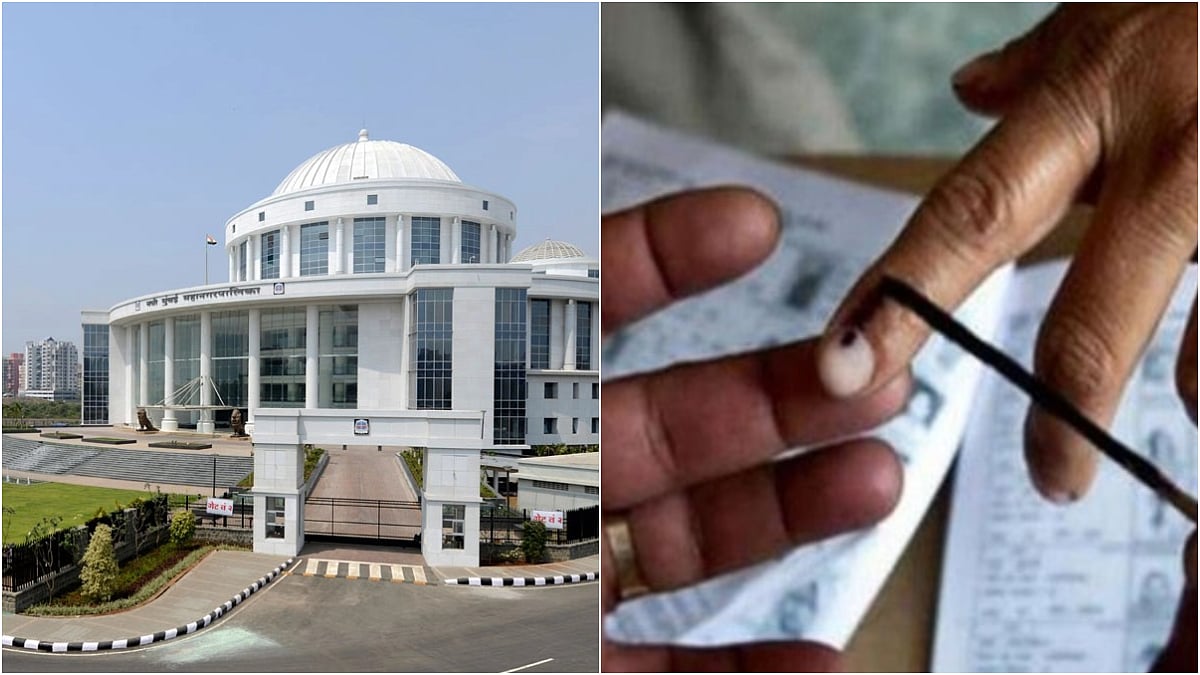
Navi Mumbai, Jan 02: As NMMC is gearing up for elections on January 15, Zone II—stretching from Sanpada to Belapur—has emerged as a major point of concern due to rapid and largely unchecked redevelopment that threatens the long-term sustainability of Navi Mumbai, civic activists and former corporators have warned.
Redevelopment is progressing at a pace far faster than the creation of basic amenities, resulting in mounting pressure on roads, water supply, sewerage networks, parking infrastructure and ecological assets, allege activists and former corporators. Observers stress that the issue is not merely an increase in population, but densification without future-ready planning.
Infrastructure lagging behind redevelopment
Former corporator Netra Shirke said CIDCO’s land monetisation and redevelopment-driven construction boom—especially in areas close to the upcoming Navi Mumbai International Airport—has ignored infrastructure limits.
“Buildings with 16 to 20 flats are being redeveloped into structures with 50 flats, but there is no proportional upgrade in water pipelines, sewer lines, internal roads or parking facilities. This kind of redevelopment will inevitably choke the city,” she said.
She added that nine-metre-wide internal roads, roadside parking and the absence of reserved plots for civic amenities would lead to chronic congestion and service failures. “CIDCO is even auctioning plots reserved for gardens, water bodies and mangroves,” Shirke warned.
Pending civic issues flagged by former corporators
Former corporator Saluja Sutar highlighted unresolved local infrastructure gaps, including the need to legalise Lotus Lake, pending issues related to the Samaj Mandir at Darave, and long-neglected problems of roadside gutters and drainage, which are likely to worsen with intensified redevelopment.
Calling redevelopment the single biggest civic challenge, former corporator Somnath Vaskar said the process must be restructured. “Redevelopment should be smooth, transparent and backed by credible builders offering fair returns. Gaothan homes need regularisation, water shortages in gaothan pockets must be addressed, and parking has to be planned before—not after—new buildings come up,” he said.
Original planning philosophy being diluted
Veteran civic activist B N Kumar said Navi Mumbai’s original planning philosophy is being systematically dismantled. “This is not the city we visualised in the 1970s and 1980s. Navi Mumbai was built with wide roads, green buffers and open spaces. Today, redevelopment is eating into every available inch without regard for the environment or quality of life,” he said.
Kumar called for ward-level citizens’ committees, similar to Mumbai’s ALM groups, to monitor redevelopment and civic services. “Such platforms would ensure real-time coordination with the NMMC and prevent elected representatives from focusing only on cosmetic road and footpath works instead of long-term urban planning,” he said.
He further argued that CIDCO should gradually exit Navi Mumbai’s core areas. “CIDCO has completed its role as a developer. The city must now fully rest with the people and the NMMC, while future development is shifted to new growth zones like NAINA,” Kumar said, stressing that plots reserved in the Draft Development Plan must be protected and expanded, not diluted.
Environmental impact and waste management concerns
Environmental concerns have intensified alongside redevelopment. Dharmesh Barai, Founder of Environment Life Foundation and Earth Champion with Sony BBC Earth, warned that Navi Mumbai’s cleanliness and ecological health are deteriorating. “Redevelopment without supporting infrastructure is directly impacting waste management, hygiene and mangroves,” he said.
Illegal vending, unregulated pan-patti shops, poor enforcement against plastic users, mixed waste collection and neglected protective nets around water bodies are compounding the problem, Barai noted.
“Mangroves are suffering as solid waste flows unchecked into creeks and lakes. Decorative installations are maintained, but core environmental safeguards are ignored,” he said.
He further added that although dry and wet waste segregation is promoted, the ground reality is disappointing, as garbage collection vehicles often mix all waste together.
Also Watch:

“I have already written to the NMMC Chief requesting dedicated dry-waste collection vehicles with public announcements, but implementation is still pending. This lack of action is discouraging citizens and causing segregation efforts to fail,” he said.
To get details on exclusive and budget-friendly property deals in Mumbai & surrounding regions, do visit: https://budgetproperties.in/

