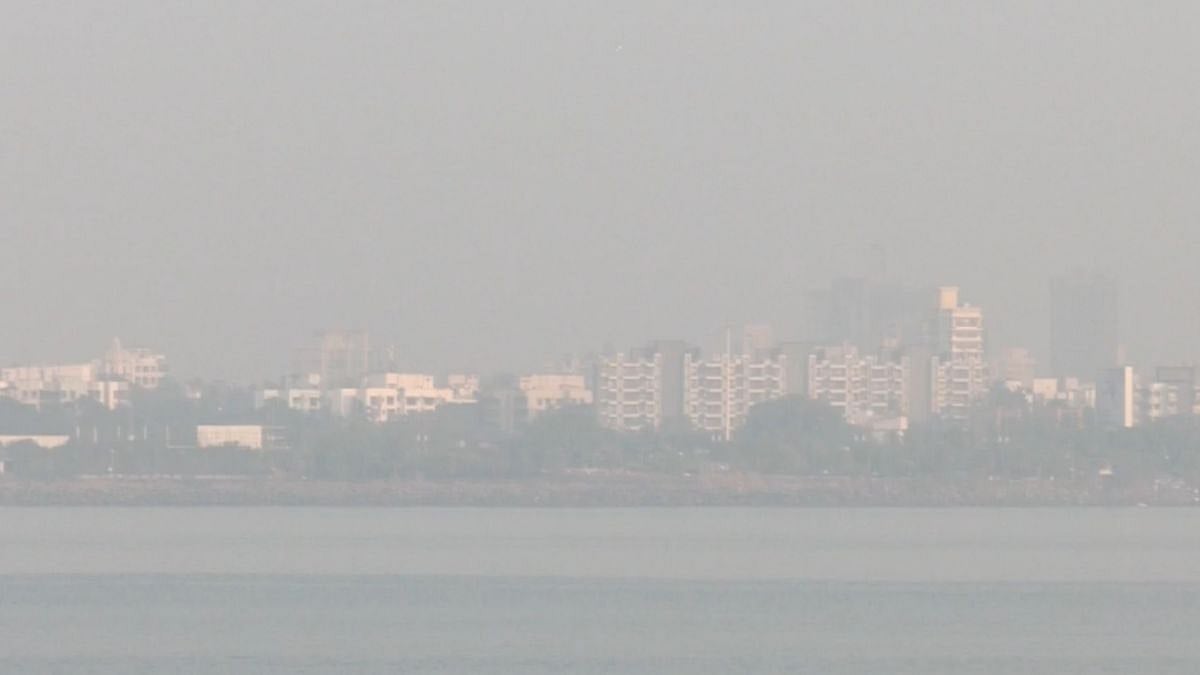
Mumbai: Mumbai experienced a refreshing winter nip on Friday morning, as clear skies, cooler winds and mild temperatures gave residents a pleasant start to the day. The India Meteorological Department (IMD) said temperatures were expected to range between a minimum of around 18°C and a maximum of 33°C, making it one of the more comfortable winter days of the season.
Overall AQI In Unhealthy Range
However, the seemingly picture-perfect weather masked a growing environmental concern. A thin layer of haze hovered over large parts of the city, underlining Mumbai’s persistent struggle with air pollution. According to data from air quality monitoring platform AQI.in, the city’s overall Air Quality Index (AQI) stood at a worrying 277 in the early hours of Friday, placing it firmly in the ‘unhealthy’ category.
While the AQI showed marginal improvement compared to some of the extreme readings recorded in recent weeks, pollution levels remain dangerous, particularly for vulnerable groups such as children, senior citizens and people suffering from respiratory or cardiac conditions.
The deteriorating air quality is largely due to dust and fine particulate matter generated by Mumbai’s relentless infrastructure expansion. Ongoing government projects, including metro rail corridors, coastal road construction, flyovers, bridges and extensive road-widening works, combined with aggressive private real estate development, continue to release large volumes of dust into the atmosphere. Vehicular emissions during peak traffic hours further compound the problem.
Several Areas Report Severe Air Quality
Area-wise AQI data revealed stark contrasts across the city. The Wadala Truck Terminal emerged as the worst-affected zone, recording a staggering AQI of 384, categorised as ‘severe’. Such levels pose serious health risks even to otherwise healthy individuals. Chembur (332) and Worli (328) also reported severe air quality, while Bandra East and Deonar registered AQI readings of 324 and 321, respectively in the severe range.
Suburban regions fared slightly better, though air quality remained far from acceptable. Kandivali East and Borivali East recorded AQI levels of 143 and 157, while Borivali West stood at 167. Malad West (180) and Mulund West (183) were also placed in the ‘poor’ category, indicating widespread pollution across the metropolitan region.
For reference, AQI values between 0–50 are considered ‘good’, 51–100 ‘moderate’, 101–150 ‘poor’, 151–200 ‘unhealthy’, and readings above 200 are deemed ‘hazardous’. With Mumbai’s air quality consistently crossing unhealthy thresholds, concerns are mounting over long-term public health impacts as winter progresses and pollution episodes become more frequent.
To get details on exclusive and budget-friendly property deals in Mumbai & surrounding regions, do visit: https://budgetproperties.in/

