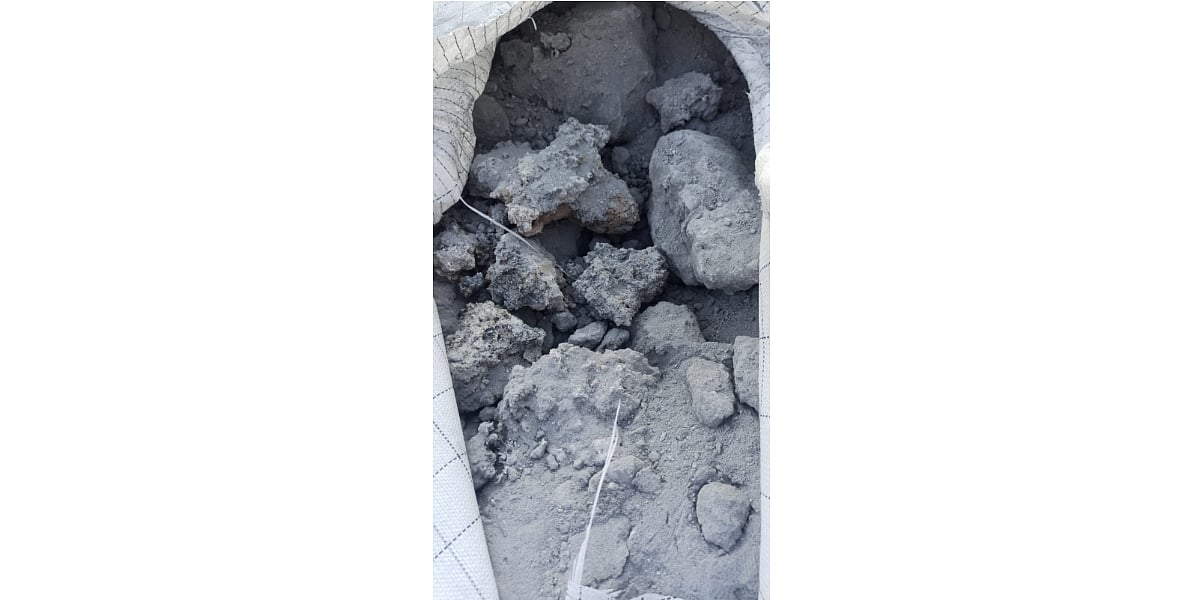
In two separate operations during the past seven days, the Customs officials at Nhava Sheva port in Navi Mumbai have intercepted 18 containers which contained Aluminium Dross (Aluminium Scrap) import of which is restricted as per Directorate General of Foreign Trade (DGFT) Policy, being a toxic industrial waste. The agency sources said that the containers which had originated from Bahrain and Qatar respectively, were declared as Aluminium Oxide Industrial Grade.
Speaking about the operations, a Customs official said that, the Special Investigation and Intelligence Branch (SIIB) (Import), on intelligence developed, had intercepted 15 containers on Monday, with goods declared as 300 metric tonnes of "Aluminium Oxide Industrial Grade", whereas on examination, Aluminium Dross was found in the containers which is restricted as per DGFT Policy, being a toxic industrial waste. On March 09, the SIIB (I) officials on specific input had intercepted three containers declared to have 65 metric tonnes of Qatar origin "Aluminium Oxide Industrial Grade" whereas on examination Aluminium Dross was found in the containers."
Dross is a mass of solid impurities floating on a molten metal or dispersed in the metal, such as in wrought iron. It forms on the surface of low-melting-point metals such as tin, lead, zinc or aluminium or alloys by oxidation of the metal. For higher melting point metals such as steel, oxidised impurities melt and float making them easy to pour off. Dross, as a solid, is distinguished from slag, which is a liquid. Aluminium dross can be recycled and is used in secondary steelmaking for slag deoxidation. "Aluminium dross as a hazardous solid waste in aluminium production industries has caused serious environmental and public health challenges," said a customs official.
The Nhava Sheva Customs officials, in the last two months, acting on specific input had intercepted 76 Containers 1900 metric tonnes of hazardous and restricted Anode Butts worth Rs 3.21 crore. "The impugned goods were found to be used/waste Anode Butts in the form of Broken, Black Coloured pieces of odd sizes/dimensions of used Anode butts. Imported goods are hazardous and restricted as per the Import Policy. As per Hazardous Waste Management Rules, 2016, these goods are restricted and can’t be imported without permission from the Ministry of Environment, Forest and Climate Change," said a Customs official.