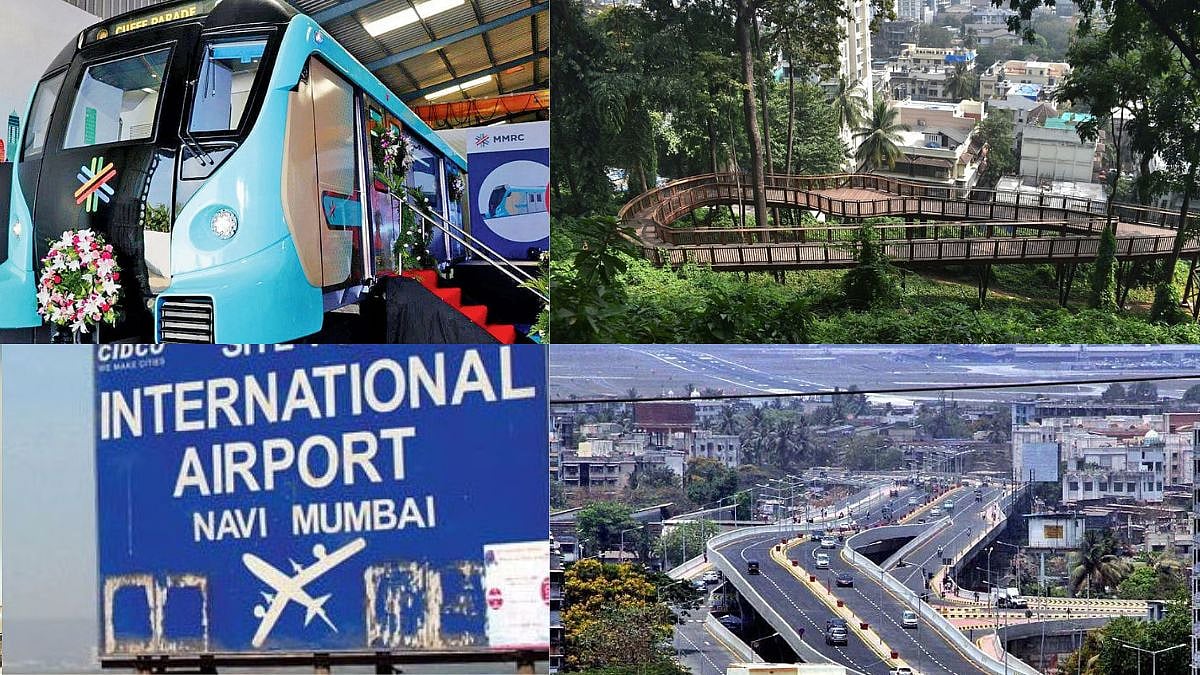
Mumbai witnessed major infrastructure growth in 2025 as several long-pending projects finally opened to the public. Projects like the Metro Aqua Line, Coastal Road connectors, Navi Mumbai airport, new railway bridges and road overbridges made commuting faster and more convenient for Mumbaikars.
Key Infrastructure Projects That Opened in 2025
Mumbai Metro Line 3 (Aqua Line)
The complete stretch of the Mumbai Metro Line 3, also known as the Aqua Line, opened to the public on October 9, and since then, Mumbaikars have readily accepted the new lifeline, which connects North and South Mumbai. Sections of the underground metro corridor became operational, improving connectivity between South Mumbai, central business districts and the western suburbs. Built at a cost of Rs 37,270 crore, the full corridor connects major shopping hubs, religious destinations, entertainment, airports, and business centres across the city.

Navi Mumbai International Airport
The Navi Mumbai International Airport, inaugurated by PM Modi on October 8, is India’s largest greenfield airport, developed at Rs 19,650 crore. With this, Mumbai received its second international airport. The airport is expected to significantly ease passenger load from the CSMIA in Mumbai. Airlines, including Akasa Air, IndiGo, and Air India Express, will commence their operations from NMI, with services beginning on 25 December 2025.
Northbound Connector Bridge
Maharashtra Chief Minister Devendra Fadnavis inaugurated the northbound carriage of the bow string bridge, which connects the Mumbai Coastal Road to the Bandra Worli Sea Link (BWSL) on January 27, 2025. This bridge, part of the Coastal Road project, reduces travel time between Bandra and Marine Drive.
Reay Road Cable Stayed Bridge
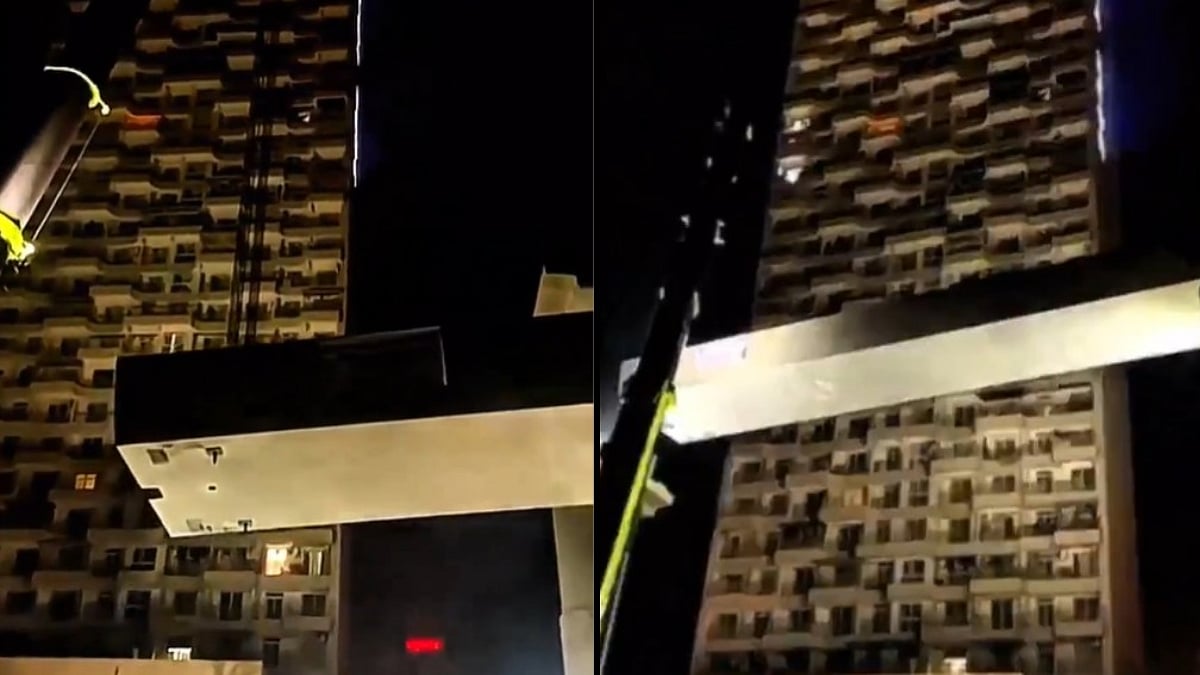
Mumbai’s first land-based cable-stayed bridge over the railway line at Reay Road was inaugurated on 13 May 2025. The new six-lane structure replaces an older bridge and improves connectivity between Reay Road East and West. Moreover, it also improves connectivity between Byculla and Mazagon. The ROB is designed to improve road safety and alleviate traffic congestion in the area, thereby contributing to a seamless, faster and more efficient transportation experience for commuters.

Titwala Road Overbridge (ROB)
The city also got a four-lane road overbridge near Titwala Railway Station. Located on the Kalyan Ring Road between Titwala and Khadavli Railway Stations, along the Kalyan Igatpuri section of Central Railway, this bridge is 820 metres long and includes four lanes. Built at a total project cost of Rs 100.06 crore, this ROB connects Ambivili to Kalyan via the famous Shree Siddhivinayak Ganesh Mandir at Titwala.
Carnac Bridge (Renamed as ‘Sindoor’)
The renovated Carnac Bridge, now called the Sindoor Flyover, linking the eastern and western corridors of South Mumbai, was officially opened on Thursday morning by Chief Minister Devendra Fadnavis. The flyover is anticipated to significantly aid in improving east-west traffic flow in South Mumbai. Sindoor Flyover, strategically located near Masjid Bunder railway station, links P D’Mello Road to key commercial areas such as Crawford Market, Kalbadevi, and Mohammad Ali Road. Developed by the BMC after the 150-year-old Carnac Bridge was dismantled in August 2022 due to safety concerns.
Gopal Krishna Gokhale Bridge
The long-awaited Gokhale Bridge in Andheri, one of Mumbai’s critical east-west arterial connectors, was also opened this year. The bridge’s first arm had been partially opened on February 26, 2024, however, due to a nearly six-foot gap between the newly constructed arm and the existing C D Barfiwala Flyover, the connection remained non-operational. The opening of the completed bridge improved traffic flow in Andheri East and West, easing the burden on alternative routes like the Milan and Andheri subways.
Santacruz Chembur Link Road (SCLR) Cable Stayed Section
With the opening of the SCLR cable-stayed section in August, this significantly improved connectivity between the Western and Eastern Express Highways, while also easing congestion for motorists travelling between Kurla, the airport, and the Bandra Worli Sea Link. A standout feature of the SCLR extension is the 215-metre-long cable-stayed bridge that spans 25 metres above the Western Express Highway.
Thane Creek Bridge 3
In June 2025, the much-awaited Thane Creek Bridge (TCB) 3 was fully opened for traffic, bringing major relief to commuters on the busy Sion Panvel route. The three-lane bridge from Vashi towards Mankhurd, the second arm of TCB 3, was digitally launched and opened to the public. The first arm, a three-lane bridge from Mankhurd to Vashi, had already been opened in October 2024.
Malabar Hill Walkway
Beyond roads and transport, the city also added new public spaces. Mumbai’s first-ever elevated nature trail, the Malabar Hill walkway, was inaugurated on March 30. The eco-friendly project, under development for three years, is inspired by Singapore’s treetop walkway. Developed amidst the lush greenery of Kamala Nehru Park and Ferozshah Mehta Garden in Malabar Hill, the elevated nature trail offers visitors a glimpse into Mumbai’s rich biodiversity, featuring over 100 species of plants, diverse birds and reptiles.
Pedestrian Pathways and Underpasses on Mumbai’s Coastal Road
The opening of the much-awaited Mumbai Coastal Road promenade marks South Mumbai’s first major seafront public space since the iconic Marine Drive, which was constructed in the 1930s. Remarkably, the new promenade is more than twice the length of Marine Drive, offering expansive open space for citizens. It features a cycle track, encouraging eco-friendly commuting and recreation. Additionally, ample seating arrangements have also been installed along the stretch for visitors to relax and enjoy the sea breeze.
As the year draws to a close, Mumbai’s infrastructure story in 2025 stands not just as a milestone but also as a poignant reminder. While infrastructure growth brought visible improvements in mobility and urban planning, the city also saw worsening air pollution. Continuous construction work across the city, right from redevelopment projects and new building projects to bridges and dug-up roads, led to increased dust levels and worsened air quality.
The city’s air quality index ranged from poor to hazardous, with locations such as Mazgaon and the Wadala Truck Terminal emerging as pollution hotspots. While infrastructure expansion will continue to meet the demands of a growing city like Mumbai, stronger measures to control air pollution remain crucial to safeguarding public health and the environment in the years to come.
