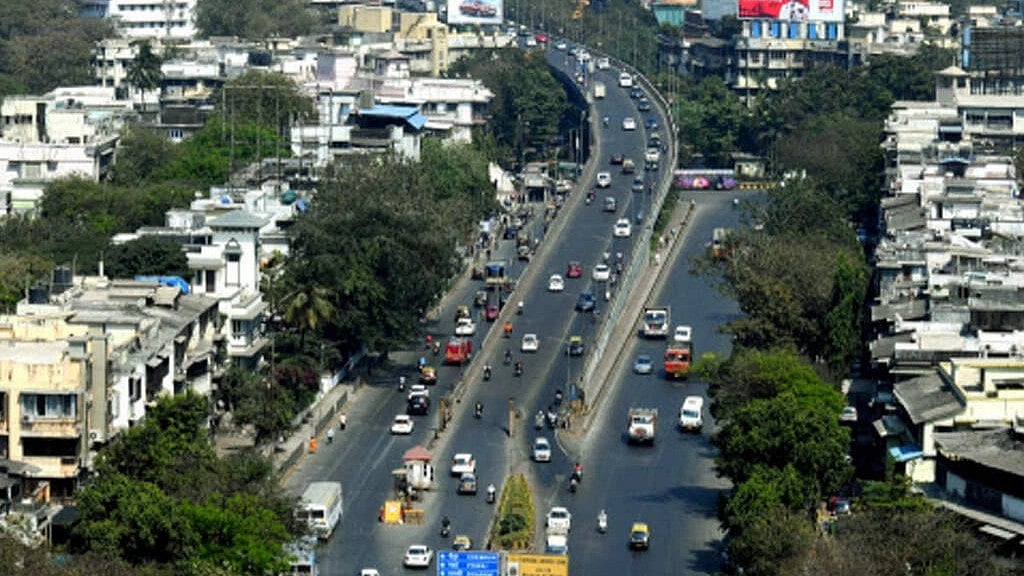
Mumbai: From illegal hawkers encroaching on footpaths to rampant illegal parking, from dug-up roads to vanishing playgrounds, and from perennial traffic congestion to shrinking green cover and rising air pollution — a range of civic issues continues to plague Mumbai’s R-Central and R-South wards, mirroring problems faced across the city.
About The R-Central Ward
The R-Central ward stretches from the Sanjay Gandhi National Park (SGNP) boundary to Gorai Creek, while R-South includes areas such as Poinsur Gymkhana, Charkop and Lokhandwala in Kandivali. Both wards have witnessed rapid urbanisation, particularly in pockets with large slum populations. However, civic infrastructure has failed to keep pace with intense real estate development, placing enormous pressure on existing resources.

Trees and mangroves have emerged as the first casualties, leading to deteriorating air quality. Environmental concerns have intensified following the Bombay High Court’s recent permission to fell over 45,000 mangroves for the Versova–Bhayander coastal road project, a section of which passes through R-Central ward. The issue is particularly sensitive as the ward also houses SGNP, often described as the “lungs of Mumbai”.
Activists have since warned that development at the cost of green cover will increase climate risks and worsen coastal flooding.
These fears appear well-founded. Both wards have experienced severe flooding during the monsoon in recent years, particularly around the Dahisar and Poinsur rivers. Pollution of rivers, nallas and beaches due to untreated sewage and waste discharge has only compounded the problem.
Traffic congestion remains another major pain point, especially along routes connecting the eastern and western suburbs. Several flyovers and roads have been announced, but many projects remain perpetually “work in progress”.
The flyover extension connecting Kora Kendra in the west to the Western Express Highway in the east has been under construction for nearly four years. After a few pillars were erected, work stalled. “This has become a major traffic choke point while travelling between east and west Borivali. At times, it takes nearly 30 minutes just to clear a 2-km stretch,” said Mayur Shah, a resident near Kora Kendra.
Commuting challenges are further aggravated as many residential pockets are located far from railway stations or the Western Express Highway. During peak hours, residents struggle with congestion as well as a shortage of autorickshaws and BEST buses.
Activist and nature lover Gopal Jhaveri, along with his River March team, has submitted a manifesto highlighting multiple civic failures. These include incomplete or missing Development Plan (DP) roads, delayed bridges and metro extensions, and poor last-mile connectivity. The manifesto also flags the deteriorating condition of municipal schools and health centres, which suffer from inadequate infrastructure and maintenance. Basic amenities such as toilets, parks and playgrounds are either neglected or encroached upon.
Jhaveri, who has been campaigning for the revival of the Dahisar river, said pollution remains unchecked. “Solid-waste management is inadequate, with poor segregation and irregular collection. The authorities must rejuvenate rivers and nallas by completing STPs and stopping untreated discharge into the sea,” he said, stressing the need to protect and expand green cover through GPS tagging and urban forestry initiatives.

The R-Central ward also includes Gorai village, located across Gorai Creek. Despite its proximity to the city, residents there continue to lack basic facilities such as healthcare and regular drinking water.
About The R-South Ward
In R-South ward, residents have long demanded the completion of the Magathane–Dindoshi DP Road. A short distance from the Western Express Highway to residential buildings in Lokhandwala often takes over half an hour due to traffic snarls. Residents have suggested solutions such as parabolic road dividers and better regulation of traffic on the highway, including easing congestion near Akurli Road and creating alternative routes towards Kurar Road.
Shishir Vivekanand Shetty, co-founder of the Lokhandwala Residents Association, Kandivali East, attributed many issues to the lack of accountability, pointing out that the BMC has been functioning without elected corporators since 2022. “Rather than spending huge sums on elections and salaries, we can coordinate directly with our MLA. We’ve resolved several civic issues this way,” he said.
Noting that the BMC is among the world’s richest municipal bodies, Shetty advocated greater use of technology. “It should invest in systems that ensure a strong citizen–civic body interface with time-bound accountability. Quarterly reviews involving the MLA would ensure better utilisation of taxpayers’ money,” he added.
BJP MLA Sanjay Upadhyay, who represents Borivali, said several major infrastructure projects are underway to ease congestion. These include the Borivali–Thane twin tunnel, extension of the coastal road and an east–west Borivali bridge. “All these projects will be completed within four years, and the traffic problem will be solved,” he said.
Claiming Borivali has the highest number of completed concrete roads, Upadhyay said, “Only 32 major roads and 23 internal roads remain and they will be completed before the monsoon.” He added that once road works are completed, more BEST mini-bus routes would be introduced to improve connectivity to railway stations.
To get details on exclusive and budget-friendly property deals in Mumbai & surrounding regions, do visit: https://budgetproperties.in/

