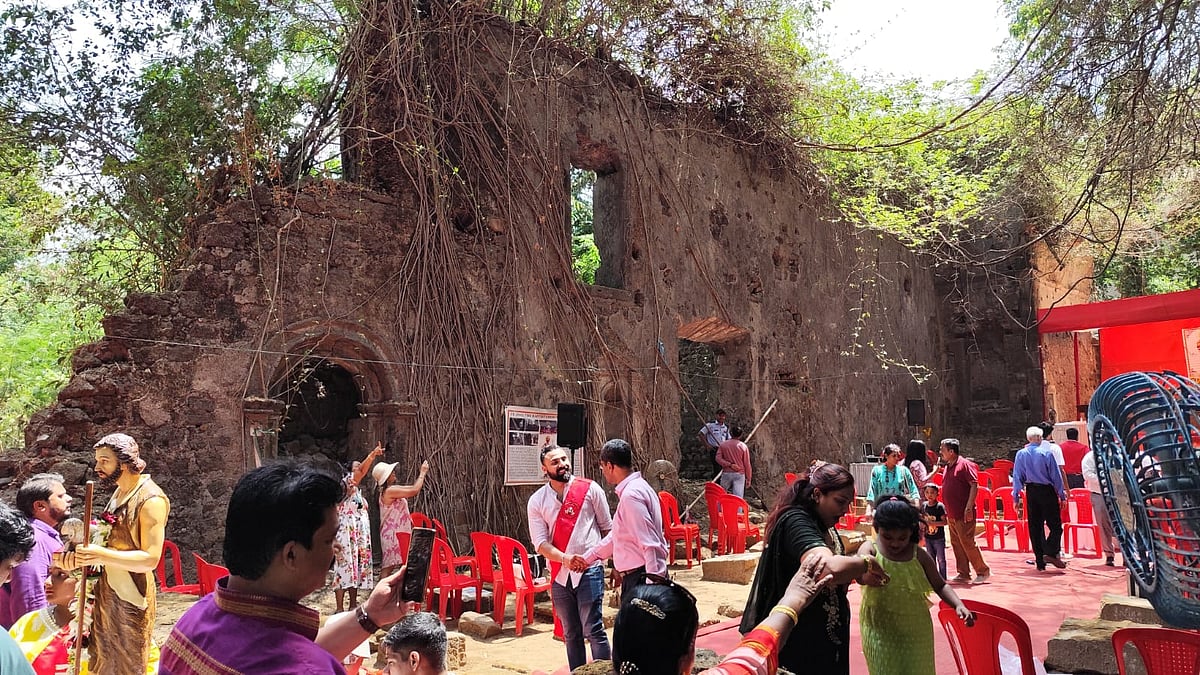
Mumbai: Reacting to the Maharashtra government's recent approval of the transfer of over three acres of land belonging to the Maharashtra Tourism Development Corporation (MTDC), Chikhaldara, Amravati district, to Shri Ambadevi Sansthan free of cost for religious purposes, the Christian community called the decision an instance of 'double standards' as the government has refused a similar demand for the historical St John the Baptist Church located inside the Santa Cruz Electronic Export Processing Zone (SEEPZ), Andheri East.
Support for Religious Tourism Welcomed, But Equality Questioned
Appreciating the government’s support to promote religious tourism and development of sacred sites, Watchdog Foundation, which wrote to the government on behalf of the Christian community, said that the decision highlights a concern of inequality and discrimination in the treatment of communities and heritage religious sites on similar lines.
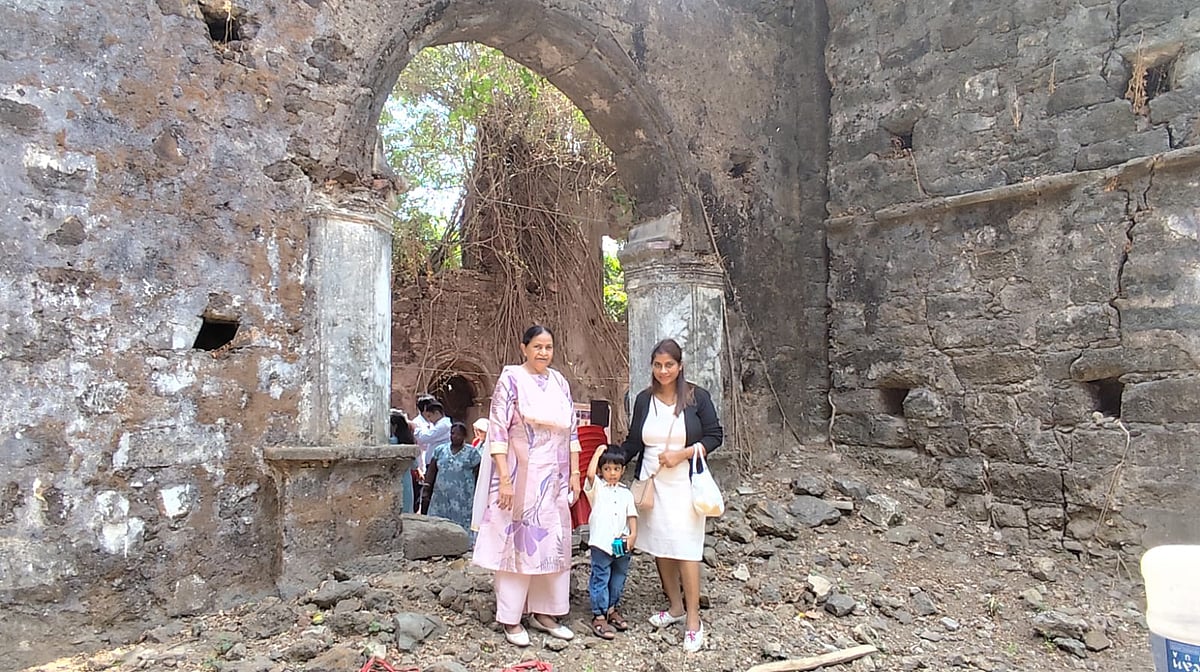
The St John the Baptist Church, built by Portuguese Jesuits in 1579 AD, is one of the oldest Christian heritage structures in the Mumbai metropolitan region. The church was abandoned in 1840 after an epidemic and residents built the St John the Evangelist Church in nearby Marol. The old church fell into ruins and when the area was converted into SEEPZ in 1973, entry to the site was restricted. Devotees are allowed to conduct a religious service on one Sunday in May.
Church Returned in 2003, But Control Remains Limited
Public access has been historically restricted since SEEPZ was declared a high-security commercial zone in the early 1970s, and faithful are permitted limited entry only on special occasions. The church had been returned to the Archdiocese of Bombay by the state government in 2003, yet administrative authority, access and restoration rights are still not fully exercised by the local community or the archdiocese due to its location within SEEPZ, the Watchdog Foundation said in a statement.

“The recent allotment of public land for a Hindu religious trust at Amravati free of cost for religious development, while an ancient Christian religious heritage site remains under restricted access and neglect, raises concerns of inequitable treatment of faith communities,” said Godfrey Pimenta, trustee of Watchdog Foundation.
Watchdog Foundation said that the local community have repeatedly petitioned the government to hand over the church to the Archdiocese of Bombay for preservation, restoration, and regular worship access. Article 14 of the Constitution of India guarantees equality before law and equal protection of laws, and Article 25 ensures freedom of conscience and religion. Continued absence of concrete action in favour of the Church, while land is granted freely for another faith’s religious development projects creates a perception of bias against Christian minority, the Watchdog Foundation said.
Constitutional Guarantees Cited in Demand for Fair Treatment
Nicholas Almeida, president of St John the Baptist Church Save Committee, said that the origin of the parish of St John the Baptist can be traced back to two mass conversions at Marol. Almeida said that till 1973, religious services were conducted at the ruins of the church. This practice was discontinued when the property comprising a lake and the ruined church was acquired by MIDC. After the community demanded regular access to the church, the then minister for sports, Sunil Dutt visited the church on July 16, 2004, along with minister for commerce, Kamal Nath, and directed the SEEPZ authorities to erect a separate compound wall around the church with an independent access.
To get details on exclusive and budget-friendly property deals in Mumbai & surrounding regions, do visit: https://budgetproperties.in/

