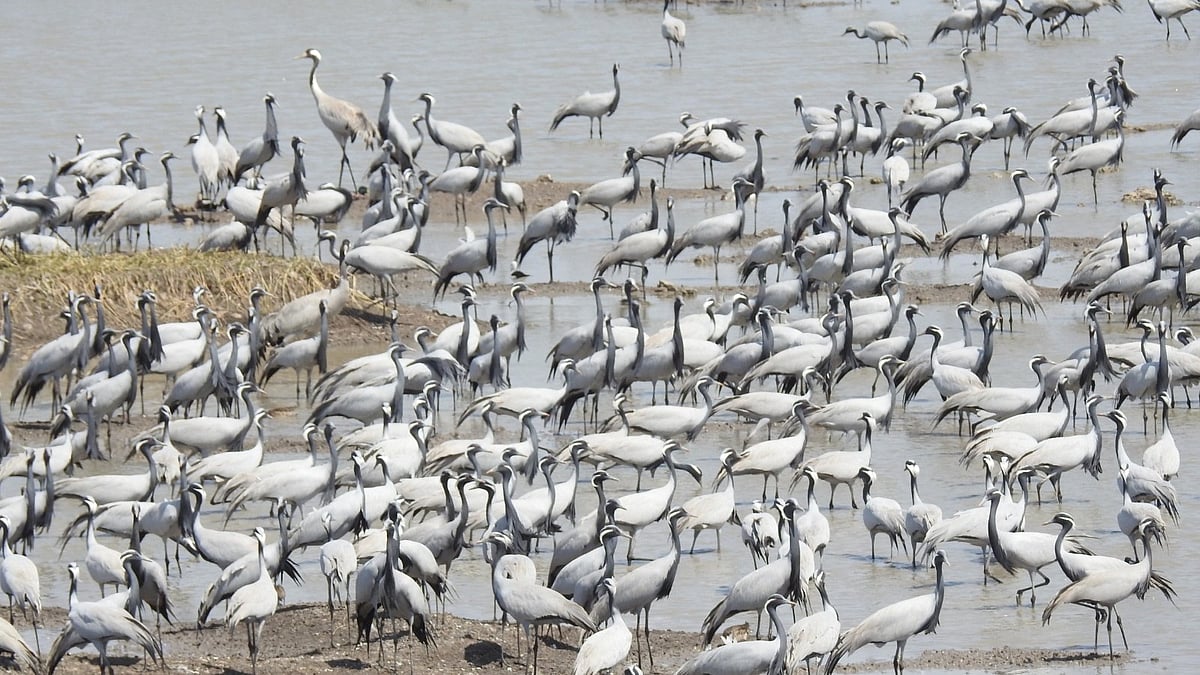
Mumbai: The Bombay Natural History Society (BNHS) has invited birders to join the country-wide Asian Waterbird Census (AWC) in India in January 2026.
The survey will be carried out between the first and third week of January, and bird counts will be accepted from December 2025 onwards to the end of February 2026, BNHS said. The nationwide citizen science exercise will help collect data on birds that migrate to India in summer and understand migration trends and the status of the wetlands, the organisation said.
The AWC, initiated in 1987, is recognised as the longest-running citizen-science programme dedicated to the conservation of waterbirds and wetlands in the region. Wetlands International South Asia (WISA), BNHS, Birdcount India, and National Biodiversity Authority are among the organisations participating in the survey.
“Wetlands are among the most productive ecosystems on earth, supporting rich biodiversity and providing essential ecological services that are vital for both nature and humans," said Kishor Rithe, director of BNHS.
Rithe said that the field implementation of the AWC is made possible through a strong collaborative network. "AWC's state coordinators will head the programme, but we need the support of local birders, researchers, university students, and other dedicated contributors," said Rithe.
BNHS stated that they have written a letter to the chief wildlife wardens and the heads of forest protection forces of state forest departments to facilitate participation of their staff in data collection as well as in conducting the census. The National Biodiversity Authority has instructed all the state and union territory Biodiversity Boards to provide support to the census by involving village-level Biodiversity Management Committees.
Dr P Sathiyaselvem, senior scientist heading the Central Asian Flyway programme in India, deputy director of BNHS, stated that several wetlands have recorded changes in waterbird populations due to degradation of aquatic habitat. "This exercise will help to understand the present status of our wetland ecosystems, and hence monitoring waterbird populations will be crucial for their conservation and restoration," said Sathiyaselvem. Data from the census will be used to prepare the national action plans and concerted action plans at the global level, he stated further.
Dhruv Varma, senior technical officer at WISA, explained that the BNHS, Indian Bird Conservation Network (IBCN) coordinators, and AWC state coordinators will train and sensitise local birders and conduct systematic waterbird counts and wetland assessments.
The AWC’s scientific and conservation value is widely recognised at the national and international levels. The programme has been identified as an important waterbird monitoring initiative under Component 5 of India’s National Action Plan for the Conservation of Migratory Birds and their Habitats along the Central Asian Flyway (CAF), an important international migratory route for birds, which aims to strengthen the management of sites of ornithological importance.

BNHS said that AWC data has made significant contributions to conservation planning and policy formulation. The results have supported the development of national action plans, including India’s National Action Plan for Conservation of Migratory Birds and their Habitats along the CAF (2018–2023), informed the designation of Ramsar Sites (wetlands of international importance), and guided wetland management programmes. Additionally, the findings have contributed to several multilateral environmental agreements, such as the Ramsar Convention on Wetlands and the Convention on Migratory Species, the organisation added.
To get details on exclusive and budget-friendly property deals in Mumbai & surrounding regions, do visit: https://budgetproperties.in/

