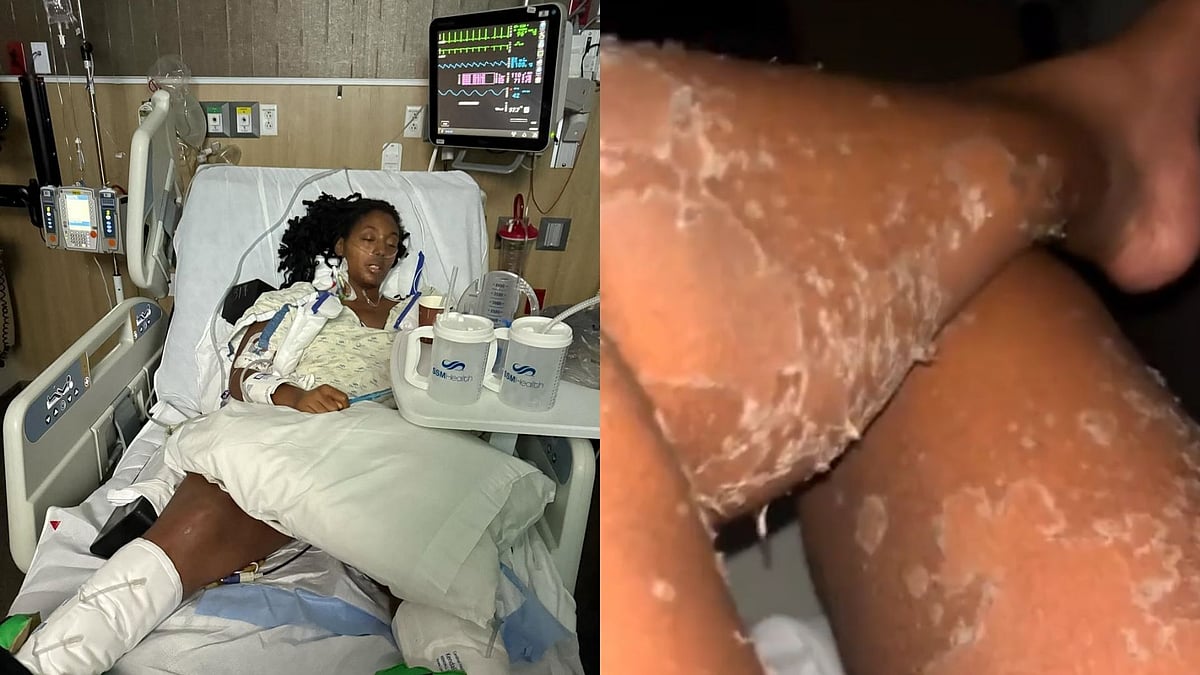
A woman’s frightening encounter with a venomous spider has gone viral, shedding light on how dangerous brown recluse spider bites can be, even when symptoms appear out of nowhere.
Mynita S., who was healthy moments earlier, suffered a life-altering medical emergency after being bitten by a brown recluse spider. She later took to Instagram to share her ordeal, revealing that the bite led to weeks of hospitalisation and lingering effects long after she was discharged.
Recalling the incident, Mynita wrote, “Something so unexpected happened to me on May 17th, 2025. I found myself hospitalised for two weeks because I was bit by a Brown Recluse Spider.” What made the experience more alarming was how suddenly her condition deteriorated.
Sudden and severe symptoms
According to Mynita, the symptoms struck without warning. One moment she was fine, and the next, her body began shutting down. “One day I was perfectly fine, and then…BOOM,” she shared, explaining how she lost her ability to walk, eat, wash herself or even keep her eyes open. Her heart rate remained dangerously high for days, hovering between 140 and 160 beats per minute, while her oxygen levels dropped to critical lows.
Her condition worsened when her haemoglobin levels fell drastically, forcing doctors to intubate her. “My body was literally fighting itself from within,” she said, describing a terrifying period where she was unaware of what was happening around her.
Skin reactions after discharge
While her hospital stay was harrowing, what shocked many viewers was what happened afterward. In a post-discharge video, Mynita showed how her skin continued reacting to the venom weeks later. Large patches peeled off from different areas of her body. She described it vividly in her caption: “A Brown Recluse Spider bit me- it had me shedding like a snake and looking like a web.”
What is a brown recluse spider?
The brown recluse spider is commonly found in the southeastern and midwestern United States. It prefers warm, dry, dark spaces such as closets, basements and storage areas. Typically tan to dark brown, it’s known for the violin-shaped marking on its back, a key identifying feature.
Brown recluse bites are often painless initially, which can delay treatment. Mild reactions may include swelling, bruising, blisters and muscle pain, while severe cases can lead to fever, rash, dizziness, vomiting and systemic complications. In rare instances, venom can cause tissue damage, blood disorders and organ stress, making early medical attention crucial.

