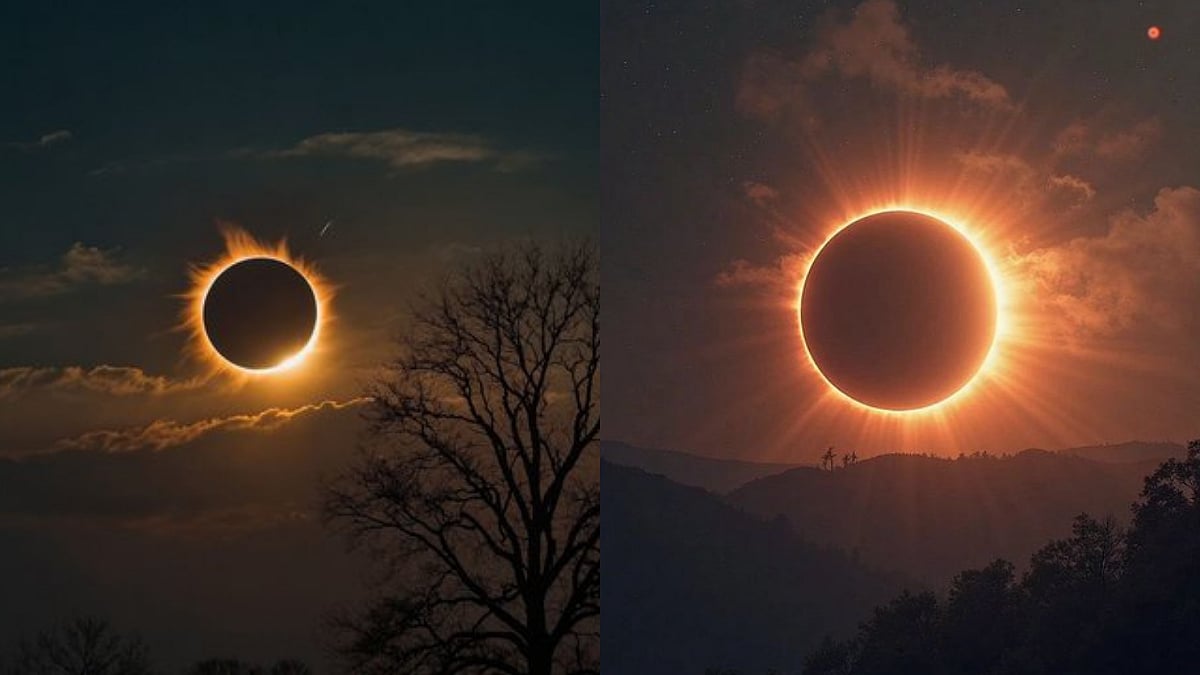
The first solar eclipse of 2026 is set to occur on February 17, marking a visually striking celestial event known as an annular solar eclipse. Often referred to as the “ring of fire” eclipse, this phenomenon happens when the Moon passes in front of the Sun but appears slightly smaller, leaving a glowing ring of sunlight visible around its edges.
During this eclipse, nearly 96% of the Sun’s centre will be covered for a maximum duration of 2 minutes and 20 seconds, creating a dramatic red-orange effect that astronomers and eclipse chasers eagerly anticipate.
However, despite its spectacular nature, the February 17 eclipse will be visible only from remote regions of Antarctica, making it inaccessible to most of the world’s population. Even so, the event holds scientific and astronomical importance as it marks a rare series of three solar eclipses within just 708 days.
According to NASA, an annular solar eclipse occurs when the Moon is at or near its farthest point from Earth. Because of this distance, the Moon cannot fully cover the Sun, unlike during a total solar eclipse. As a result, the Sun’s outer edges remain visible throughout the event, making a ring of fire.
Safety precautions to take:
Safety remains a key concern during annular eclipses. Since the Sun is never completely blocked, it is never safe to look directly at the eclipse with the naked eye. Experts strongly advise using certified solar eclipse glasses. These should always be inspected before use; any scratched, torn, or damaged viewers must be discarded immediately. Children viewing the eclipse should be supervised at all times to prevent accidental eye exposure.
Total Solar eclipse in 2026:
Looking ahead, eclipse enthusiasts have even more to anticipate. A total solar eclipse on August 12, 2026, will be visible from parts of Europe, making it the first total eclipse seen from the continent since 2015 and the first from mainland Europe since 1999.
From August 2026 to July 2028, skywatchers will have the rare opportunity to witness three major solar eclipses across three different continents, a dream run for anyone passionate about celestial events.

