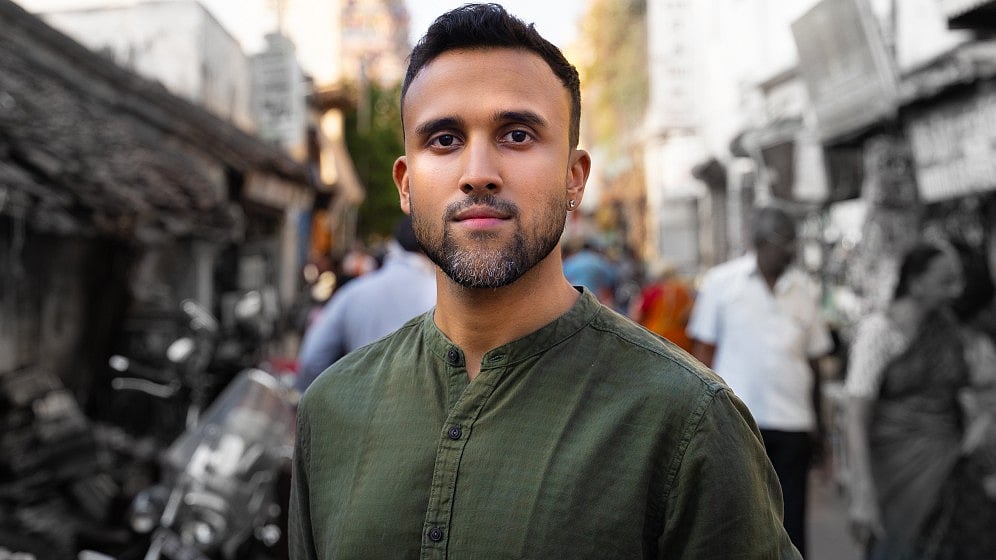
When Los Angeles-based Carnatic singer Aditya Prakash released his seven-song album Isolashun in 2023, he felt the listener might not experience its thematic and socio-political layers only through sound. He thus came up with the idea of Room-i-Nation, a solo gig-theatre project with a more narrative form.
“Room-i-Nation functions as an extension of Isolashun. I didn’t want the live version to simply reproduce the music, since the album already exists for that. Instead, I wanted the performance to open up the stories, histories, questions and conversations that shaped the work,” he says.
After showcasing Room-i-Nation at the Mumbai Lit Fest in November, Prakash’s current tour includes a January 16, 2026 performance in Bengaluru. He also performed at the Mahindra Kabira Festival in Varanasi in December, where he was joined by the Aditya Prakash Ensemble in a set that included fresh settings of Kabir’s poetry.
Prakash’s musical journey began while growing up in an artistic family in Los Angeles. His mother ran a Bharatnatyam school, and he got exposed to Carnatic music since early childhood. However, in the desire to feel included, he tried to keep his music and Indian cultural identity separate from his American persona. His passion for Carnatic music made him spend vacations visiting Chennai and learning the rudiments.
The turning point came when sitar maestro Pt Ravi Shankar spotted him, and invited him to do a 30-minute set at his home. One thing led to another, and soon, Prakash accompanied the maestro on a tour of the US and Canada in 2005-6, playing at the Carnegie Hall, Hollywood Bowl and Disney Concert Hall. He recalls, “Pt Ravi Shankar really encouraged me to be curious, to experiment, to pick up different things and not be close-minded. Later, my mentor (Carnatic singer) T.M. Krishna taught me how to practise, advising me not to practise as though I was preparing for a concert. He told me to just set time aside to practise with an explorative spirit. He taught me to define what Carnatic music is, helping me to find a deeper, personal connection with the music.”
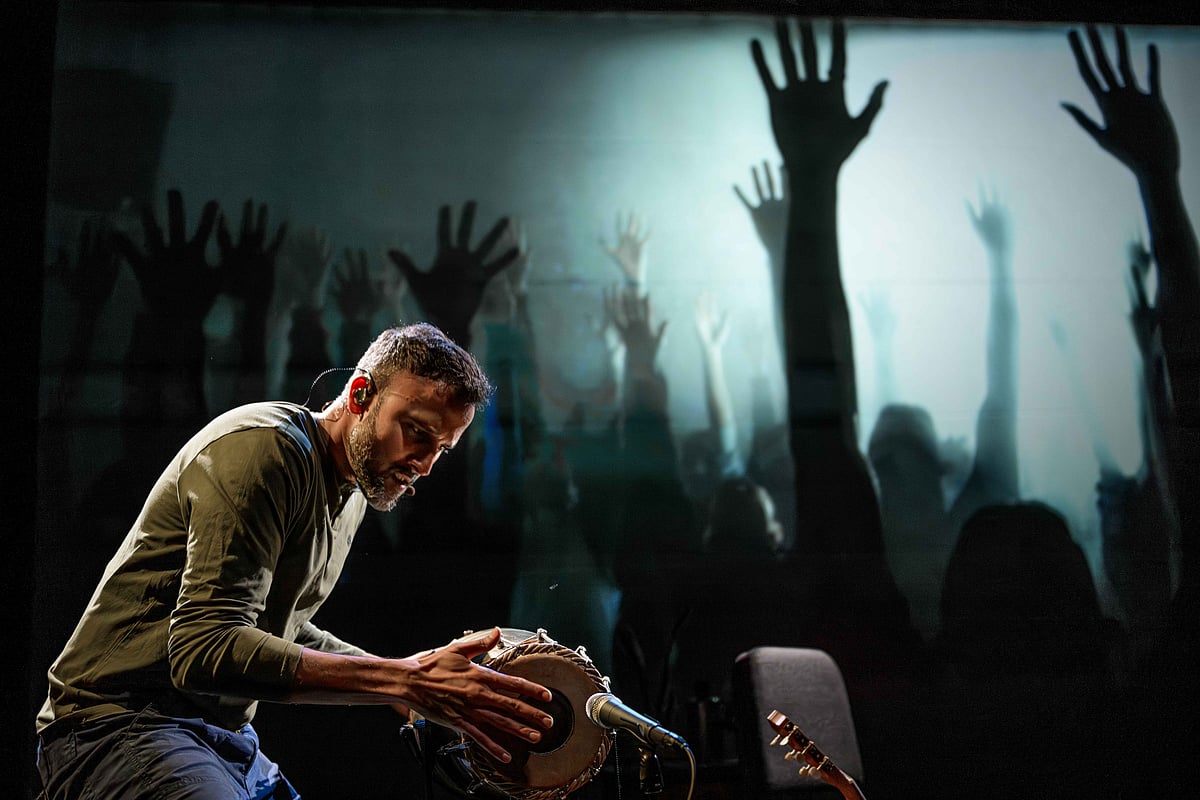
After making a mark with the Aditya Prakash Ensemble, which was a dialogue between Carnatic music and jazz, he once again pushed the boundaries on Isolashun. He says, “It is a self-critique album that explores the tension in dual identity and questions the notions of beauty tied to the ‘classical’ aesthetic.”
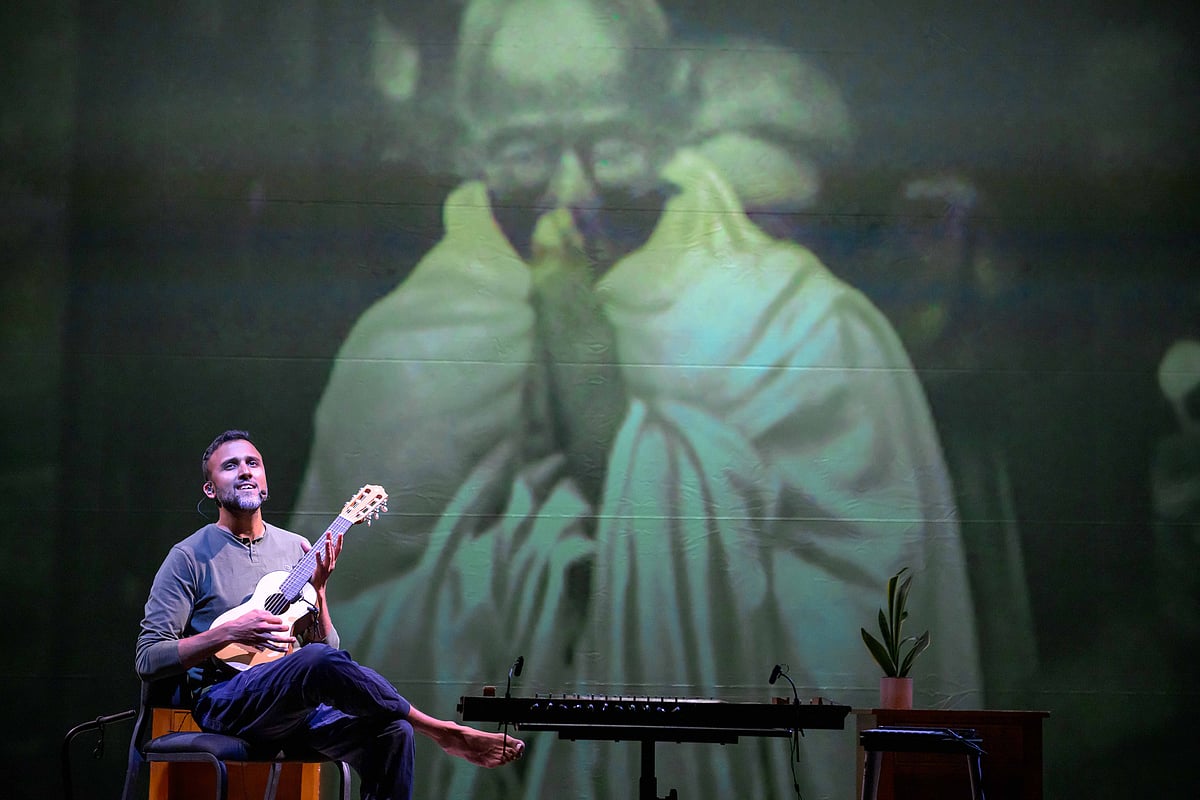
For its part, Room-i-Nation weaves together the threads of Carnatic music with the history of Asian immigration and stories of identity and belonging to offer a nuanced take on navigating two worlds. For it, Prakash needed to use a more theatrical form, and thus collaborated with his sister Mythili Prakash, dancer and choreographer. He points out, “Mythili is my longest and most consistent collaborator. Although she found her voice in dance and I did in music, we were asking many of the same questions through our respective forms. Her dramaturgical approach helped translate the ideas behind the album into a live experience.”
In terms of format, Prakash says Room-i-Nation is structured as a flow of consciousness rather than a linear narrative. He elaborates, “It moves between time, memory and ideas, shifting from informal conversation to more poetic moments. My personal musical journey becomes the entry point for wider discussions around diasporic identity, immigration, inter-generational relationships, privilege, caste, history and extremism.”
Among his other projects, Prakash has toured with sitar player Anoushka Shankar and electronic producer-tabla player Karsh Kale, besides producing Singapore-based singer Sushma Soma’s 2022 album Home and 2024 EP The Mountain Has The Last Say. The latter is being expanded as a solo gig-theatre work called Foreverest, with Prakash serving as its music director and sound designer. He says, “Sushma has been a close collaborator for over a decade. Watching her grow as a songwriter has been incredibly rewarding. Supporting another artiste’s vision has also expanded my own musical language in unexpected ways.”
He is currently working on a new album titled Lotus and Dagger, produced by Grammy-winning producers William Brittelle and Shahzad Ismaily. He is also looking forward to the release of his first film project, having contributed an original song to the feature film Hamlet by Riz Ahmed and Aneil Karia. Later this year, he will be composing original scores for new works by dancer-choreographer Akram Khan, another of his mentors.

Prakash feels that one of the challenges faced in attracting new audiences to Carnatic music is the increasing scarcity of time. He elaborates, “Because of expectations, it becomes harder to truly receive unfamiliar or unconventional work. For artistes creating things that sit outside the mainstream, this lack of openness is one of the biggest challenges.”
Having said that, he feels the genre has the capacity to resonate with new audiences. He explains, “Often, it’s the way the music is framed that makes it feel distant or reserved. Shifting the context to the present, rather than placing it in an imagined past, can make it feel more immediate and relatable. When artistes bring their own personal voice into the tradition, it opens space for younger listeners to find their own connection to the music as well.” That’s where Prakash wants to play an important role.

