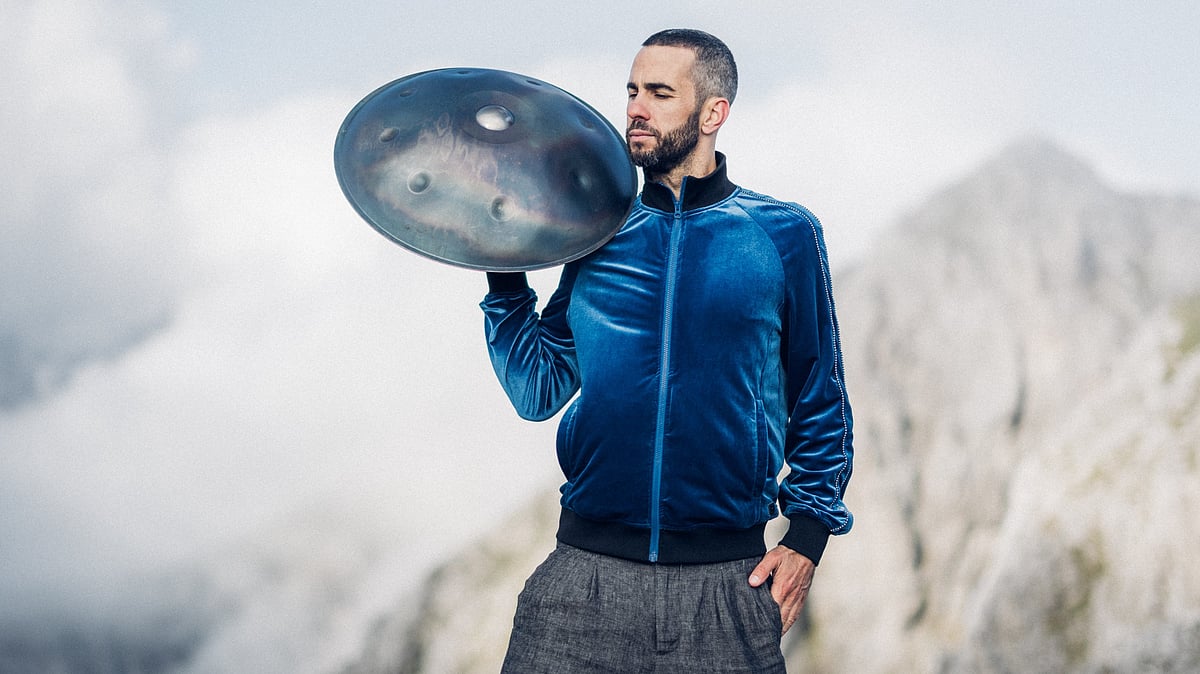
The first thing one noticed was the different arrangement of the percussion instruments. While the standard drumkit was placed at the back, the front was adorned by three handpans next to each other. When Manu Delago arrived on stage at his show at the Nita Mukesh Ambani Cultural Centre in Mumbai, he chose the latter, and began playing with a deft touch.
Consisting of two metal half-shells glued together, the handpan is a relatively new instrument, which became popular after 2007. Says Delago, “Before I started playing it, I played the drums and marimba. The handpan sounded like it combined these instruments. Since it was relatively new, a lot of territories could be explored.”
The Austrian’s musician’s desire to explore new avenues led to collaborations with sitar player Anoushka Shankar on the albums Land Of Gold, Traces of You and Between Us. Later, he worked with Indian-origin artistes like London producer Nitin Sawhney and Singapore-based singer Sushma Soma. He also travelled to new regions, first visiting Bengaluru in 2017 for the Echoes of Earth festival. His trio, which features Clemens Rofner on bass and Isa Kurz on piano, violin and vocals, returned this December, covering seven shows in Mumbai, Goa, Delhi, Kolkata and Bengaluru.
Excerpts from the interview:
How long have you been playing with Clemens and Isa?
Isa was already part of my first own band that I founded in 2006 and Clemens joined about 10 years ago. I played at Echoes of Earth with the trio back in 2017 and ever since wanted to come back to India. I’m glad it worked out with a real tour consisting of seven shows this time.
One of the tracks you played in Mumbai was Rudi, where Isa tells the story of a young drum student and you play drums as per her spoken narration. It’s quite a unique track. How did it come about?
I think in some strange way that track was inspired by Indian konnakol (south Indian rhythmic syllables) but executed in a very different way. I like working with rhythm in playful and fun ways, and Isa is the perfect person to perform it with.
You grew up in Austria, which has a lot of classical music. Was that the genre you were exposed to?
Not a lot. As a child, I was more into pop and rock. Later, I got a bit more into jazz, hip-hop and electronic music. When I moved to London in 2007, I got more into orchestral music which is when I actively listened to classical music. But London also opened up my mind towards many other types, including Indian classical music.
What attracted you to the handpan?
It can sound soft and melodic, but is also percussive and metallic. It’s a very versatile instrument. It’s not attached to a specific culture, genre or tradition. I’d say it’s a global instrument.
After playing the drums, what were the challenges in adapting to the handpan?
It’s a very quiet instrument, so it’s tricky to play together with loud instruments. Also the tonal range is pretty limited, but that limitation was also an inspiration.
How did the collaboration with Anoushka happen?
She first contacted me in 2010 after she saw me perform with (electronic music project) Shpongle. With both lived in London then, so we met up, started recording and playing together. Later we also wrote music together and became good friends.
What was it like playing for her albums and then on Between Us with her and the Metropole Orkest? How did the handpan fit in with sitar and orchestra?
I think the combination sitar and handpan works very well, and especially with Anoushka, it feels very special. I also really enjoyed contributing to the compositions and developing the live sets together, also playing drums and electronic sounds. Anoushka brings a lot of traditional Indian elements into the music but at the same time, she is open-minded and has a good understanding of various other genres.

Could you tell me about your collaboration with Nitin Sawhney and Icelandic singer Bjork?
I met Nitin while working on Anoushka’s album Traces Of You and he invited to play on his albums and on his Royal Albert Hall shows. He’s a musical pioneer and it’s inspiring to work with him. A for Bjork, I’ve been a fan of hers since my teenage days. She’s an absolute legend and I couldn’t believe when she got in touch with me. It was amazing that I ended up being her drummer for more than 10 years, performing over 100 shows.
You also appeared on the song Nature with Sushma Soma on the album Home. What are your memories of that?
That was a remote recording and as far as I remember the song changed quite a lot after I recorded my part. I think Sushma wanted to take it in a different direction but the end result is really nice.
What else are you working on these days?
I’ve just founded a new duo with the American hammered dulcimer player Max ZT. It feels like a very special project and we’ll release our debut album in February. I’m also performing some shows as soloist with a big symphony orchestra in Europe. I’m always open to more collaborations with Indian musicians.

