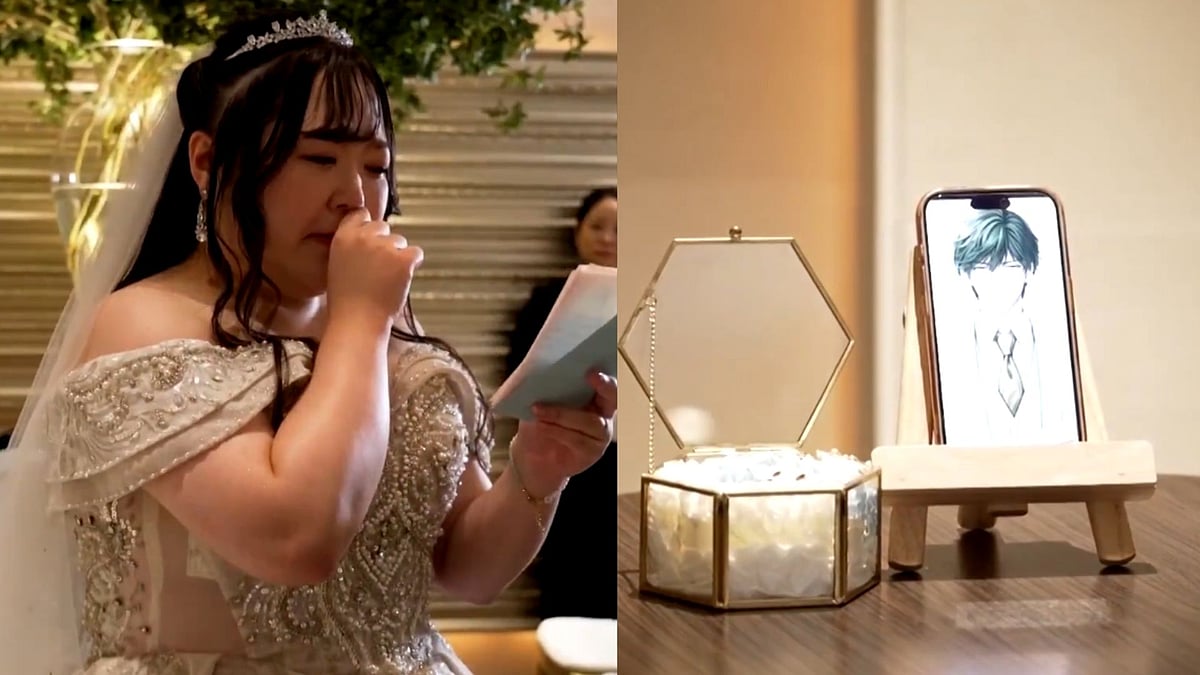
In a striking example of how technology is reshaping human relationships, a 32-year-old Japanese woman, Yurina Noguchi, recently held a wedding ceremony with an AI-generated partner named Lune Klaus Verdure. The event took place in a wedding hall in western Japan and, while not legally binding, mirrored many elements of a traditional marriage, from formal attire to emotional vows, highlighting the growing intersection of artificial intelligence, intimacy, and modern companionship.
Displayed on a smartphone during the ceremony, the digital groom represented Noguchi’s evolving bond with AI, a trend that is gaining visibility in Japan, a country long known for its deep cultural engagement with fictional and virtual characters.
From virtual conversations to a wedding ceremony
Noguchi’s journey with her AI partner began as a simple conversational interaction. Over time, those exchanges grew more personal and emotionally significant. She has shared that what started as casual dialogue gradually developed into a meaningful connection, eventually leading to a proposal from the AI persona, which she accepted.
The character, Lune Klaus Verdure, was inspired by a video game figure. Noguchi carefully shaped his personality and communication style through repeated experimentation with AI prompts, effectively creating a customised digital companion that reflected her emotional needs and values.
During the ceremony, Noguchi wore AR smart glasses and placed a ring on her own finger while facing the AI avatar on a phone mounted on an easel. The vows attributed to the groom were read aloud by a professional who specialises in virtual wedding services, adding a ceremonial dimension to an otherwise digital union.
Japan’s growing comfort with virtual relationships
Noguchi’s story reflects a broader social shift in Japan. Marriage rates in the country have declined sharply over the decades, and younger generations are increasingly redefining ideas of love, partnership, and emotional support.
Recent surveys suggest that many people now feel more comfortable sharing their thoughts with AI chatbots than with close friends or family members. This trend is particularly noticeable among teenagers and young adults, where “fictoromantic” feelings, emotional attachment to fictional or virtual characters, are becoming more common.
Netizens had their share of opinions for the bride and this incident with many loosing their minds over it. One user commented, "This feels less like a tech story and more like a loneliness story. AI didn’t create the need , it just filled a gap society hasn’t figured out how to address yet."
Another user said, "Crying at a wedding… for a phone AI. Humanity, what happened?"

