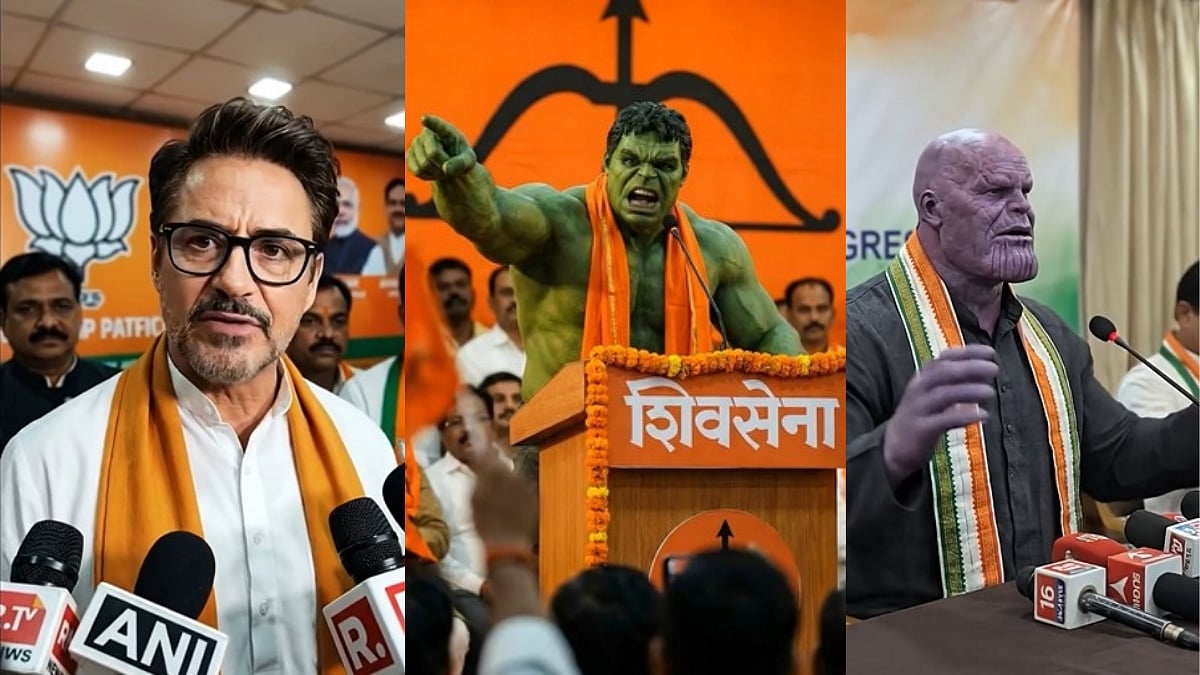
If there’s one thing that made Mumbai’s civic elections feel cinematic, it was Iron Man, Hulk, and Thanos showing up on the campaign trail. Not in rallies, of course, but on Instagram.
When the city geared up for the Brihanmumbai Municipal Corporation (BMC) elections, social media feeds began to fill with AI-generated superhero reels that transformed political chatter into digital entertainment. What started as light-hearted satire quickly became one of the most talked-about elements of the election season.
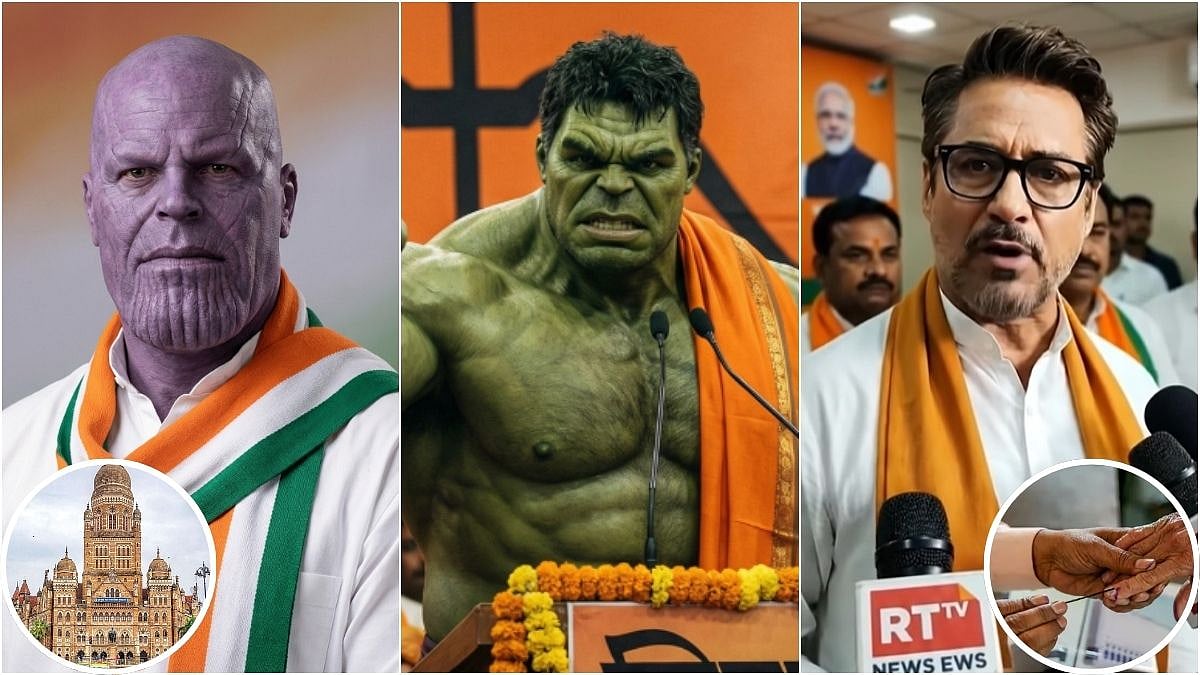
Accounts like @incthanos, @shivsenahulk, and @bjptonystark took over the internet with uncanny visuals of Marvel superheroes campaigning for Indian political parties. Thanos was seen filing nomination papers as a Congress representative, Hulk rallied for Shiv Sena, and Iron Man pledged support to the BJP all rendered through artificial intelligence so convincingly that even a quick scroll could make you do a double-take.
These weren’t official campaign videos, but they spread faster than any poster or press release. Each reel came with witty captions linking the superhero’s traits to the party’s image. Hulk’s strength for Sena’s power, Iron Man’s innovation for BJP’s leadership, and Thanos’ obsession with balance tied cheekily to Congress. Together, they created an alternate version of Mumbai’s political scene, one where pop culture, technology, and humour collided.
From rallies to reels
For years, political campaigning has relied on roadshows, manifestos, and speeches. But in 2026, the tone of election buzz changed, it went viral. Social media became the new rally ground, with creators using AI tools to reimagine the seriousness of politics as a playful, scroll-stopping spectacle.
“I watched the Thanos video before I saw any ad campaign. It was hilarious, but it actually made me google when the BMC elections were happening. So I guess it worked,” shares 22-year-old Akash Shah, a student.
This is the new language of civic engagement, which thrives on memes, relatability, and humour rather than long speeches. For Gen Z, who live their lives online, these bite-sized videos are often their first point of contact with anything political.
Politics meets pop culture
The success of these reels lies in how effortlessly they merge political themes with pop culture. They don’t lecture or convince, they entertain. By using universally loved characters, they bridge a gap between a generation that’s more likely to debate Marvel timelines than municipal policies.
“AI has given satire a digital makeover. People of my age might skip a debate video but share a funny reel in seconds. The message still spreads, just with a laugh,” says Raj Saliya, 24, a social media marketer.
It’s also worth noting that while the humour grabs attention, it opens a door for curiosity. Many viewers end up reading more about candidates, local issues, or even voting dates, something traditional campaigns have struggled to achieve among younger audiences.
Gen Z’s turn in the political spotlight
Beyond the AI humour, there’s another layer to this story where young people aren’t just watching from the sidelines anymore. A new wave of Gen Z voices is taking part in politics, both online and offline.
In Mumbai’s suburbs, Tanvi Dinesh Rao, a candidate from Goregaon, drew attention for her fresh, youth-driven approach to campaigning. Meanwhile, in Dombivli, Pooja Dhatrak, also from the younger generation, turned digital campaigning into a family effort while supporting her parents, Shailesh and Manisha Dhatrak, in their election bids.
Their presence, combined with the rise of AI-driven election memes, highlights something crucial that politics is no longer confined to age or hierarchy. It’s becoming conversational, participatory, and often funny.
“People underestimate how interested Gen Z actually is. It’s not that we don’t care, it’s just that we prefer information in formats that don’t feel heavy or scripted,” says Ritika Rawat, a 24-year-old social media strategist.
Algorithm of awareness
The viral superhero reels might look like jokes, but they represent a real shift in how civic awareness spreads. Platforms like Instagram are now where campaigns, discussions, and even satire shape perceptions.
While these videos don’t guarantee votes, they do spark curiosity and that’s a starting point. A generation that once felt disconnected from local politics is now engaging with it, even if through humour and memes.
Of course, not everyone is impressed. Some older voters see this trend as trivializing politics. But for digital natives, it’s not about replacing seriousness with silliness, it's about finding a new way to care.
As another Gen Z, Pragya Mishra, graphic designer, puts it, “If a 15-second reel makes someone talk about elections instead of ignoring them, that’s progress.”
Future of political storytelling
As the election results are out, the buzz around these superhero reels may fade, but the message they send will linger that politics can be interesting if it learns to speak the language of the internet.
AI, once seen as a futuristic tool, has now become a bridge between generations, turning political communication into a shared cultural moment. What once felt distant or dull is now part of the feed and that’s no small change.
So maybe the next big face of Mumbai politics isn’t a leader or a campaigner, but an algorithm. One that makes us laugh, scroll, and maybe for the first time, they actually listen.

