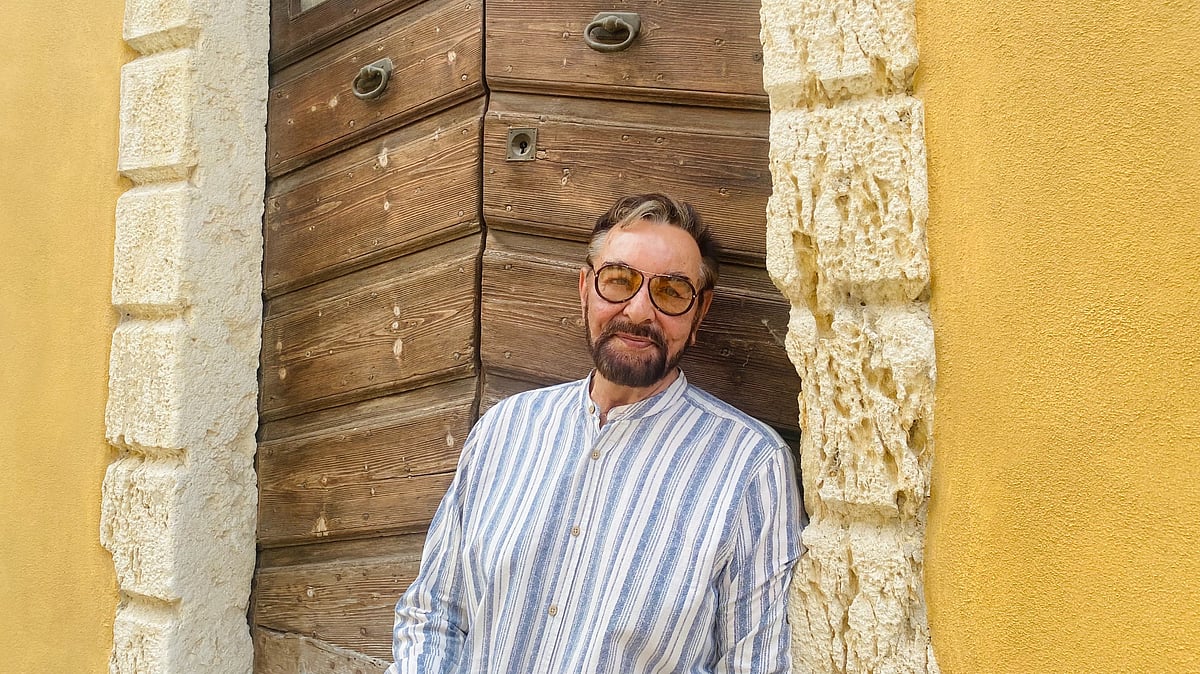
He has spent 50-plus years in film and television apart from doing theater and modelling earlier. Kabir Bedi turned 80 on January 16, complete with a global standing as star and actor, and is now, in his own words, “in one of the busiest and most productive phases of my life”. His wife, Parveen Dusanj, is maha-helpful in facilitating this interview and so is the agency that manages him.
Excerpts from the interview:
What are your birthday plans?
Parveen and I are just trying to go away somewhere. On the 15th, a day before my birthday, we celebrate our 10th wedding anniversary too! So we just want to disappear into sun and sand somewhere beautiful and have a proper party next month!
.webp)


What is the magic behind the fact that you don’t look a day over 60?
I guess positivity, keeping fit with what I eat and light exercises for strength and agility. But I also have one nuska: I use a mix of turmeric, black pepper and honey with either coconut or olive oil, and some cinnamon. I have it either as a spoonful or spread it on bread, like jam. I also do some Yoga and pranayam, and if you don’t have a cholesterol issue, do eat as many eggs as you can!
A cliché: How do you look back at your long journey?
It’s been incredible, covering Indian, Hollywood and European cinema across three major continents. There have been highs and lows. But today, I am busier than I was in a long time with five projects.

Kabir & Parveen Dusanj |
And those are?
I just came back from London where I was shooting USA Vs. Raj. It’s a real story about Dr. Raj Bothra, an Indian doctor in America who was persecuted by the FBI with 54 terrible charges against him. They refused him bail and wanted to break him, but he fought back because he was innocent and was finally acquitted 12-0 by the jury.
Then I have done a very human Italian drama, Questione di Stoffa, about an Indian tailor in Italy and his business rivalry with a local, showcasing problems that immigrants both cause and face. There is the very interesting Detective Shantaram, in which I play the central role of a dementia-afflicted Maharaja from Rajasthan who knows where the royal treasure is stored, but either can’t or won’t tell! Sunny Kaushal plays the detective. My first Kannada film, Koragajja, is also coming, and finally, I have a web series, Teen Kawwe, a spy drama produced by Siddharth Roy Kapur.
You have played such varied roles across the world, been Sandokan the Malaysian pirate, have enacted Shah Jehan thrice, played Tughlaq, real people, heroes, villains—the works! But you first acted on screen, not in Hulchul, as is commonly believed, but in a 1967 TV series called Maya.
That’s true! I was in Mumbai looking for work in advertising and I met veteran actor and then casting director Karan Dewan, and told him that I was an actor from Delhi. He cast me in an American serial shot in India named Maya. Technically, that was my very first screen appearance, even before my advertising stints with Lintas and Ogilvy & Mather, and four years before I officially joined the film industry with Hulchul. The serial even featured Shatrughan Sinha and Amrish Puri!
And since you mentioned Sandokan, let me inform you that this serial that made me a star in Europe and Italy has now been remade with a Turkish actor, Can Yaman, in its 50th release year. It’s a great success and everybody is comparing both us and the shows!
After so much global work, how do you see the differences and similarities in Indian and foreign films?
Firstly, all films have transformed since the time I joined films—the biggest change is technology. Instead of film we shoot digitally now. Special effects are now needed in every film. Budgets have shot up and films have become internationalized. OTT sees films travel across boundaries and production, distribution and exhibition have all changed greatly.
The differences are largely of content, as stories have to relate to any country’s audience. We Indians prefer emotional stories, but Dhurandhar shows that we also like tremendous action. Hollywood is into franchises and now we have started doing the same! But Hollywood plans for two years and shoots in two months. We used to plan for two months and take two years to shoot, but now that is changing and we are getting far more modern in technique. And we are much better at improving and improvising while Americans tend to be very rigid. The Italians plan like Americans and shoot like Indians!
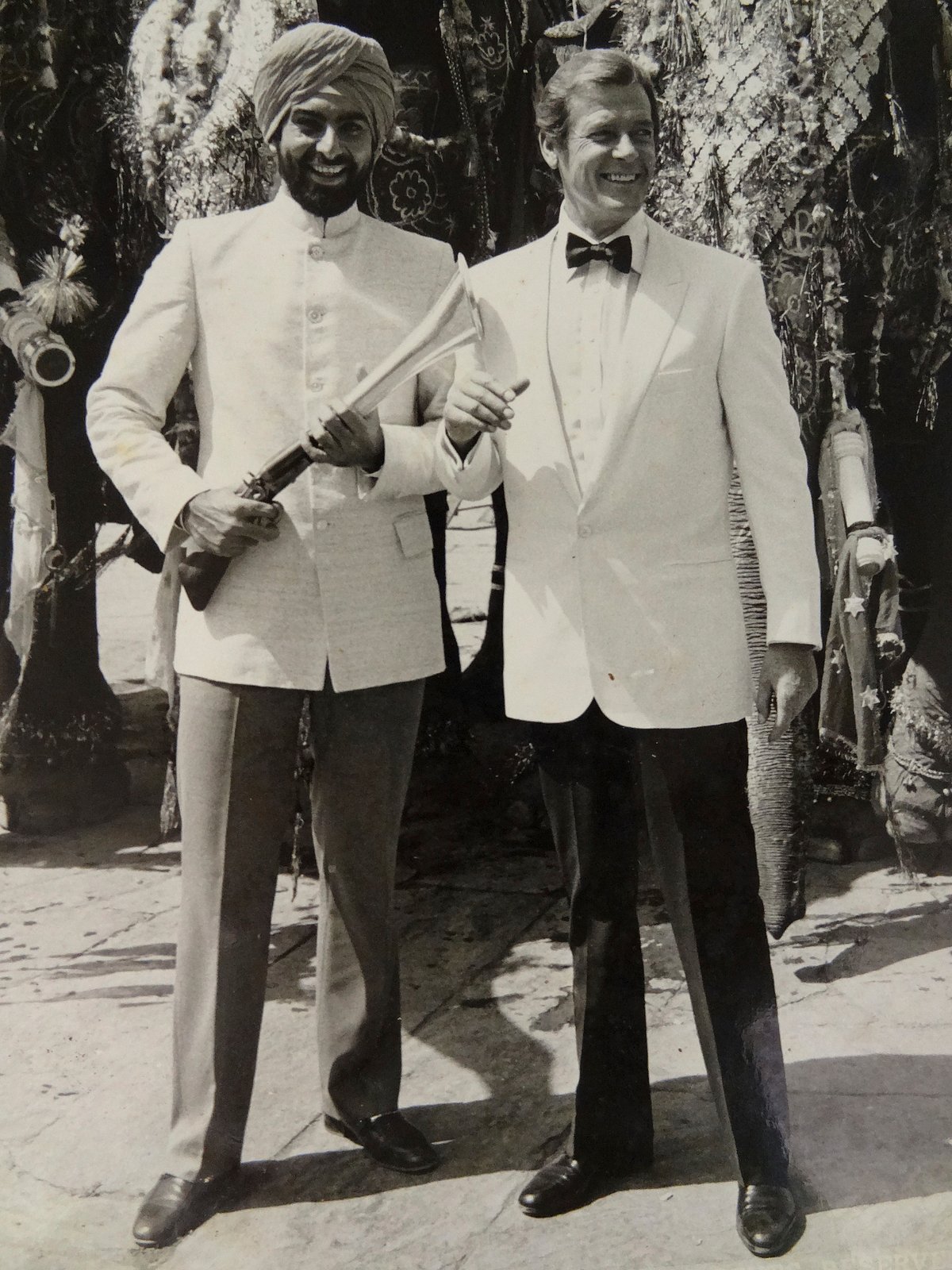
Kabir and Roger Moore |
Also OTT has been very good for actors as there is so much more work. But now, people will go to theaters only for an event film as everything is available at home. Film-going has thus become far more selective, and that is a bigger problem for smaller filmmakers. Small, intimate films cannot offer spectacle.
And how do you look at your many directors across the world?
I have learnt something from each of them. They are great people who teach you more than any acting school or academy can, so I have been very fortunate in that. I must say I have to thank Sergio Sollima, my Sandokan director, who changed my life forever. I feel extreme gratitude towards him. Three projects rank tallest in making me accepted the world over: the other two are Octopussy, in which I was Govinda, the Indian villain. I am the first actor to work in any Bond film and the movie was also shot in India. It was a very proud moment and a wonderful experience, as an Indian, as actor and as human being. Then there is The Bold And The Beautiful—I did that show for a year.
A question I always wanted to ask: What made you think of writing your autobiography, Stories I Must Tell?
At one point, I told myself that I have a great story to tell. A career across three continents, a colourful personal life and lots of memorable experiences— if I didn’t talk about it, who will? And if not now, when? So during Covid, I wrote for 10 hours a day, and in 18 months, my book was ready!
In our first interview, you mentioned that you did not like enacting songs. Still, do you have any favourites among the few you did?
There is one—Jab bhi yeh dil udaas hota hai, which Mohammed Rafi-saab sang for me in Seema! But much as I was reluctant to sing and dance, I am the greatest admirer of song and dance in Hindi cinema! I love watching them—I just don’t like doing them! One of my favourite activities on YouTube is watching songs.
You were to start a production concern called Mango Movies. What happened there?
I did not continue with that as I was travelling so much and could not commit to production. But now I have planned something called Bedi Nation, and when that takes off, you and I will meet up again!