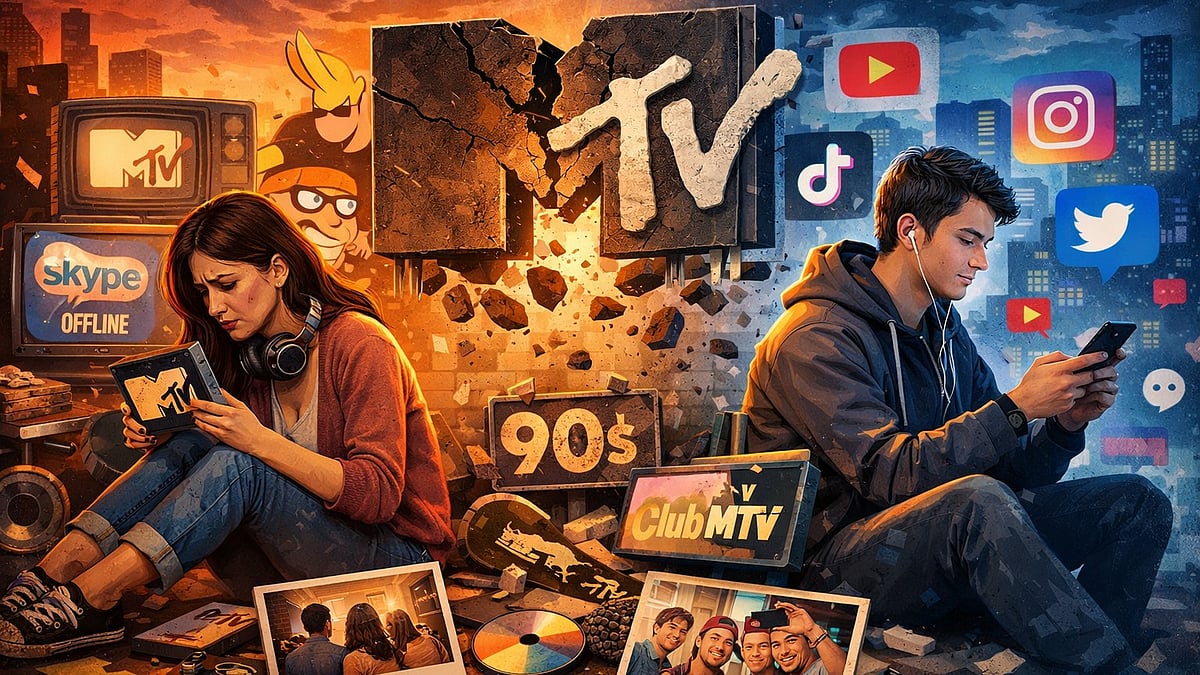
When news broke that several of MTV’s iconic music channels would shut down by the end of 2025, it triggered an unexpected emotional wave across social media. For many Millennials, it felt like a personal loss. For Gen Z, it barely registered.
The closure of MTV Music, MTV 80s, MTV 90s, Club MTV and MTV Live marked another quiet ending in a long list of disappearing cultural institutions. Before this, Cartoon Network shut down its official website in 2024, ending a 26-year digital playground for children of the late ’90s and early 2000s. In 2025, Skype, once synonymous with long-distance connection, officially retired.
Each shutdown sparked nostalgia, commentary and reflection. But reactions differed sharply across generations.
Millennial grief
For Millennials, media was not just content — it was ritual. Television meant fixed time slots, shared anticipation, and collective experience. Music discovery happened through countdowns and curated programming. Cartoons weren’t algorithms; they were appointments.
Sneha Yadav, fashion analyst and NIFT alumna, explains:“Millennials feel the loss of platforms like MTV as a thing. The MTV channel was more than a media outlet; it marked a turning point for us. I remember waiting for time slots to watch movies and learn about music and culture like millions of people. Like Cartoon Network, MTV shaped our identity. When these platforms disappear, it feels like an important chapter of our lives ends.”
That sense of ritual shaped emotional attachment. Ankit Choudhary, 29, a Mumbai-based professional, says the news unsettled him more than he expected. “When I heard MTV was shutting down its music channels, it hit me suddenly. It was part of how I discovered music and culture. It felt like a memory turning off.”
Mridu Malhotra, 30, echoes the same feeling. “I grew up timing my day around shows and video premieres. That routine itself was emotional. Hearing it was ending felt strange — like something permanent was slipping away.”
For Millennials, media platforms were emotional landmarks — reminders of growing up, friendships, rebellion, first crushes, and shared conversations.
Raised in permanence
Motivational speaker Harrish Sairaman explains this attachment through cultural conditioning. “Millennials mourn media because we grew up when platforms felt permanent and formative. MTV wasn’t just content; it was a shared cultural clock, shaping taste, rebellion, and identity. When it shuts down, it feels like losing a chapter of ourselves.”
He contrasts this with Gen Z: “Gen Z was raised in an ecosystem of constant beta — apps die, creators migrate, trends reset weekly. Their loyalty is to people and moments, not formats. For millennials, media endings feel like endings. For Gen Z, they’re just updates.”
Gen Z detachment
For Gen Z, media has never been stable. It has always been replaceable.Kartik Agarwal, a Gen Z creative professional, says, “I honestly don’t even think of MTV as a destination. I grew up with YouTube and Instagram. If a song is good, I find it there. I don’t care what channel it comes from.”
Similarly, Nikita Wadhva, 20, shares, “I have grown up changing schools, changing cities, changing mindset. These things don’t affect me as much as they should. Anyways, yes I am from a generation brought up watching more of Netflix than anything else.”
To Gen Z, the idea of mourning a platform feels outdated. Content is not tied to institutions — it lives wherever attention goes.
This isn’t emotional coldness. It is survival in a fast-changing digital world. Psychologist Dr Harshant Upadhyaya of Way to Hope, Mumbai, explains: “Millennials seek meaning through continuity and shared memory, while Gen Z seeks safety through movement and adaptability. One generation mourns because media once felt enduring. The other shrugs because impermanence has always been the norm.”
Not everyone fits neatly into boxes. Avirup Nag, 27, born in 1998, stands between the two worlds. “As a Gen Z born in 1998, my connection with the TV era is still very strong. Coming back from school to Tom & Jerry and waiting for favourite songs on MTV or Channel V was excitement. We didn’t have smartphones to scroll endlessly, so moments felt fuller. Today, when we think of those days, it naturally makes us emotional because that kind of shared joy feels rare now.”
Avirup’s voice reminds us that emotional attachment isn’t only about generation — it’s about how media was experienced.
When icons disappear
MTV is only one example. Cartoon Network’s website shutdown in 2024 shocked many who spent childhood hours playing games and watching clips online. Skype’s retirement in 2025 quietly ended a tool that once symbolised global connection.

Each closure reflects a larger truth: media is no longer built to last — it is built to evolve. And with evolution comes emotional displacement. For Millennials, these shutdowns feel like personal losses. For Gen Z, they feel like a natural transition.
Beyond nostalgia
This divide isn’t about who is more sentimental. It’s about how identity is formed. Millennials grew up with a shared culture. Gen Z grows up with personalised culture. Millennials remember when something happened. Gen Z remembers how it made them feel — regardless of platform.
Millennials carry emotional permanence. Gen Z carries cultural mobility. Sneha Yadav summarises it: “Millennials grieve the loss of institutions. Gen Z simply follows the flow.”
As more platforms fade into history, this generational divide will only deepen. Today it is MTV, Cartoon Network and Skype. Tomorrow it will be apps that Gen Z itself once loved.
And perhaps, when that happens, Gen Z will finally understand what Millennials feel today. Because the media doesn’t just disappear. It takes pieces of our past with it. And how we react to that loss reveals not just our age, but the era that shaped us.

