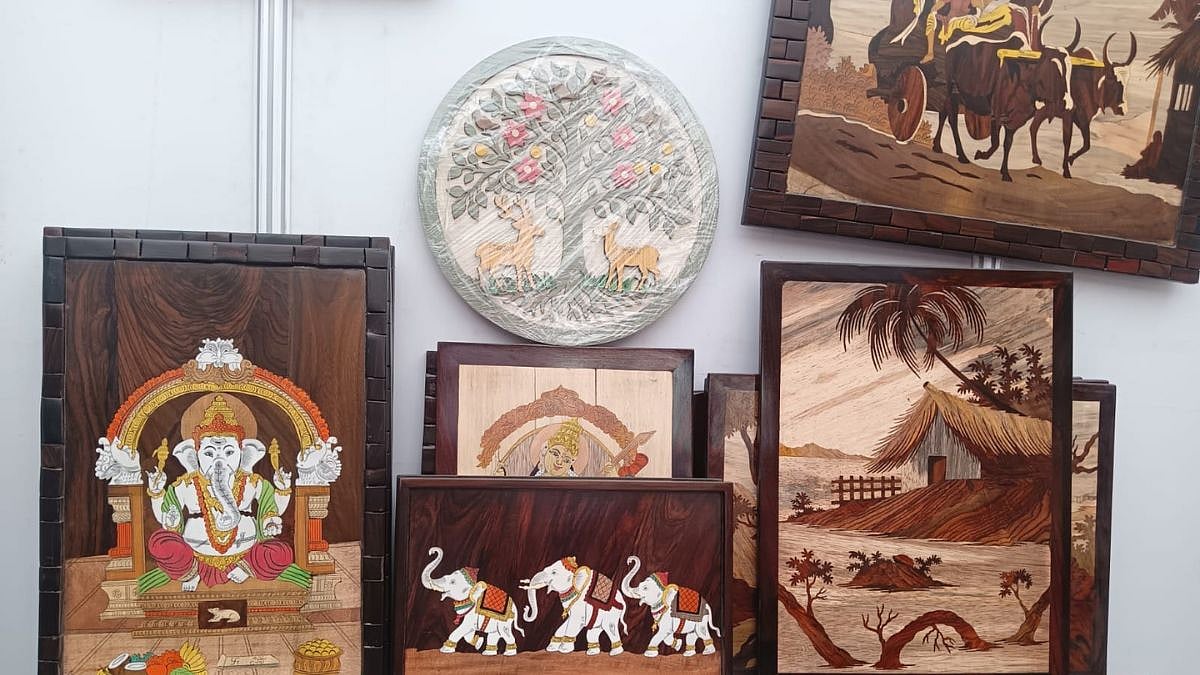
For the first time at Mumbai's iconic Kala Ghoda Arts Festival, a rare GI-tagged art form from Karnataka's royal city of Mysore is drawing curious crowds. Completely crafted from wood and natural wood colours, Mysore's beautiful wooden art, traditionally seen in palaces, has found a new audience in the city.
Speaking to Free Press Journal, Tanuja, the artist shared insights into this intricate heritage craft, its painstaking process, and its cultural significance.
“This is not a painting at all. Everything you see is completely made of wood,” the artist explains. “It is a GI-tagged royal art found only in Mysore. You’ll mostly see it in the Mysore Palace.”
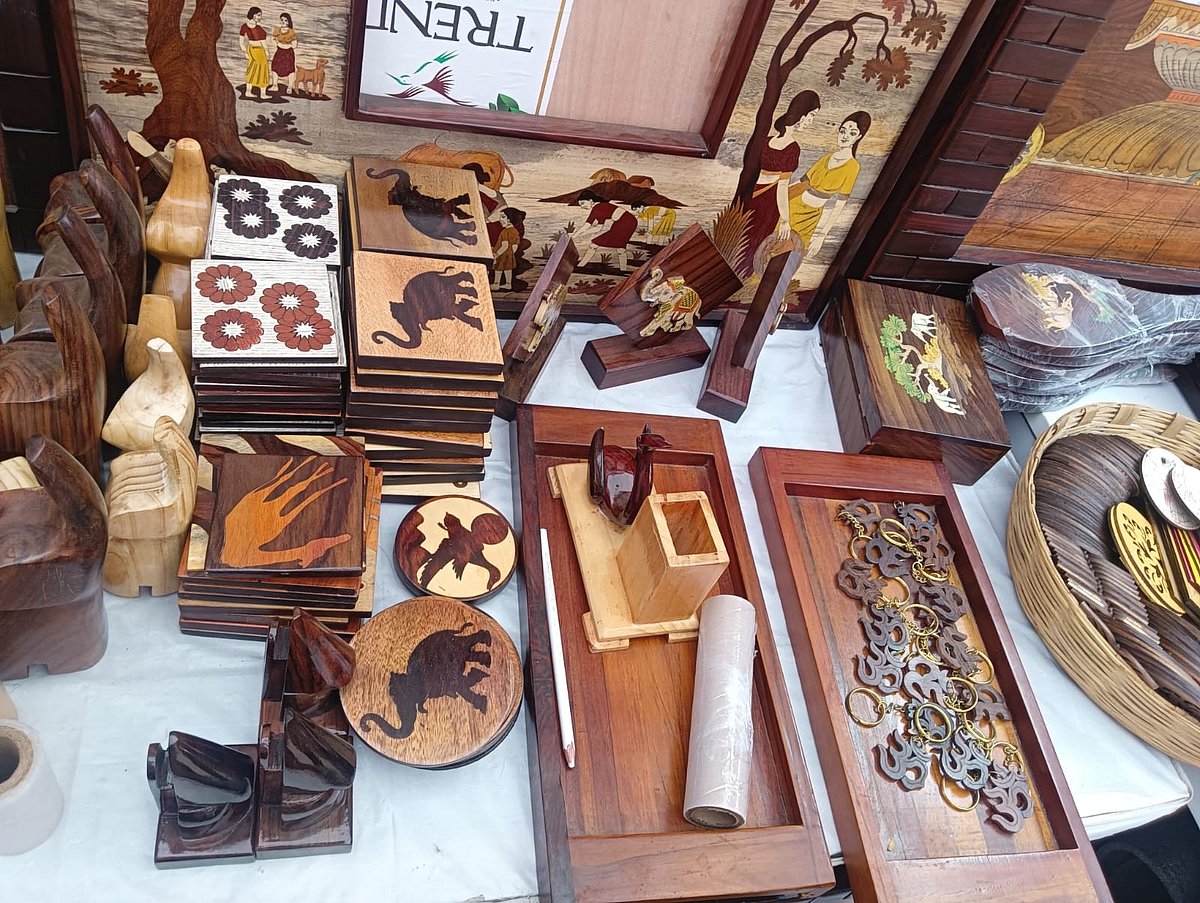
FPJ/ Sunanda Singh
Traditionally reserved for royalty, the art was later introduced to the public through jewellery boxes, wall hangings, and decorative panels. What makes it unique is the use of natural colours derived entirely from different types of wood, sourced locally.
“For yellow, we use jackfruit tree wood. For white, we use banyan tree bark. Black earlier came from ebony wood, which is now very rare. Maroon shades are made using wood from the Andaman and Nicobar Islands,” the artist says, adding that no artificial colours or paints are used.
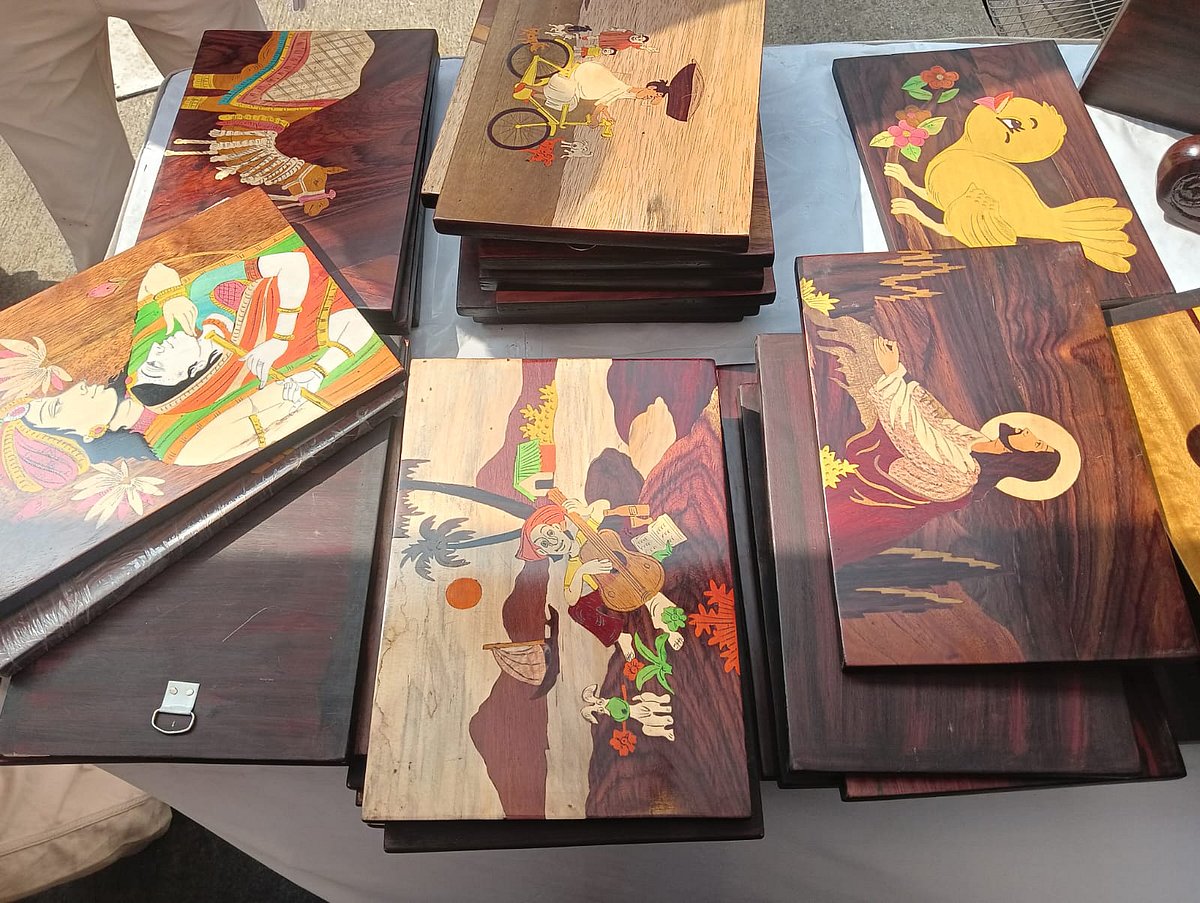
FPJ/ Sunanda Singh
At least five to six skilled artisans are involved in creating a single artwork. Even a small piece takes two to three days to complete.
“My father-in-law started this. My husband continued it, and now my daughters are part of the third generation,” she shares.
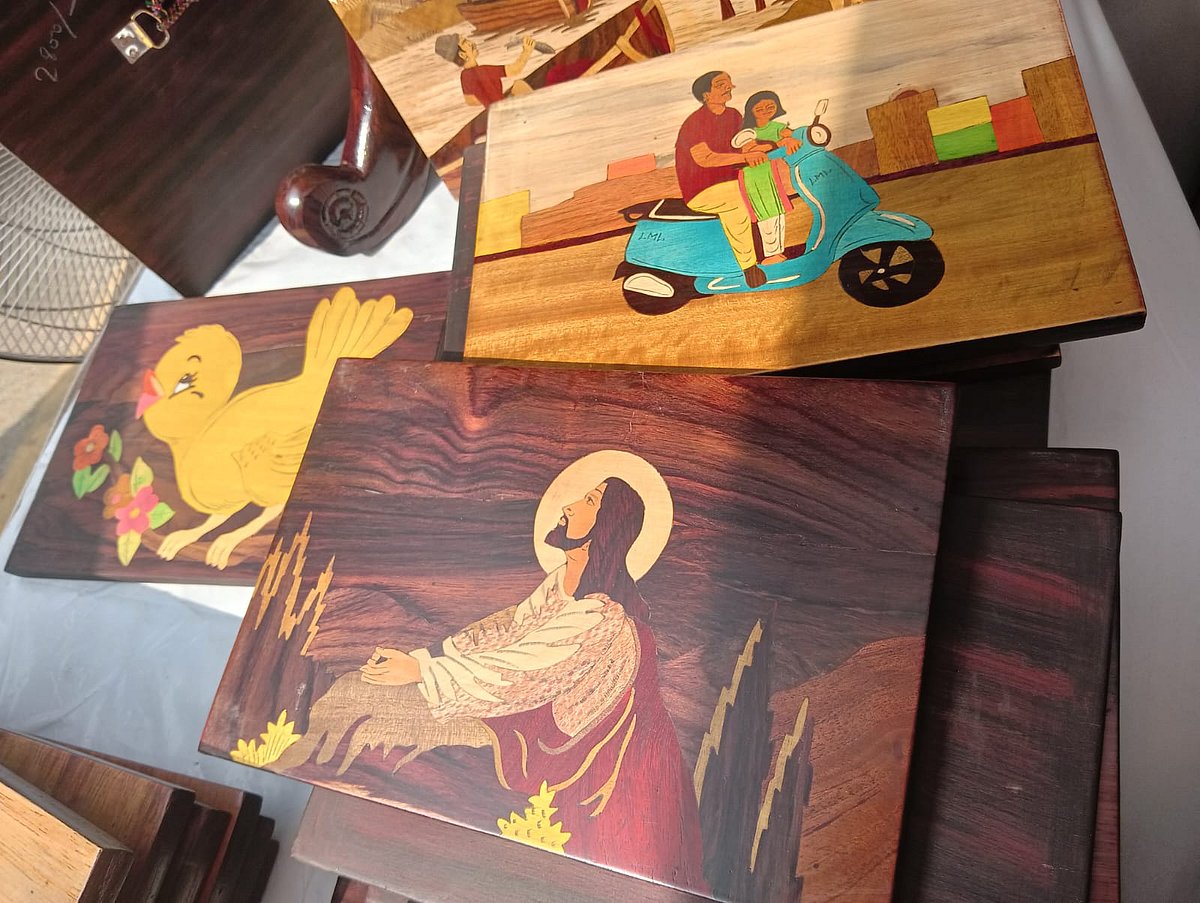
FPJ/ Sunanda Singh
For the artists, the wooden inlay art is more than decor; it is an identity. "This art represents Mysore, its culture, traditions, and royal heritage. From Dussehra processions to tribal stories, we can depict anything. It's not limited to religious themes," she says.

