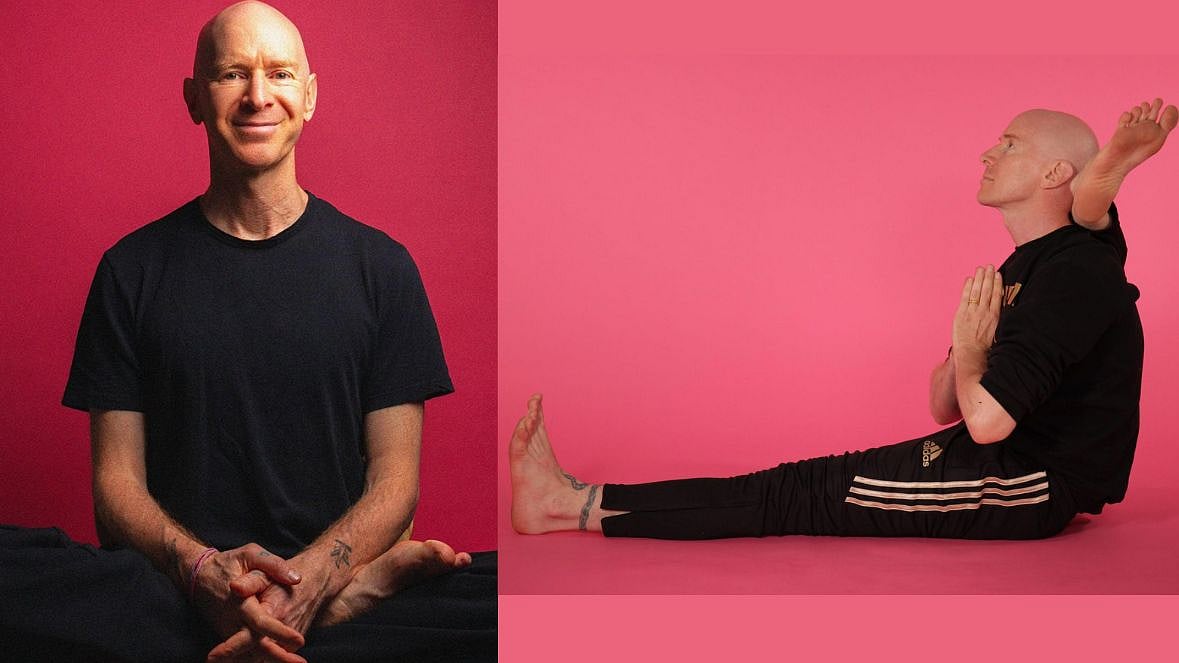
On this episode of Buzz by the Bay, Anushka Jagtiani speaks to world-renowned yoga teacher and author Eddie Stern. Known as the yoga instructor to stars like Madonna, Gwyneth Paltrow and Chris Martin, he opens up about why he dislikes the "celebrity" label and dives deep into the traditional roots of yoga.
Eddie shares his incredible spiritual journey from a young Jewish boy in New York to the ashrams of India.
The episode also tackles modern misconceptions of yoga as a physical exercise and America's problematic marketing of yoga.
Anushka: You're not new to India. You have been coming here for decades now and have a deep spiritual connect with the land?
Eddie: I started coming to India in the late 1980s. I spent a lot of time traveling through India, going to all the big temples and the smaller temples, and I would stay in each of them.
So, every time I'm in India, which is every year or twice a year, I make sure to go to any of the holy places I can, and just keep connecting to this spirit of India, which has really guided my life.
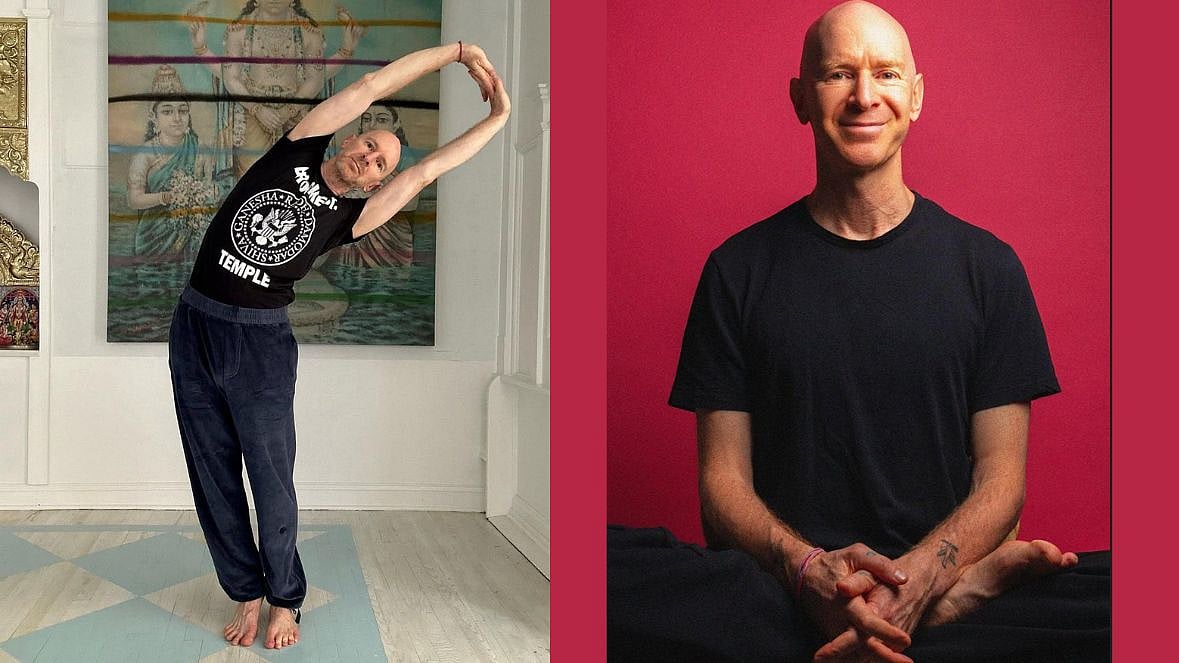
Eddie got into yoga in the 80s and it helped him find meaning and purpose in life |
Anushka: In what way has India guided you and changed your life?
Eddie: So, there is a very deep tradition of listening in India, and I feel that's one of the things that when I go to these holy places, I want to be receptive. India teaches me how to try to be receptive on different levels.
Anushka: Yes. Listening is one of the cornerstones of Hindu tradition. In Vedanta, it's called Shravan.
You're from a Jewish family in NYC. Can you tell us about what made you take the decision to pursue yoga and then travel to India?
Eddie: Well, I wasn't raised religious. We had extremely little religion in my family. So, it wasn't like I left Judaism to become a Hindu. I didn't grow up being Jewish. I just grew up being a New York City kid. After high school, I started a business. I was screen printing T-shirts and selling them. I didn't go to college. I just ran a business.
Then I got into yoga around 1986/87, and by 1988, it had overtaken my life because really what I was looking for, was some meaning and purpose in my life in New York.
When I was 15 or 16, I was searching for who I was and what was important about life. Like, what did it mean to be alive? And that brought me to yoga. And when I found yoga, I had a structure for my quest. And then, it was all I wanted to do. So, yoga grabbed me.
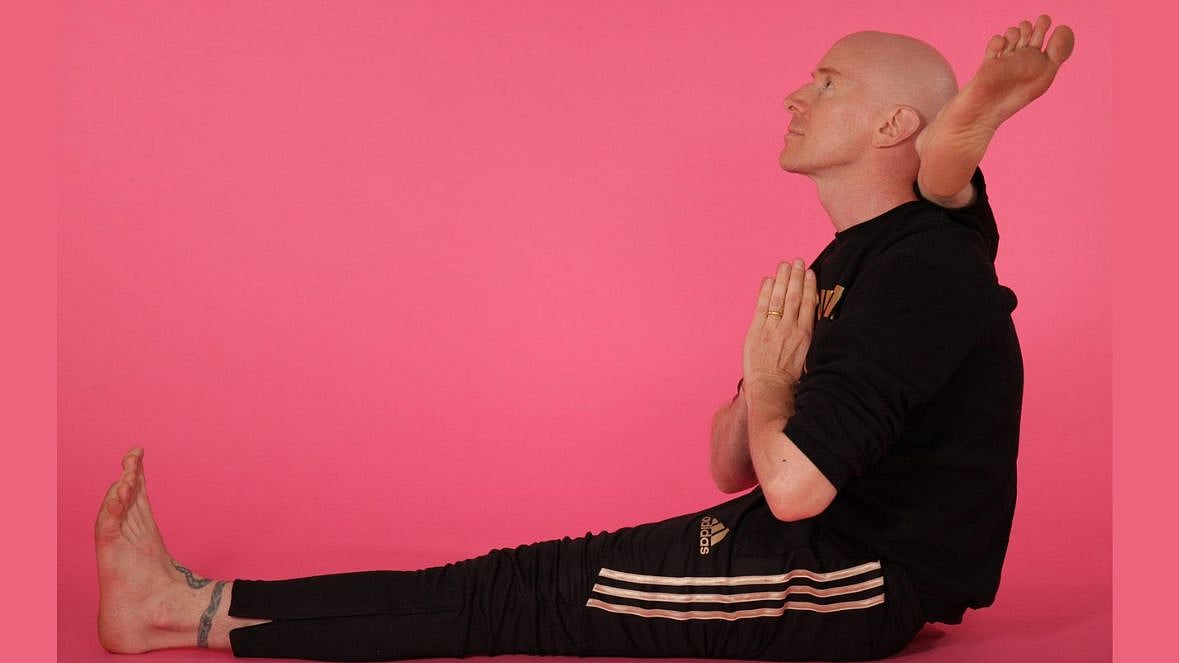
Every time Eddie visits India and then heads back to NY, something in his life shifts |
Anushka: When you set off for India after you discovered yoga, which city did you travel to?
Eddie: I landed in Bombay. It was just right after Christmas in 1988. I came with Swami Shankara Nanda from Shiv Ananda Ashram. We stayed in Pali Hill. After that, we went down to Kerala, and I did the Shivananda training there.
Anushka: I've heard you say, in another conversation which I saw, that you feel India is your karma bhumi?
Eddie: It is many types of bhumis here. It is karma bhumi. It is tapas bhumi. This (India) is the place where transformation happens, and where you work out karmas and you know, America, they say, is the place where you enjoy and reap your karmas. Here (India) is where you work things out. Every time I come to India — every single time — and it's been a lot of times, when I go back to New York, something in my life shifts.
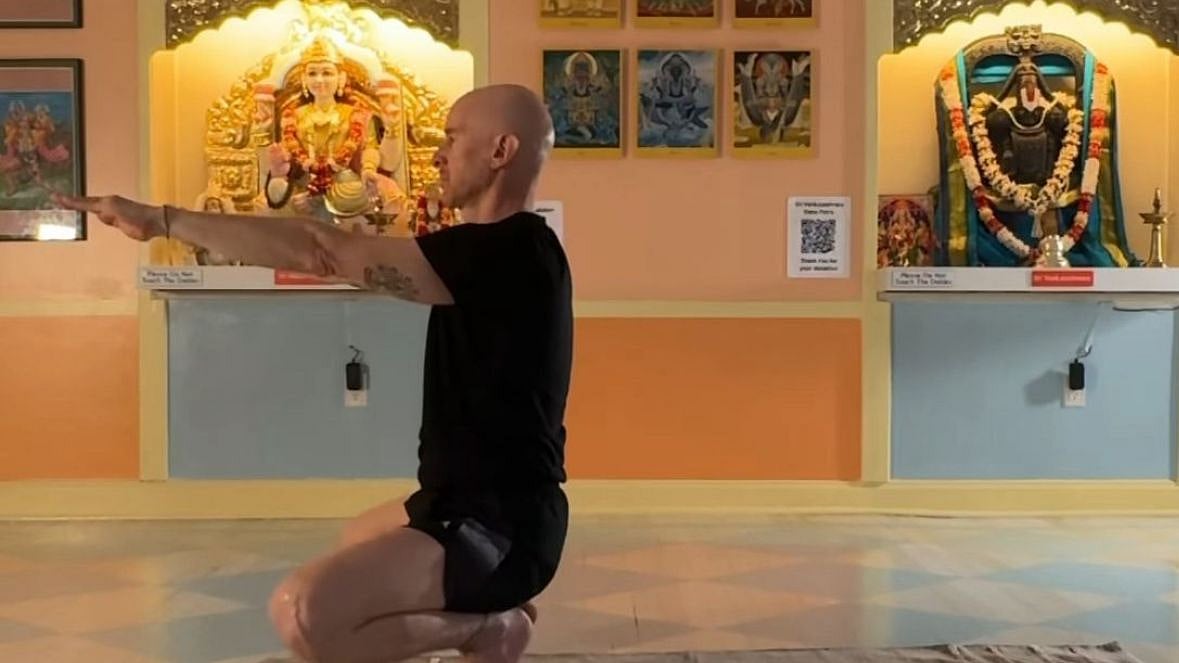
Eddie objects to the way that America has used yoga asanas as a sales pitch |
Anushka: You prioritise traditional sources of yoga knowledge in your teachings such as The Patanjali Yoga Sutras, etc. These days yoga is largely associated with the physical practise of asanas or postures. People think of it as an exercise. People don't even know that asanas are just one of the eight limbs of yoga (Ashtanga). Is that largely due to the way America has marketed yoga?
Eddie: It's 100 per cent how they've marketed yoga, and 100 per cent why people have such misconceptions about it, and it's been going on for a long time.
There has been marketing about yoga directed towards asanas since the mid 1900s or early 1900s where it was fetishized, you know, standing on your head or sitting in lotus or all these things.
But now, it's much worse with yoga brands like Lululemon, all of these companies, and magazines like Yoga Journal, which have been very, very heavily focused on the presentation of young, beautiful, fit bodies. And this marketing has infiltrated society.
I just object to the way that they have used yoga asanas as a sales pitch, and I think that it's done a lot of harm to the perception of yoga in the world. They have created the impression that yoga is for white, wealthy women.
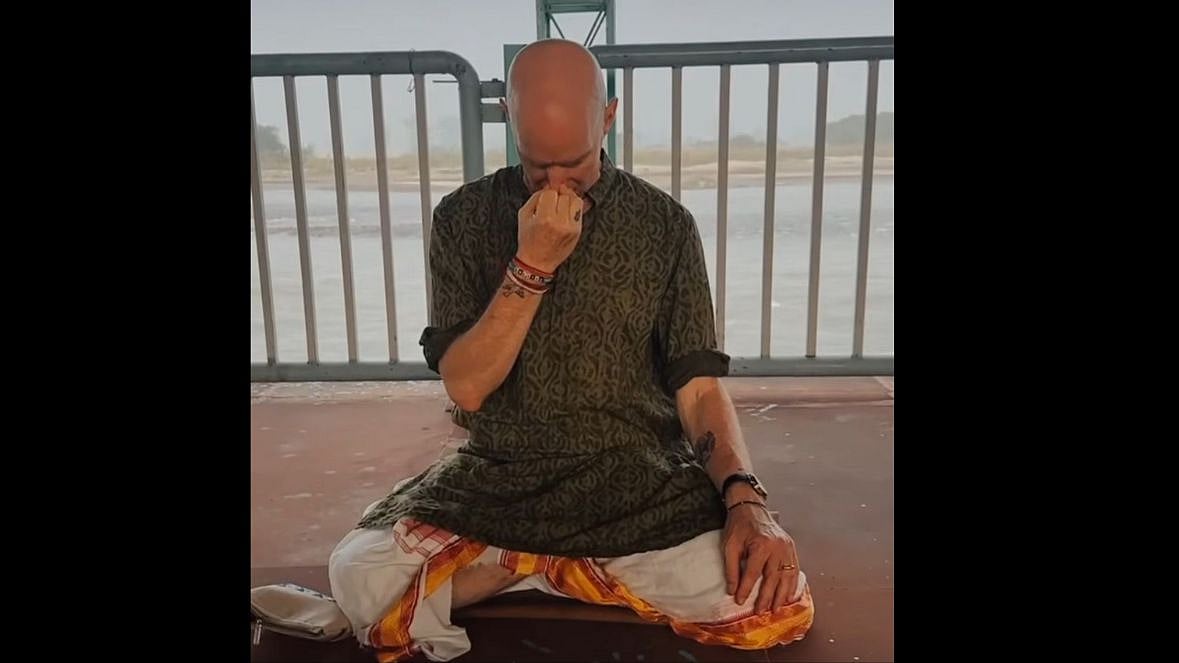
According to Eddie, India is the place where transformation happens, America is where you enjoy and reap your karmas |
Anushka: Maharishi Patanjali lists the eight limbs of yoga called Ashtanga. Asanas or postures are the third limb. Asanas are an integral part of yoga, but what is their real purpose?
Eddie: The mind and body are a continuum; there's no distinction or separation between the mind and the body. So, something that happens in the mind, happens in your body. At the same time, something that happens to your body, happens to the mind.
The mind is a substance. It's a field where, when ripples occur within it, those ripples are turning into things that we identify as thoughts or as memories.
This entire physical frame is also the field of the mind. When you do asanas, you're quietening the body through an asana in order to quieten your mind.
At the same time, it's not that you do an asana, so that later you can quieten the mind. You're quietening the physical field of mental manifestation.
There's a process of quietening that you go through, so that at the end of an asana session, you've achieved a still point — a quiet point. You're not agitated; you're not exhausted.

