At a time when Goa is witnessing the steady erosion of its heritage and mounting threats to its environment, art reflects the changing scenarios. At the Visual Arts Awards in Panjim, hosted by the Fundação Oriente, artists use their canvases to reflect forgotten histories and fragile ecosystems. The recently concluded edition saw 104 submissions across drawing, paintings, photography, printmaking, sculpture, and other genres.
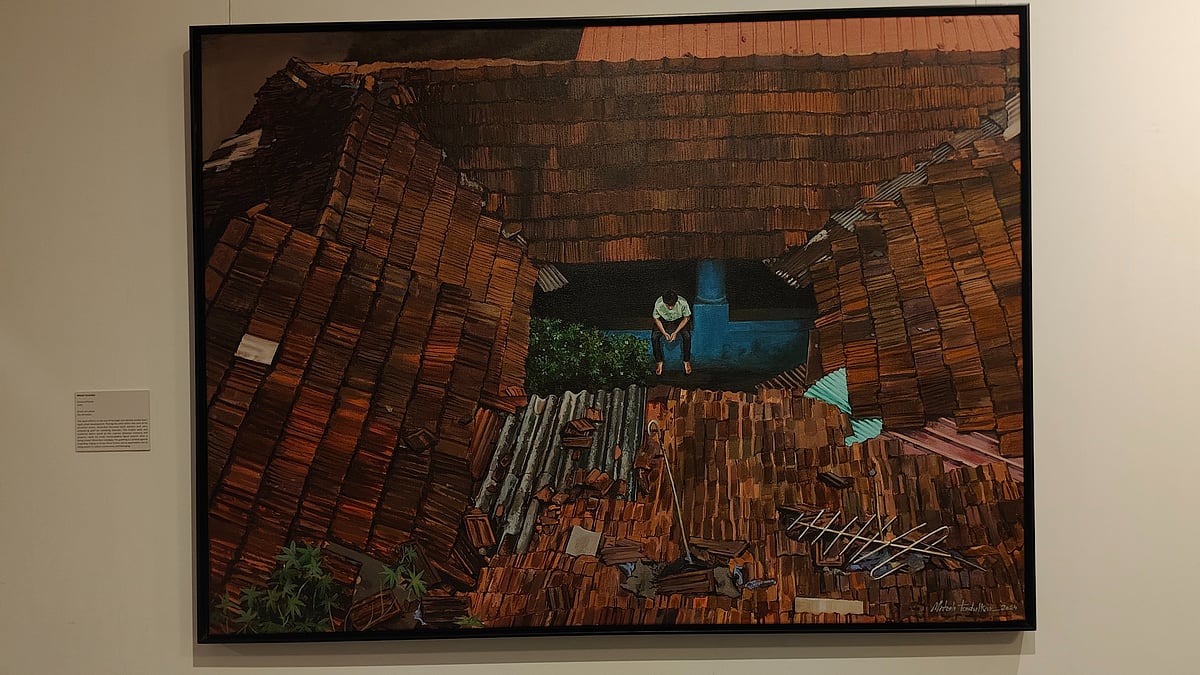
Mapusa-born artist Mitesh Tendulkar and first place winner of the competition drew inspiration from the 500-year old home in his city. For him, it represents layered histories that continue to exist even as they risk being forgotten. “These spaces carry memories, identities, and ways of life that cannot be replaced by new structures,” says Mitesh. Describing his work as a “quiet protest against forgetting,” he adds, “It urges us to see these homes not as expendable structures, but as living vessels of culture, community, and belonging. Once these spaces are gone, they cannot be recreated—only remembered.”
The scattered tiles on the roof speak of a rupture between memory and progress, while the small, contemplative figure mourns what is being erased. The aerial perspective allows the viewer to see the house as a whole—its gaps, exposed interiors, and fractures resembling an open wound. “This perspective creates a sense of distance and vulnerability,” Mitesh explains, “placing the viewer in the position of a silent observer, much like time itself.”
Nandini Raiker |
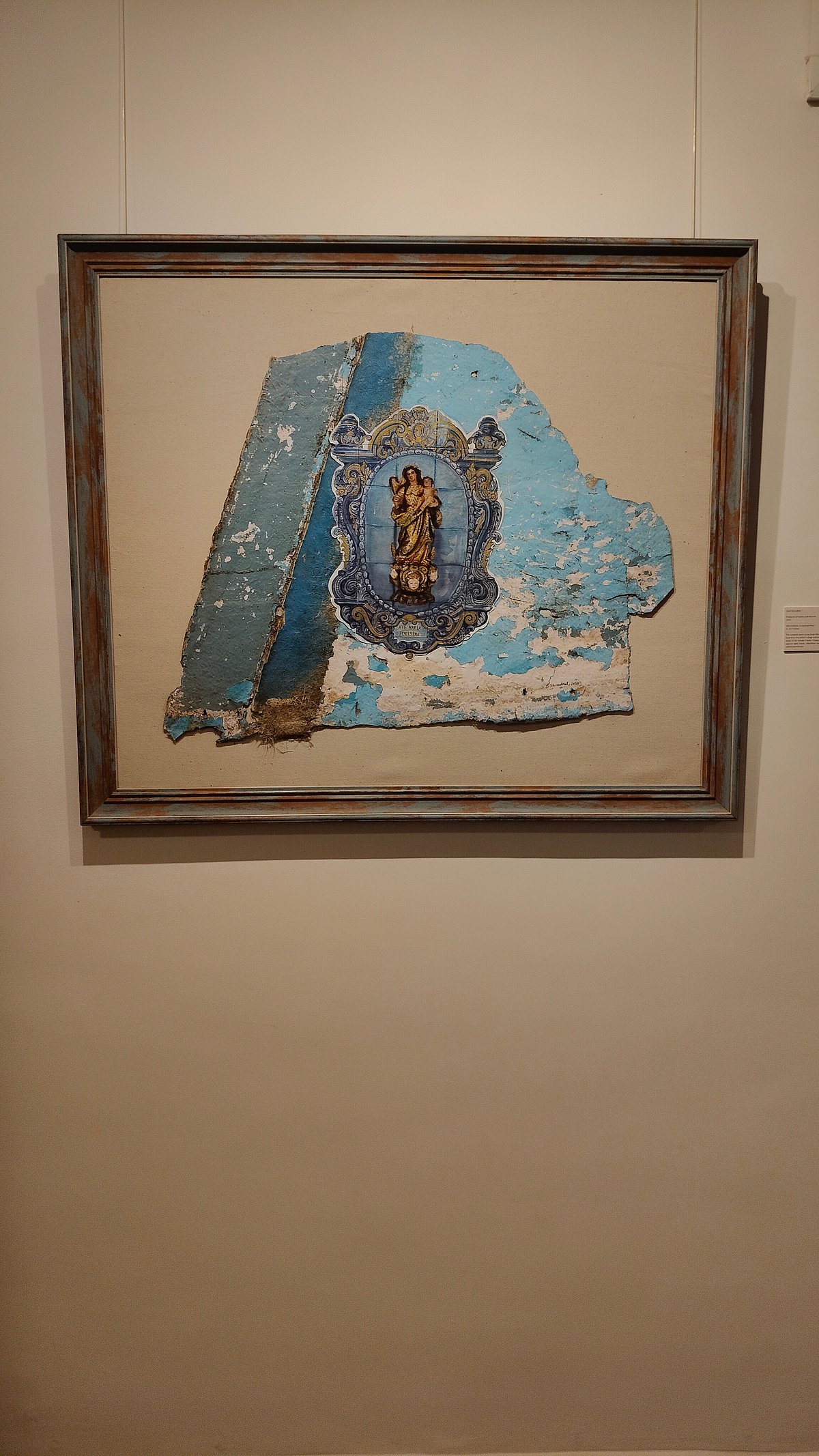
On the opposite wall, second-place winner Sunil Shirodkar's Protector of Sailors and the Sea, reflects faith and tradition. The mixed-media piece showcases the coastal life of Siridao village, where the artist grew up. The work is a tribute to the sea and the communities shaped by it—marked by reverence, risk, and resilience. “The ocean is generous, but it is never gentle. It remembers every journey,” Sunil writes in his concept note. His artwork incorporates fragments of an old fishing boat, its blue paint cracked and peeled by salt, storms, and time. At the centre rests the image of Mother Mary holding the child Jesus, her calm gaze set against the chaos of the waves. The chipped blue paint symbolises the sea, while the raw fabric beneath speaks of humility and endurance, much like the lives shaped by tides and prayer.
Sunil Shirodkar |
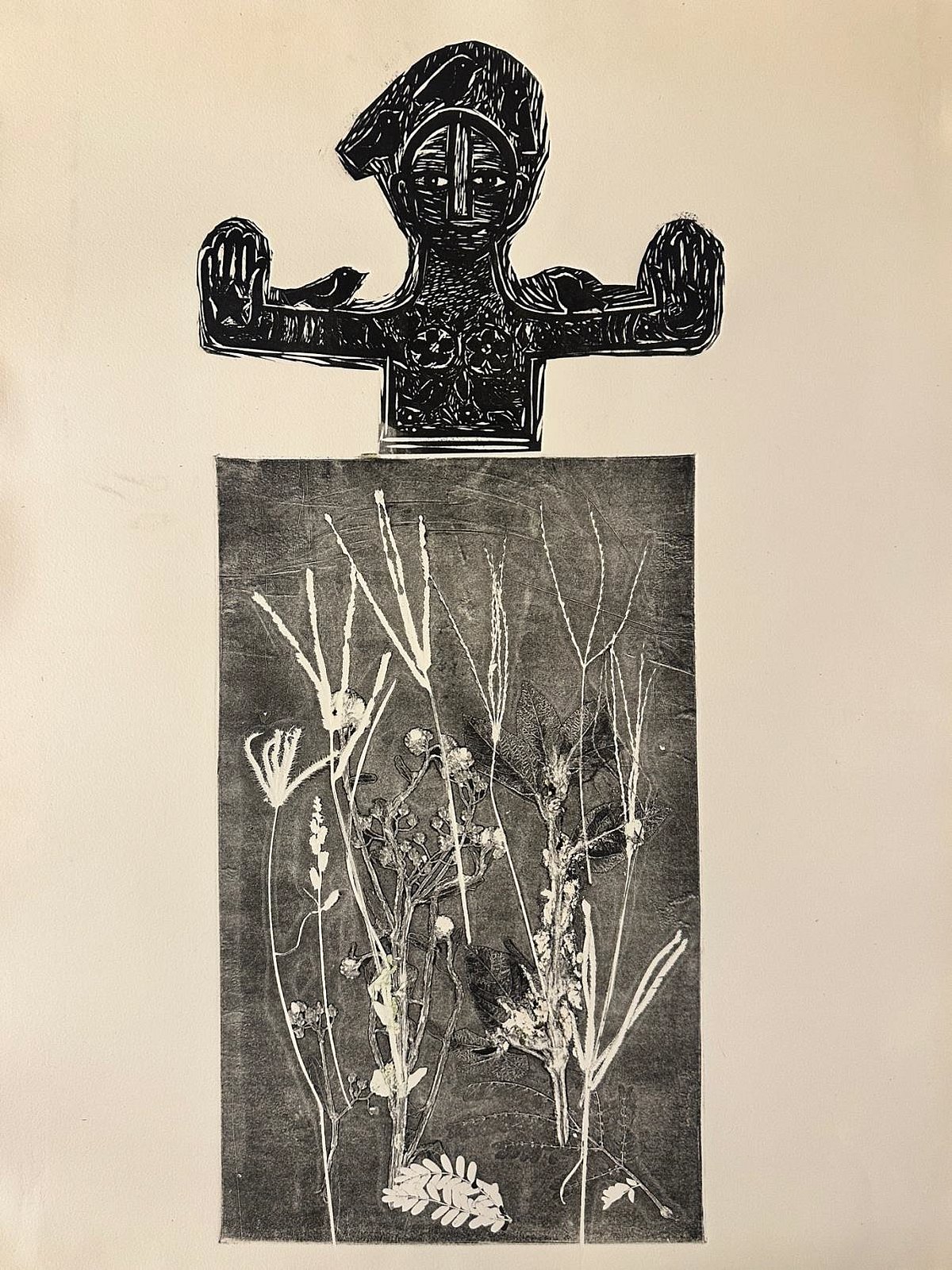
Sonia Rodrigues Sabharwal’s Healer of the Ecosystem addresses an urgent need of the time. “These works are a statement made to society, community, and all of us as humans,” says Sonia. “The Earth is a rare gem—it has all the natural resources to look after every being, big and small.” She believes unchecked greed has led to widespread environmental damage. “Goa bleeds with deforestation, hill cutting, coal transportation and holding, and sand silting. Every day, at every moment, something is dying.”
Sonia Rodrigues |
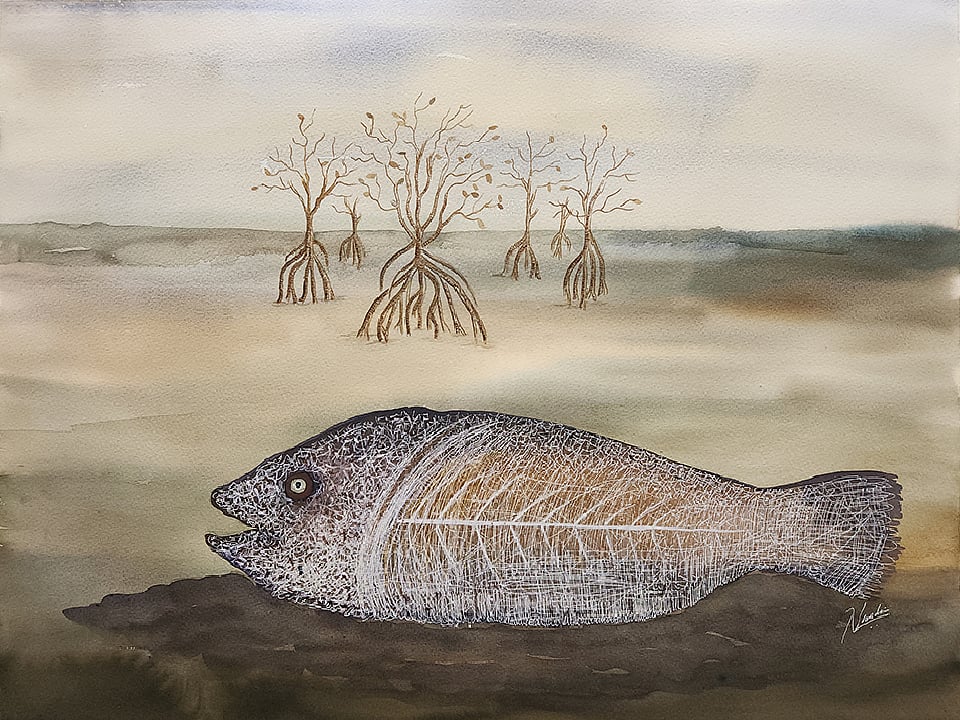
Another artist engaging with environmental concerns is Nandini Raiker, whose work Dystopia emerged from her observations of Goa’s changing landscapes. “Places that were once alive with mangroves, birds, and water bodies are being replaced by concrete, highways, and development projects,” she says. “What disturbed me was not just the physical destruction, but the slow disappearance of entire ecosystems.” The painting presents a sombre vision of the future—a world where nature has been pushed to the edge, dry, silent, and forgotten. A withered dried fish lies on the shore against the mangroves. Departing from her usual bright and positive palette, Nandini describes the work as a deliberate shift. Using watercolour and acrylic, she creates sharp contrasts and textured layers that evoke dryness, decay, and stillness. Through Dystopia, she wants viewers to feel the silence and loss—and to question what led to it. “If art can spark even a small moment of awareness or responsibility toward nature,” she says, “it has done something meaningful.”

The conflict between man and tiger finds a place in Anish Abhijit Naik's Waaghro. He captures the transformation in the hills of Vagheri and the tussle between the tiger and the capitalist. The concrete fencing pillars across the painting serves as a metaphor for rapid construction encroaching on indigenous lands. The tiger resists this change.
Together, the works at the Visual Arts Awards showcase form a quiet yet powerful call for awareness and protection. The show ends on February 7, 2026.

