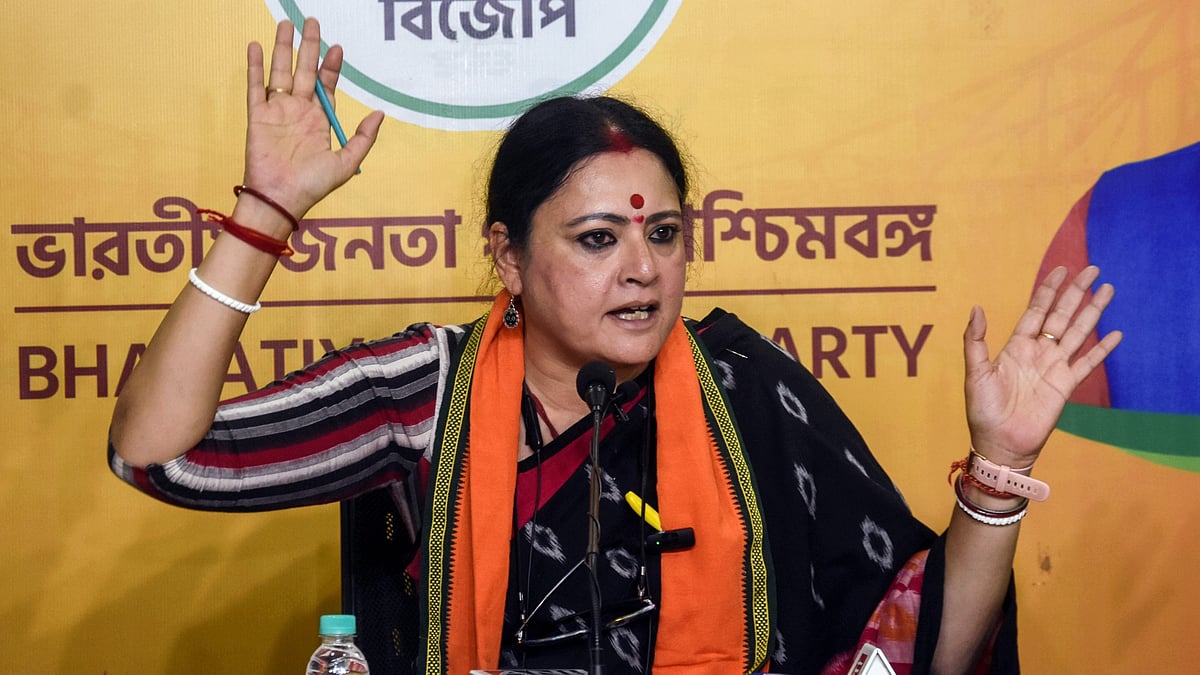
Kolkata: Bharatiya Janata Party (BJP) MLA Agnimitra Paul on Sunday strongly opposed the narrative of “Hinduism needs protection from Hindutva,” as being set by Trinamool Congress (TMC), arguing that the premise itself was flawed and diverted attention from what she described as “real and ongoing threats” faced by Hindus in India and neighbouring Bangladesh.
Paul questioned by there has been selective condemnation referring to Hindus allegedly killed or persecuted in the recent months in Bangladesh, naming individuals such as Dipu Das, a textile worker who was burnt alive; Sarat Chandra Mani, who she said was hacked to death after returning from abroad; Rana Pratap Bairagi, a businessman and media house owner who was shot dead; and others.
She also referred to the alleged torture and gang rape of a Hindu widow, describing it as an example of violence that “fails to trigger secular outrage”.
“Before deciding whether Hinduism needs protection from Hindutva, we must confront a more uncomfortable truth—why does Hindu suffering so often meet with secular silence?” Paul questioned.
Rejecting the narrative of the ruling party that Hinduism and Hindutva are opposing forces, the senior BJP leader described Hinduism as “a civilisation—ancient, plural and resilient” and Hindutva as “civilisational self-awareness”. “To argue that Hinduism needs protection from Hindutva is to argue that a civilisation must apologise for recognising itself,” she said.
Paul also cited incidents from West Bengal such as murders in Murshidabad’s Samserganj, alleged displacement of Hindu families in Birbhum, Malda and Murshidabad, and what she described as repeated intimidation of Hindu villagers in parts of South 24 Parganas. She alleged that during Hindu festivals in districts such as Howrah and Hooghly, processions faced restrictions, while violence was “sanitised as clashes”.
Across borders and political systems, Paul claimed, the pattern remained the same. “Hindu victims are normalised, Hindu pain is minimised, and Hindu identity is problematised,” she said, calling this “pseudo-secularism” rather than true secularism.

Also Watch:
Addressing the criticism that Hindutva promotes uniformity, Paul said the charge is misplaced. “Hindutva does not mean forced worship or cultural uniformity,” she argued, pointing to the coexistence of diverse Hindu traditions—Shaiva, Vaishnava, Shakta, tribal practices and even atheistic schools—within the faith. “Pluralism is not threatened by Hindutva. It is protected by it,” she added.
The fashion designer-turned- politician also raised issues of illegal infiltration and demographic change, alleging unequal application of law in West Bengal. She questioned why, according to her, permissions for Hindu religious processions often required court intervention, while other religious rallies allegedly faced fewer restrictions.
“The real argument is not Hinduism versus Hindutva. It is justice versus selective silence, true secularism versus pseudo-secularism.” Asserting that Hindutva “refuses to accept silence in the face of injustice”, she categorically stated.
