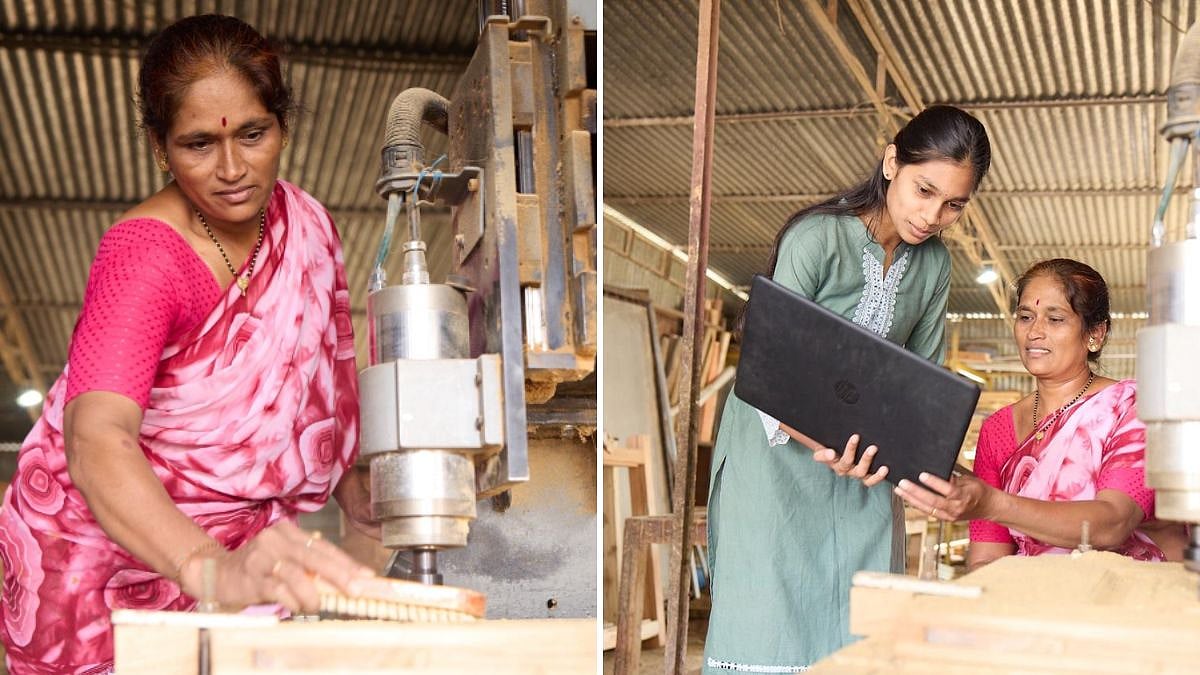
“Whenever I go to people’s homes, I don’t want my husband to become the topic of conversation,” Meena told me, her eyes narrowing the way women’s eyes do when they have tolerated far too much nonsense for far too long.
“Where is your husband? Why are you coming to fix doors?” they ask me.
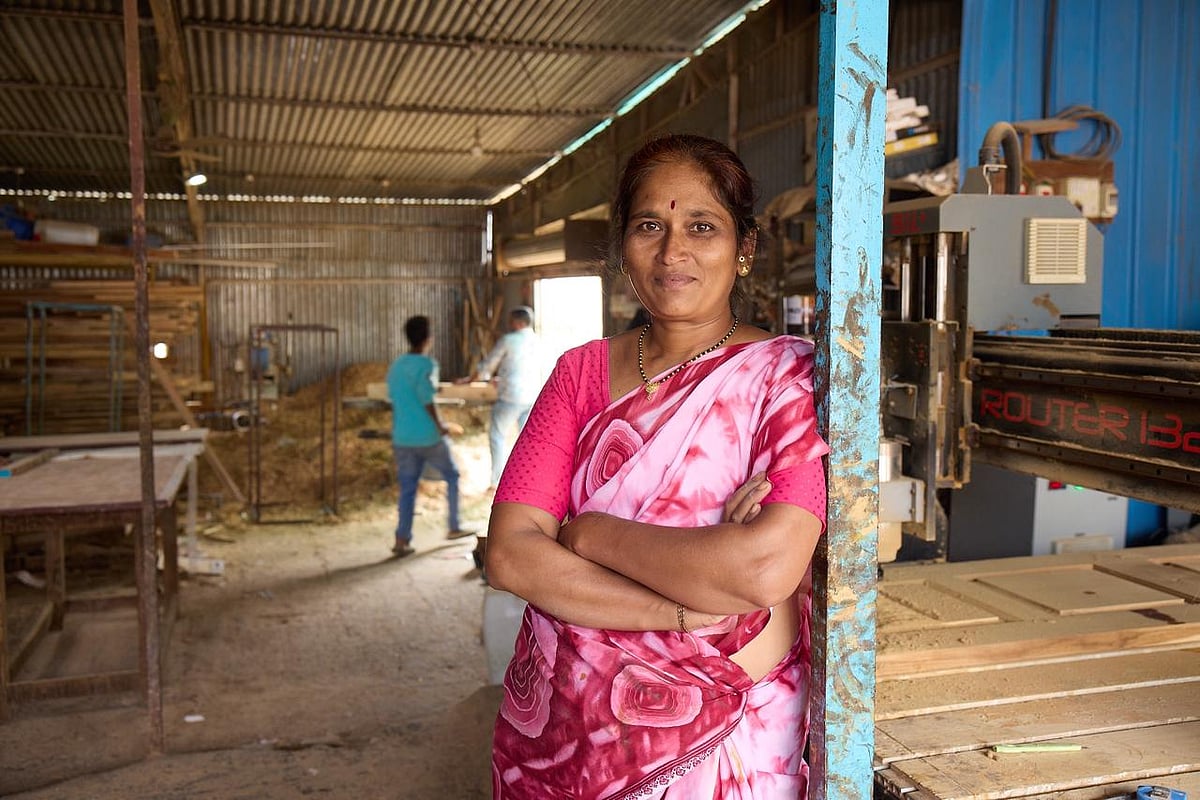
In fact, it is women who are more curious - more than men. They look closely at my toe rings, my bangles, my mangalsutra. They want to know if I am lying or telling the truth.
He’s away for work and I run this business - that is my only reply.”
I say to myself - There it is.
The whole machinery of patriarchy contained in a single glance. The feet scanned for silver, the wrists checked for bangles, the neck searched for the thin thread that certifies a woman’s belonging in the world.
Meena grew up in a household considered comfortable by rural standards. Marriage brought her into another home where her husband, a carpenter, ran a modest but well-respected workshop. She had never worked. Never needed to, never thought she would. Her sphere was the home.
Then COVID-19 arrived, and with it, a loss that struck at the heart of her world.
Overnight she became a widow, left alone to care for her two daughters, and the accidental inheritor of a business nobody believed she could run. And of course, the whole world rushed forward to offer “advice.”

“Give the workshop to the carpenters,” they said.
“They will run it and give you a small amount.”
But Meena refused.
Because grief sometimes cracks open a passageway through which something fierce escapes.
Widowhood in India has never been only about grief. It has always been about property, inheritance, and control.
The 2011 Census recorded nearly 43 million widowed women, almost four times the number of widowed men, with close to half of all women above the age of 60 widowed. These numbers make it clear that widowhood in India is a mass social reality.
The United Nations Population Fund, in its India Ageing Report 2023, highlights how, with fewer women in paid work and limited access to assets, widowhood often translates into sudden economic precarity. This leaves many widows dependent on sons, in-laws, or natal families for survival.
Not surprisingly, studies consistently find widowed women among the most economically vulnerable groups in the country, facing higher risks of poverty, food insecurity, and social isolation than married women or widowers.
What is taken from women, then, is not just a husband or ornamentation, but dignity and decision-making.
Back in Meena’s life, the two male employees at Meena’s husband’s - now her - workshop made their displeasure clear. The idea of taking orders from a woman, especially in front of customers, was unbearable to them.
Yet Meena stood her ground.
And what followed was a long, demanding journey.
Her brother came for a while to help. The male carpenters at Meena’s workshop settled into accepting his authority as a man. They assumed he was their new boss.
But her brother came with a mission.
He refused to let Meena remain within the confines of her home. It was time for her to step up and take charge. That, he believed, was the only way through this.
Every day after lunch, he would take her along to the workshop. She watched, absorbed.
Each night after the carpenters left, she practised.
And slowly, her hands learned the language of wood.
She also taught herself to ride a scooty so she could travel for work. And on the day her brother finally left for home, she rode to work alone.
I wonder how the air must have tasted different to her that day.
Over time, the business began to reflect her presence. Her daughter, an engineering student, joined her to operate the technical machinery.
I imagined the men’s faces - first one woman, now two!
It was during this turbulent time that she began banking with Mann Deshi Bank, saving carefully, taking small loans, building a life she once couldn’t have imagined.
Meena’s experience also exposed another uncomfortable truth - when women navigate vulnerable life transitions, finance must enter the picture, not as charity, but as a recognition of reality.
For women navigating widowhood, access to timely, appropriate credit can be the difference between dignity and dependence.
Yet most financial products assume stable salaried households, male earners, and clear asset ownership - assumptions that collapse precisely when women are most vulnerable.
If courage is the capital women bring, shouldn’t financial institutions learn to recognise and support it, rather than look away?

Meena often talks about how customers sometimes question her, underestimate her, and attempt to take advantage. “But that is only until I pick up a tool and fit a doorframe faster than the men beside me!” she says.
The world is stubborn, I think.
But Meena is stubborn-er.
Recently when we celebrated Savitribai Phule’s birth anniversary, I remembered how one of her quieter radical acts was lighting the funeral pyre of Mahatma Phule herself.
An act unimaginable for women in her time, and still rare in ours.
Doesn’t this tell us that women have always known what is at stake, carrying this struggle forward - often alone?
A few months back when I met Meena, she told me her elder daughter had been married.
Then she added, with an irrepressible smile, that she wore a green saree and green bangles for the ceremony.

“Je manala aavadla, tech kela,” she said.
I went with what my heart wanted, that’s all.
In a world that keeps trying to overwrite women, Meena Sutar continues to write her own story - stubbornly, beautifully.
Even if the world keeps checking her toe rings to see if she is telling the truth.
I think to myself - if that isn’t courage, then what is?
Anagha Kamath is the Founder of KickStart Girls - a financial education and leadership development initiative for adolescent girls and young women in rural Maharashtra. She is also a board member of Mann Deshi Mahila Sahakari Bank Ltd, and, would love to hear from readers at anagha@manndeshi.org.in

