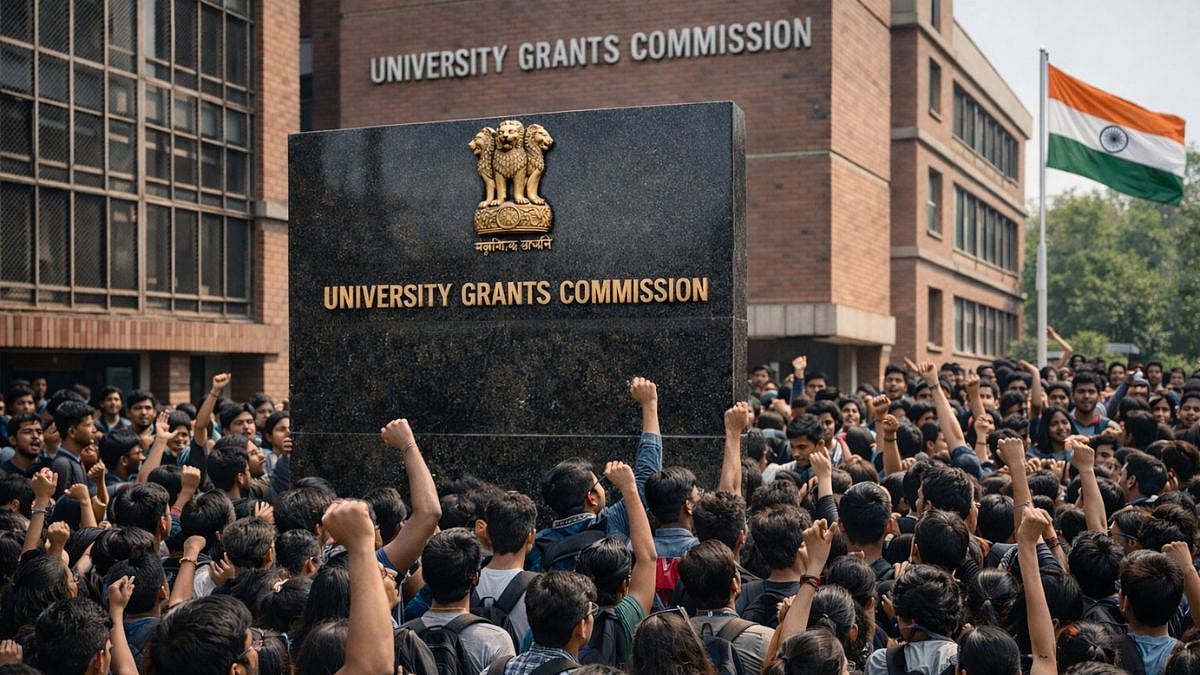
A legal tussle has started over the University Grants Commission’s (UGC) latest move to institutionalise anti-discrimination policies in higher education institutions, with the Supreme Court being approached even as disgruntlement is brewing on campuses across the country. A Public Interest Litigation (PIL) has been moved, challenging the validity of the UGC’s newly notified equity policy framework, amidst protests by students and faculty members.
Notified last week, the UGC (Promotion of Equity in Higher Education Institutions) Regulations, 2026, the new rules seek to further enhance institutional mechanisms to prevent discrimination in universities and colleges. The new regulations supersede the existing anti-discrimination guidelines notified in 2012 and are now mandatory for all higher education institutions, including central, state, and private universities.
According to the new policy, institutions are supposed to set up Equal Opportunity Centres, form Equity Committees, appoint equity officers, and establish grievance redressal mechanisms that function round-the-clock. The new regulations also provide for the formation of Equity Squads to investigate complaints of discrimination on campuses. The UGC has clarified that the move aims to address long-standing concerns about caste and social discrimination on campuses and ensure that grievances are addressed through formal channels.
However, the rules have also received criticism regarding their formation and extent. Student bodies have received grievances regarding the lack of representation from the general category in Equity Committees, which might hamper impartiality. Teachers’ associations and lawyers have also pointed out the absence of provisions against baseless or malicious complaints, which were present in the draft notification but have been removed in the final notification.
There have also been concerns regarding the broad definition of discrimination, which could potentially grant discretionary authority over academic discussions and assessments. The PIL has challenged certain clauses, such as Clause 3(C), which allegedly violate the constitutional provision of equality and overstep the UGC’s legal authority. Meanwhile, protests are also taking place on campuses, although the UGC has stated that it is taking feedback from stakeholders while justifying the need for more robust equity policies.

