Bhopal (Madhya Pradesh): Higher still and higher
From the earth thou springest
Like a cloud of fire – To A Skylark,
-PB Shelley
The bosomed hours, which have been behind the veil of winter mist, are slowly budding. The bougainvillaea branches on both sides of the roads in the city are reddening, but because there is still a nip in the morning and the evening air, one needs to carry woollens.
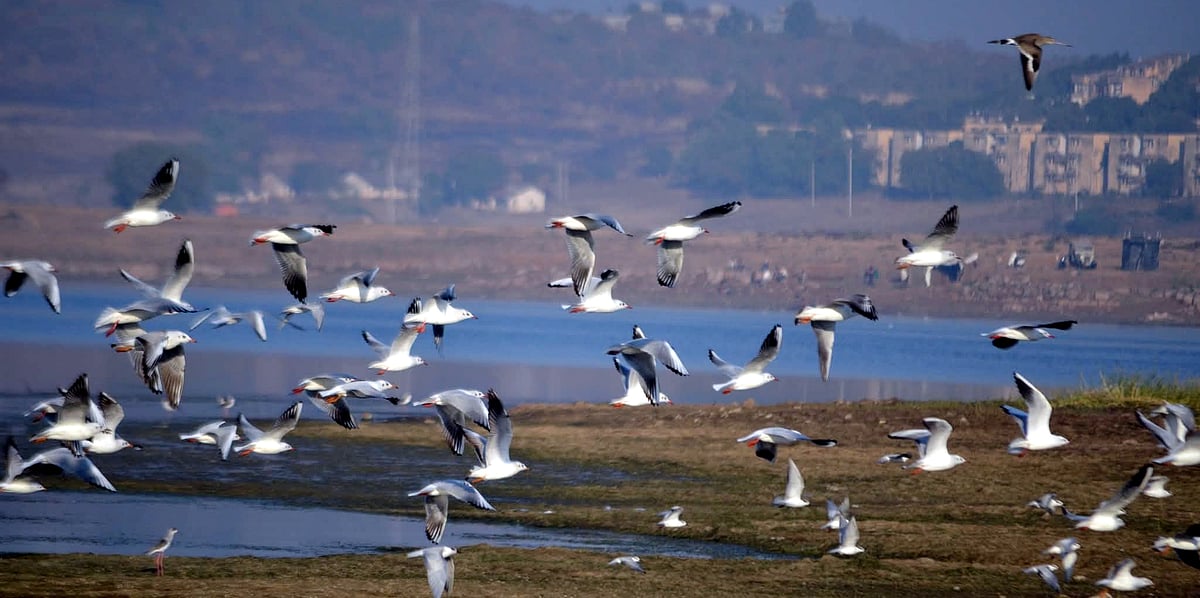
The days are getting longer and the nights shorter. This is the time to get out of homes and make trips to select places in Bhopal, particularly Van Vihar, which is full of warblers from different parts of the world.
These winged guests have no country, no religion, and no barriers. They are the world citizens who are pouring their hearts out, making the forested wetland of the city into a heaven on the earth.
A visitor can discover the untaught harmony of spring, and as the winged guests fly, they whisper pleasure. They carol a variety of notes – shrill, chirrup, trill, hoot, caw, squawk, and whistle.
Van Vihar is home to nearly 210 species of winged guests. They make the national park their home during the winter and stay there until the spring. To watch birds and listen to their trills, nature lovers must visit there in the morning, or else, as the sun ascends, the warblers go into the dark deep woods.
One of the most beautiful visitors to the Van Vihar National Park is the bar-headed goose, and because of its look, it is the centre of attraction for birdwatchers. Since the high-flying bird has two thick black bars on its otherwise white head, it is christened as a bar-headed goose. When it flies, it seems as if the Goddess of Muse were sitting on its back and playing the harp. Though people tweet about the bird, it does not tweet. Nor does it chirp.
The bird simply pours out honking calls when it flies. And when it promenades, it looks like a queen doing the Passarella walk – slow, steady, and confident. Another migratory bird that attracts the birdwatchers’ attention is the Northern Pintail. Its bill is an elegance, but the bird rarely comes within sight.
Then, who can be oblivious of the naughty red-crested pochard, Mother Nature’s masterpiece? Its red bills, brown head, and capacity to dive into water with the blink of an eye surprise a nearby birdwatcher. The male Red-crested Pochard issues wheezing calls, and the female pours out vrah-vrah-vrah.
Then there is the purple heron, a rare species, which is not easily sighted. It keeps a birdwatcher waiting for several hours, but once the bird comes within view, it is a piece of beauty to watch. It is calm but alert. It takes just a few seconds to pounce upon and strike at prey. It has a long snake-like neck.
There are innumerable such beauty queens, like the spotbill, gadwall, Brahminy duck, and cotton teal. Then there are painted storks, spoonbills, Sarus cranes, black-winged stilts, redshanks, and snipes.
Their movements, colours, and trills take a visitor to a land far from the madding crowd. This is the right time to enjoy rosy-bosomed hours in the park.
Just as a visitor is absorbed in watching the guests, an Indian golden oriole sings from nearby bushes – weela-wee-ooo. The visitor cannot ignore these delightful notes and wants to be happy with the melody of the little winged piper and fly away with it, murmuring to himself John Keats’s celebrated lines:
Away! away! for I will fly to thee,
Not charioted by Bacchus and his pards,
But on the viewless wings of Poesy …

