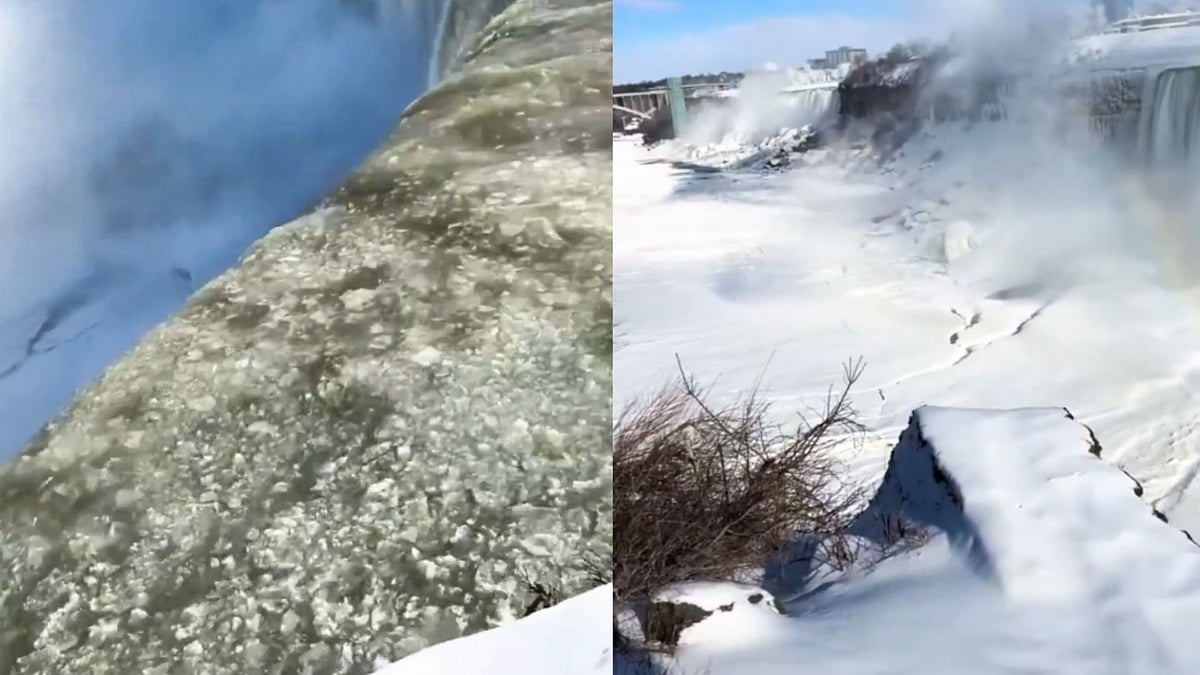
Niagara Falls has turned into a breathtaking icy landscape after a powerful polar vortex swept across the region, sending temperatures plunging well below minus 20 degrees Celsius. The extreme cold has transformed the iconic waterfalls into a dramatic frozen spectacle, stunning viewers across social media.
Mist turns to ice as water keeps roaring
Despite the brutal temperatures, the waterfalls have not stopped flowing. Millions of litres of water continue to crash over the cliffs every second, producing thick clouds of mist. In the freezing air, this mist rapidly solidifies, forming layers of ice on nearby rocks, trees, railings, and cliff faces.
Videos circulating online show towering ice formations clinging to the riverbanks and surrounding terrain, creating a scene that looks almost otherworldly.
Frozen river sections and a rare rainbow
Parts of the Niagara River appear partially frozen, with massive ice sheets drifting near the brink of the falls. Adding to the visual drama, a faint rainbow has been spotted forming through the icy mist, a rare and striking contrast against the stark winter backdrop.
Straddling the border between Canada and the United States, Niagara Falls is made up of three separate waterfalls: Horseshoe Falls, American Falls, and Bridal Veil Falls. The falls are created by the Niagara River as it flows from Lake Erie into Lake Ontario and are among the most powerful waterfalls on the planet.
Seasonal transformations draw global attention
Niagara Falls is known for changing character throughout the year. While summer brings millions of tourists drawn by the thundering water and lush surroundings, winter offers a quieter but equally dramatic transformation. Although the water never freezes completely due to its immense volume and constant motion, ice buildup along the edges is common during extreme cold spells.
More than a tourist attraction
Beyond its visual appeal, Niagara Falls plays a vital role in hydroelectric power generation, supplying electricity to large parts of both Canada and the United States. The site also carries deep cultural and historical significance, symbolising nature’s raw strength and enduring beauty.
As the polar vortex tightens its grip, Niagara Falls once again proves why it remains one of the world’s most captivating natural wonders, even when frozen in time.

