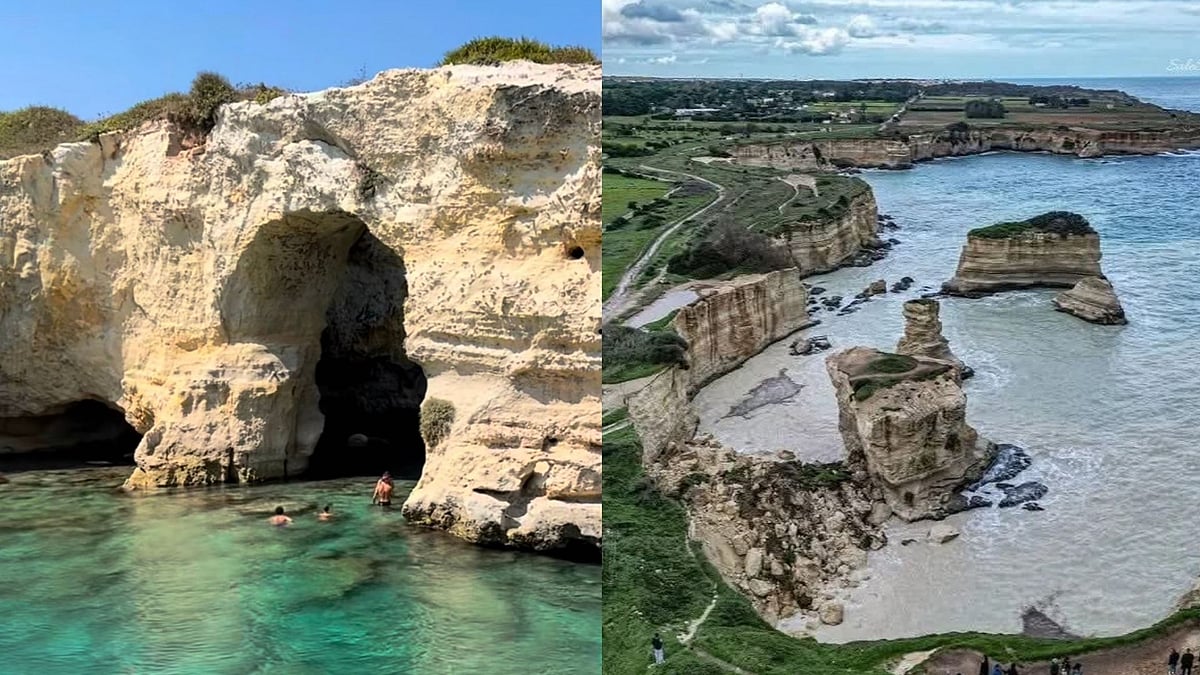
A dramatic stretch of Italy’s Adriatic coastline lost one of its most iconic landmarks on Valentine’s Day, as the famed natural rock formation known as the “Lovers’ Arch” crumbled following days of relentless storms.
The distinctive sea arch, part of the scenic Sant’Andrea sea stacks near Melendugno in southern Puglia, had long been a magnet for couples, photographers and tourists. According to local news outlet Corriere Salentino, prolonged heavy rain, strong winds and turbulent seas weakened the limestone formation until it ultimately gave way.
Melendugno’s mayor described the collapse as “an unwanted Valentine’s Day gift,” underscoring how significant the arch had become as a symbol of the region’s romantic appeal and tourism identity.
Erosion and extreme weather underline coastal risks
Officials warn that the dramatic loss of the Lovers’ Arch may foreshadow further changes along this fragile coastline. Visible cracks in nearby cliffs suggest that additional stretches of rock could be vulnerable to collapse as powerful weather systems continue to pound the shore.
Broader impact of winter storms in southern Italy
The storm system that felled the arch also battered other parts of southern Italy’s coastline. On the Ionian Sea, including areas between Ugento and Gallipoli, rough seas and flooding have damaged beach infrastructure, led to small cliff falls and disrupted port operations.
Beyond Puglia, weeks of severe weather have caused widespread damage across the south. In Niscemi, massive rainfall triggered a landslide that forced more than 1,500 residents to evacuate their homes, part of broader damages this season now estimated at more than one billion euros.
Geologists say natural arches and sea stacks are constantly reshaped over time by the forces of the sea, but increasingly frequent and intense storms-possibly linked to shifting climate patterns, may accelerate these changes. The collapse of the Lovers’ Arch is a striking example of how dramatic and sudden such losses can be, even for formations that stood for generations.

