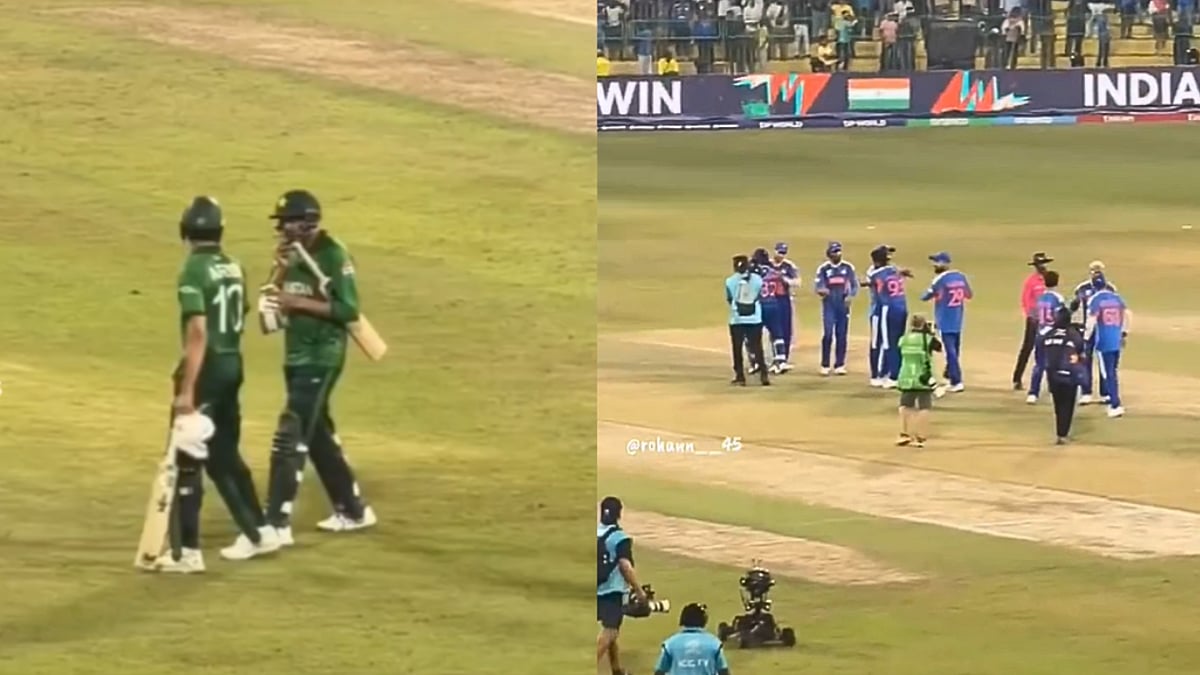
In a highly anticipated ICC Men’s T20 World Cup 2026 clash in Colombo, India demolished Pakistan by 61 runs in a dominant display that underlined their strength in high‑profile encounters between the arch‑rivals.
But the pre‑match tension didn’t end on the field. Long before the first ball was bowled, a “no‑handshake” policy, adopted by the Indian team since the 2025 Asia Cup, set the tone for the encounter. India’s skipper Suryakumar Yadav and Pakistan captain Salman Ali Agha avoided the traditional handshake at the toss, reflecting lingering political tensions that have spilled into the cricketing arena.
When the match ended, a similar scene unfolded. As the Indian players celebrated their comprehensive victory, Pakistani stars like Shaheen Shah Afridi and Usman Tariq stood waiting near the field hoping for the customary gesture of sportsmanship. But the Indian team walked past without engaging, no handshakes, no eye contact, before heading straight to their dressing room.
The sight of Afridi and Tariq looking on was widely shared on social media, sparking debate among cricket fans. Supporters from both sides have weighed in, some defending India’s stance as symbolic of broader national sentiment, others arguing that sport should rise above politics and uphold traditions like the post‑match handshake.
Cricket commentators note that this is not the first time the ritual was skipped; the two teams have avoided handshakes at key moments since geopolitical strains intensified last year. Whether this becomes a new norm in Indo‑Pak clashes remains a topic of passionate discussion among fans and experts alike.

