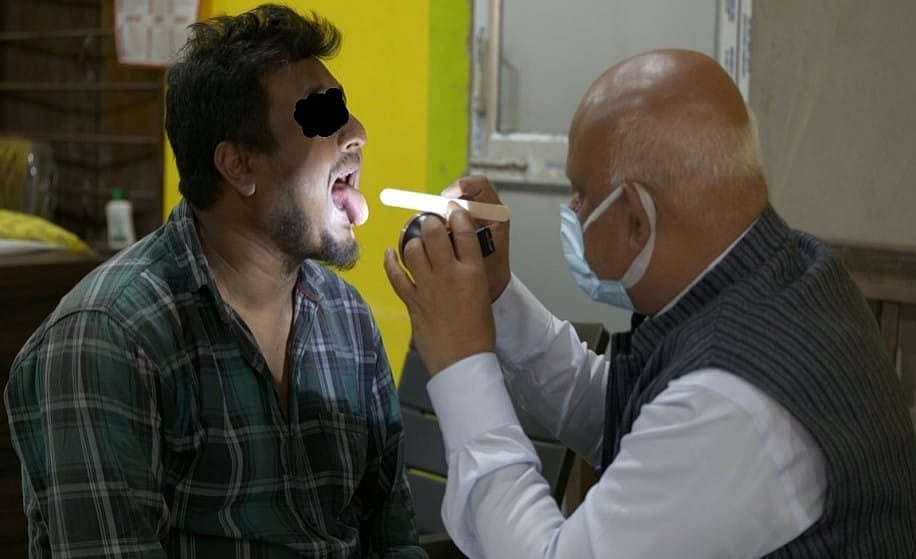
When 18-year-old Subhash (name changed) first noticed white patches and lesions inside his mouth, he ignored them for months. By the time the pain became unbearable, and he reached the Government Cancer Hospital in Chhatrapati Sambhajinagar, where doctors confirmed oral cancer.
Subhash has undergone surgery and continues treatment, but doctors say his case reflects a worrying shift they are increasingly witnessing across Maharashtra, especially in Pune. Oral cancer is affecting younger patients, and cases are rising despite a statewide ban on smokeless tobacco products.
Ahead of World No Tobacco Day on May 31, state health department data paints a grim picture of Maharashtra’s tobacco-linked oral cancer burden. In 2025-26 alone, 3,677 oral cancer cases were registered under the National Programme for Prevention and Control of Non-Communicable Diseases (NPNCD) population-based screening programme, compared to 1,018 cases in 2021-22.
As of 2026, 11,885 patients across Maharashtra are undergoing treatment for oral cancer, including 8,758 men.
Pune district itself mirrors the larger crisis. Between April 2021 and March 2026, over 29 lakh people above the age of 30 were screened for oral cancer in the district under the National Programme for Prevention & Control of Non-Communicable Diseases (NP-NCD) programme. However, screening coverage remains just 56.7% of the eligible population, exposing major gaps in early detection.
According to health department data, Pune district has nearly 51.1 lakh residents above the age of 30, considered vulnerable to non-communicable diseases, including oral cancer. Of these, only 29.03 lakh underwent oral cancer screening over the last five years.
In 2025-26 alone, Pune screened 14.16 lakh people, around 27.7% of the eligible population. During the same period, 58 patients in the district were reported to be undergoing treatment for oral cancer.
Doctors say delayed diagnosis remains one of the biggest challenges.
Dr Sunil Deshmukh, Professor and HoD, Head Neck Surgery, Master of Chirurgiae at State Cancer Institute in Chhatrapati Sambhajinagar, who treated Subhash, says over the years the number of cancer patients has grown, and they are also younger now. He says, “Two decades ago, the average age of the patient would be about 50 years; this has gone down to 30 years now. The number of cases has also gone up, and the cancer is also more aggressive with rapid spread. We are also reporting rarer cases of cancer, which we had only studied in our medical books.”
Public health experts continue to link Maharashtra’s high oral cancer burden to widespread use of smokeless tobacco products such as gutkha, kharra and mishri, despite the ban on manufacture, sale and distribution of gutkha and scented tobacco products in the state.
The burden is especially severe among informal workers, migrant labourers, slum residents and tribal communities, many of whom lack regular access to screening facilities or delay seeking medical help because of stigma, wage loss and poor awareness.
Dr Rakesh Neve, Director at Lifepoint Cancer Centre, said, “Early diagnosis is important for ensuring a cure in any cancer. At stage one, the surgery can be done intraorally without causing any cosmetic or functional deformities; however, in later stages, surgery involves disfigurement and functional problems. Survival for stage 1 oral cancer is upwards of 95%, however, beyond stage 3, survival is only 30-40%.
India ranks among the top countries having a very high prevalence of oral cancer of up to 19-20 cases per lakh population. This translates into 1.5 lakh new cases diagnosed every year, and oral cancer contributes to 1,30,000 deaths every year. Sadly, this means around 5 deaths per hour are attributed to oral cancer.”
Officials say screening coverage continues to remain inadequate despite government outreach efforts.
Dr Nitin Ambadekar, Director, Health Services, said, “Oral cancer cases are definitely rising, for which we have a mobile diagnostic van which goes from village to village. Hesitation and stigma among the public regarding cancer are major problems our staff faces. Also, follow-up is a tedious process for the staff. Every referral must be closed until diagnosis and every diagnosis is put on treatment. Oral cancer patients often reach us at a later stage when limited treatment options are available.”

State health officials say they are now exploring technology-driven interventions to improve early detection, especially in rural and underserved areas where specialists are scarce.
One such tool, Mukhia Plus, developed by Pune-based Edgescan AI, is being tested in screening programmes in Pune and Sangli.
Dr Prachee Hendre-Mhetras, Oral Cancer Screening Expert, Edgescan AI, said, “Mukhia Plus can detect up to 60 different types of cancerous, pre-cancerous and non-cancerous lesions. It can be used by any healthcare worker who can be easily trained to use the app. The healthcare workers photograph up to nine regions inside the mouth, and the system processes the images in real time. A sophisticated algorithm then identifies abnormal areas, classifies potential lesions, and provides a triage recommendation, whether the patient should be referred for further investigation or not. The technology is built on a dataset of over 50,000 annotated images collected from 18 diverse clinical settings across India, suited for the Indian population. It has shown high sensitivity of 96.2% and an overall accuracy of 89.7%, which is validated by a registered study under Clinical Trials Registry of India (CTRI) and is a CDSCO-licensed AI tool. We have already implemented the tool at two major screening programmes in Pune and Sangli, and the results have been promising.”
Experts say smartphone-based oral imaging, AI-assisted triage and cloud-linked registries could help convert every ASHA worker visit, anganwadi meeting or factory health camp into an opportunity for early oral cancer detection.
But doctors warn that unless tobacco addiction is tackled aggressively and screening reaches vulnerable populations consistently, Maharashtra’s oral cancer crisis will continue to deepen, with younger patients increasingly paying the price.
