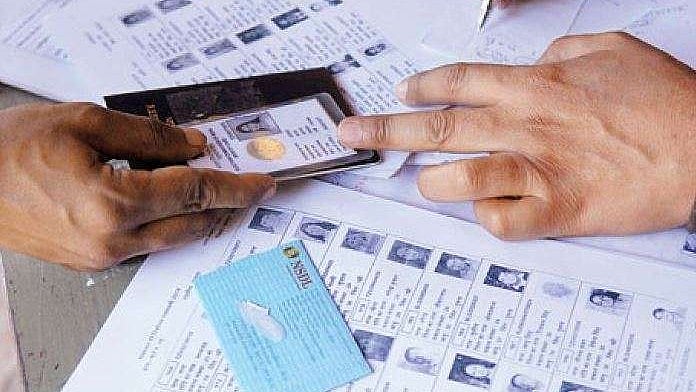
Pune: With 28.66 lakh names missing from Pune district’s draft electoral roll following the Special Intensive Revision (SIR), questions over voter verification, wrongful exclusion and the process of restoring names have come into focus.
The Election Commission of India (ECI) has announced a return to the Special Summary Revision (SSR) in 17 states and Union Territories, while Maharashtra’s SIR exercise remains underway.
In an interview with The Free Press Journal, Minal Kalaskar, Pune Deputy District Election Officer, explained the differences between the two processes, the verification required under SIR and the steps eligible voters can take if their names are missing. The distinction is significant because SSR updates the existing electoral roll, while SIR involves a more extensive enumeration and verification exercise.

Why did Pune’s electoral roll shrink?
The draft electoral roll published on August 31, 2026, contained 62.13 lakh electors, compared with 90.80 lakh in the earlier roll, a reduction of approximately 28.66 lakh names, or 31.6%.
Kalaskar explained that the entries were associated with categories such as absent, shifted, deceased and duplicate electors. However, the number of names omitted from the draft should not be interpreted as the number of confirmed ineligible voters. Some cases may require further verification, particularly when electors are temporarily away from their registered addresses or have moved within the district.
The administration’s exercise covered approximately 90.80 lakh electors across Pune’s 21 Assembly constituencies. According to figures reported during the exercise, 17.83 lakh voters could not be traced and 5.91 lakh were identified as shifted. These classifications must be distinguished from final deletions following verification.
SSR vs SIR: What is the difference?
Kalaskar explained that SSR is the routine process of updating electoral rolls. Existing electors are generally carried forward into the draft roll, while officials add newly eligible voters, correct personal details, update addresses and remove entries where deletion is legally justified.
SIR, by contrast, requires a fresh enumeration exercise under the prescribed procedure. In Maharashtra, Booth Level Officers (BLOs) visited households, distributed pre-filled enumeration forms and collected completed forms between June 30 and August 17. Officials also checked existing records and used electoral rolls from 2002-2004 as a reference for mapping voters.
The difference matters to existing electors. During SIR, failure to complete the prescribed enumeration process can leave a name out of the draft roll, requiring the voter to seek inclusion. Under SSR, existing names generally remain in the draft, subject to lawful corrections and deletions.
The ECI announced on October 15 that SSR would be conducted in 17 states and Union Territories, with January 1, 2027, as the qualifying date. Maharashtra is not part of that SSR schedule because its SIR process is still underway.

Why was intensive revision needed?
Electoral rolls can accumulate inaccuracies as people migrate for employment or education, change residences, die or acquire duplicate registrations. Kalaskar said the ECI’s stated objective was to identify such discrepancies through intensive verification rather than relying solely on routine updates.
She explained that Pune’s urban growth and population mobility make address verification particularly important. However, an unsuccessful household visit does not automatically establish that an elector is ineligible. The distinction between an untraceable voter and a confirmed deletion is central to assessing the final roll’s accuracy.
What safeguards protect eligible voters?
The Representation of the People Act, 1950, and the Registration of Electors Rules, 1960, govern electoral-roll preparation and revision. The prescribed process provides for claims and objections and requires notice or a hearing, where applicable, before deletion decisions are finalised.
The draft roll does not necessarily represent the final determination of every disputed entry. Electors can check their details, seek inclusion and respond to requests for further verification. The Election Office must examine applications and objections under the applicable rules.

Kalaskar said, “For Pune, the key indicators will be the number of claims accepted, names restored, deletions confirmed and cases still pending. Constituency-wise figures would help establish how the initial omissions were resolved.”
Name missing? Here is what voters can do
Voters should first check their names, addresses and constituency details on the ECI’s Voters’ Services Portal or the Pune district SIR webpage. If a name is missing, they should contact their BLO or Electoral Registration Officer (ERO) to establish the appropriate procedure.
Form 6 is the standard application for inclusion in the electoral roll; Form 7 is used for objections or deletion on permitted grounds; and Form 8 covers shifting of residence and specified corrections. The documents required depend on the case and the applicable instructions. Voters should retain application acknowledgements and follow up on the outcome.
The published Pune SIR schedule listed September 30 as the last date for claims and objections, October 29 for their disposal and November 4 for final publication. As schedules and instructions may be revised, voters should confirm the applicable deadlines with the Election Office.
Even after final publication, eligible citizens can generally apply for inclusion under the applicable rules, subject to qualifying dates and election-related restrictions. An EPIC voter ID card or having voted previously does not, by itself, guarantee that a name appears on the current roll.
What should the final figures reveal?
The final electoral roll will need to be assessed not merely by its total number of electors but also by the accuracy of its entries and the treatment of disputed cases. Additions, deletions, corrections, claims accepted and names restored will help show how the verification exercise affected eligible voters.
For Maharashtra, the distinction between SSR and SIR is more than procedural. It determines how existing electors are carried forward, how discrepancies are examined and what action citizens must take when their names are missing. For Pune’s voters, checking the roll early and following up with election officials remain essential to ensuring that eligible names are included.

