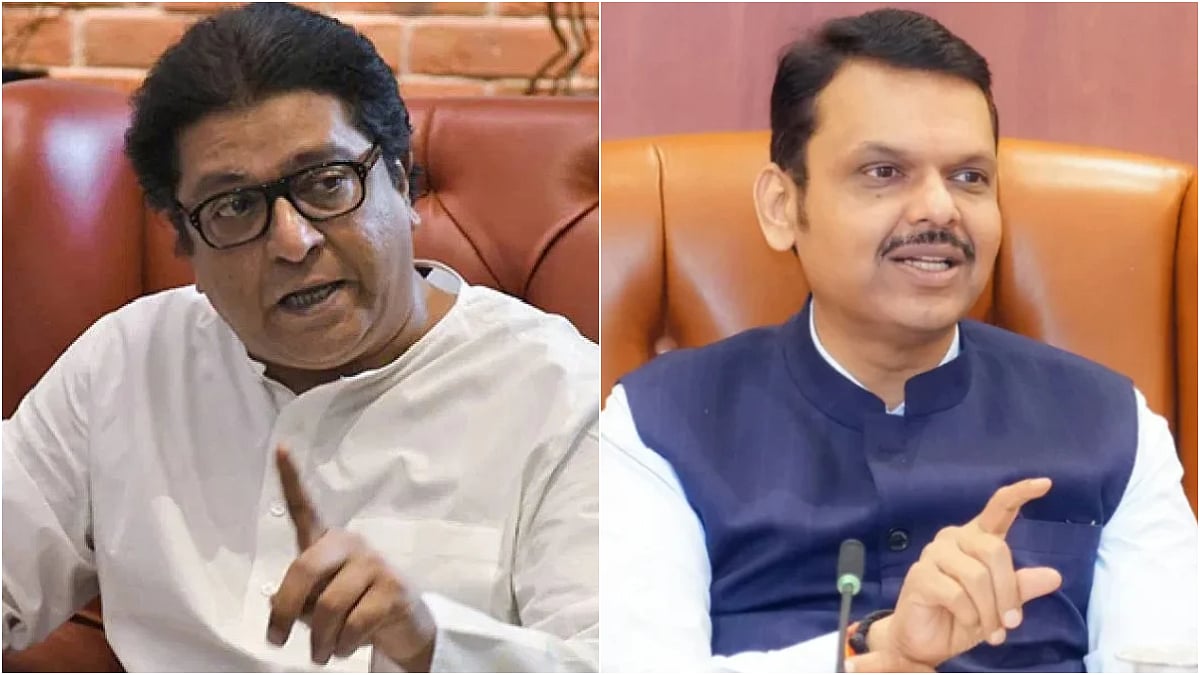
A fresh political controversy has emerged in Maharashtra after Devendra Fadnavis responded sharply to criticism from Raj Thackeray over the recent 100 year outreach event organised by the Rashtriya Swayamsevak Sangh.
Speaking to the media, Fadnavis said that those who did not receive invitations were criticising the event out of disappointment. He stated that representatives from different sections of society were invited to interact, ask questions and understand the organisation better. According to him, participants were guided for two days and every question was answered. He also questioned why attention should be given to what he called anti Sangh propaganda.
Raj Thackeray Raises Linguistic Identity Concerns
The remarks come after the Maharashtra Navnirman Sena chief strongly criticised statements made by Mohan Bhagwat during a speech in Mumbai on February 8.
Reacting to reports that linguistic protests were described as a disease, Thackeray argued that linguistic and regional pride is a fundamental right of every citizen. In his post on social media platform X, he questioned the understanding of India’s linguistic history and state reorganisation.
He argued that if regional identity is considered a disease, then it exists across several states including Karnataka, Tamil Nadu, West Bengal, Punjab and Gujarat.
Debate Over Migration And Cultural Respect
Thackeray further claimed that linguistic tensions often arise due to the behaviour of migrants who, according to him, sometimes disrespect local culture and traditions while attempting to create political vote banks. He also accused the RSS of selective silence, questioning why similar messaging on harmony was not seen during past regional tensions in other states.
Political Temperatures Likely To Rise
The exchange reflects deeper ideological differences around nationalism, regional identity and cultural representation. With Maharashtra’s political landscape already competitive, the issue is expected to trigger further reactions from leaders across parties in the coming days.
The controversy has once again placed the spotlight on the balance between national unity and regional pride in India’s diverse social fabric.
