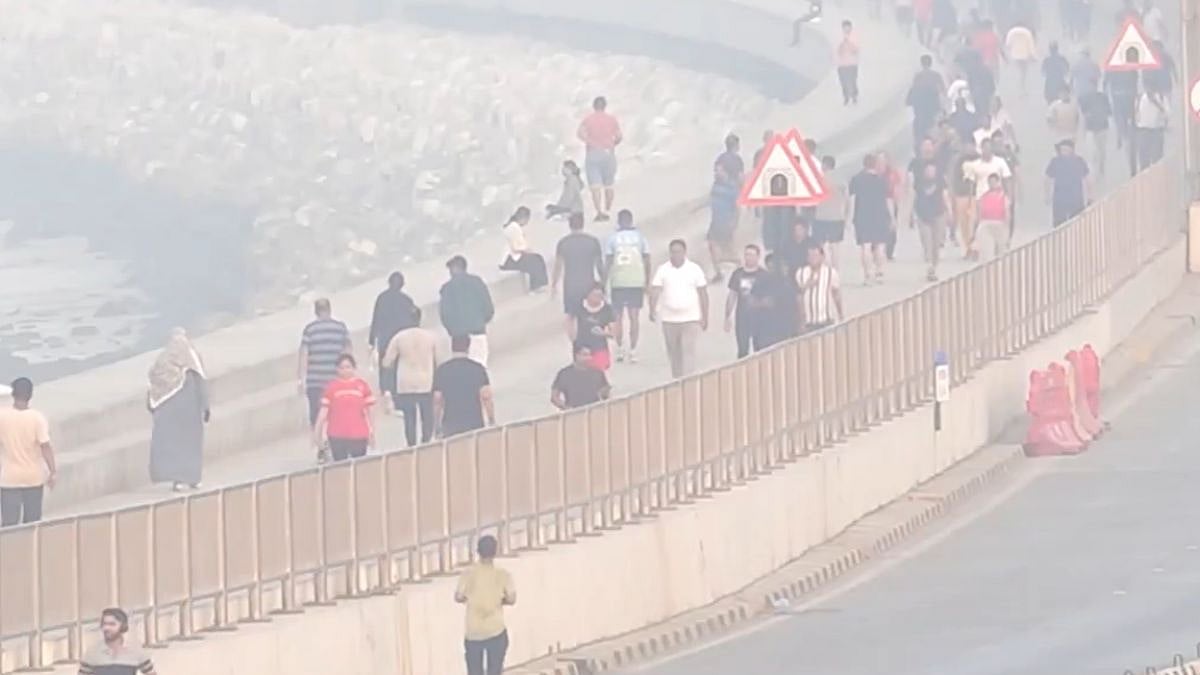
Mumbai: Mumbai woke up on Wednesday to a chill winter morning, with clear blue skies, cool breezes and a noticeable dip in temperatures, offering residents a fleeting sense of relief. The early hours felt fresh and pleasant, raising hopes of a comfortable day ahead. However, the respite was short-lived as a dense blanket of smog gradually engulfed the city, reducing visibility and once again highlighting Mumbai’s deepening air pollution crisis.
Today's Weather Update
The IMD had predicted a bright and pleasant day, with minimum and maximum temperatures expected to hover between 19 degrees Celsius and 31 degrees Celsius. Despite favourable weather forecasts by the India Meteorological Department (IMD), air quality quickly emerged as the city’s biggest concern. By morning, several parts of Mumbai were shrouded in haze in the air.
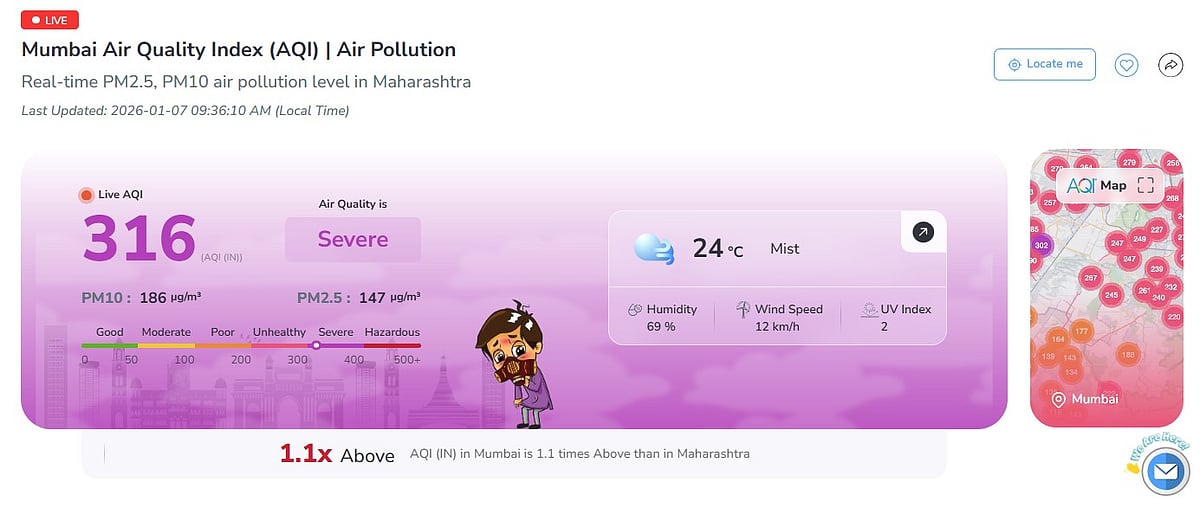
Mumbai's overall AQI today | AQI.in
According to data from air quality monitoring platform AQI.in, Mumbai’s overall Air Quality Index (AQI) touched 316 during the early hours, placing it firmly in the ‘severe’ category. Health experts warned that such levels pose serious risks, especially to children, senior citizens and people suffering from respiratory or cardiac ailments. Residents were advised to avoid outdoor activities and limit exposure to polluted air.

The persistent poor air quality has largely been attributed to dust and fine particulate matter generated by the city’s relentless construction activity. Multiple large-scale infrastructure projects, including metro rail corridors, flyovers, coastal road extensions and road-widening works, are underway across Mumbai.
These, coupled with rapid private real estate development, continue to release major pollutants into the atmosphere. Vehicular emissions during peak traffic hours further worsen the situation, making effective air quality management a growing challenge for civic authorities.
Wadala & Chembur Among Worst Hit
Several areas across the city emerged as major pollution hotspots. Wadala East recorded a dangerously high AQI of 388, categorised as ‘severe’ and posing health risks even to healthy individuals. Chembur followed closely with an AQI of 370, while Colaba reported 338. Worli and Deonar also recorded alarming AQI levels of 334 each, placing them in the severe pollution bracket.
Suburban areas fared slightly better but remained far from safe. Kandivali East and Jogeshwari East reported AQI readings of 207 and 217 respectively, falling under the ‘unhealthy’ category. Borivali West recorded 223, Borivali East 263, and Powai 287, indicating that air pollution remains widespread across the city rather than confined to select pockets.
As per standard air quality classifications, AQI levels between 0 and 50 are considered ‘good’, 51 to 100 ‘moderate’, 101 to 200 ‘poor’, 201 to 300 ‘unhealthy’, while readings above 300 fall under the ‘severe’ or ‘hazardous’ category.
To get details on exclusive and budget-friendly property deals in Mumbai & surrounding regions, do visit: https://budgetproperties.in/

