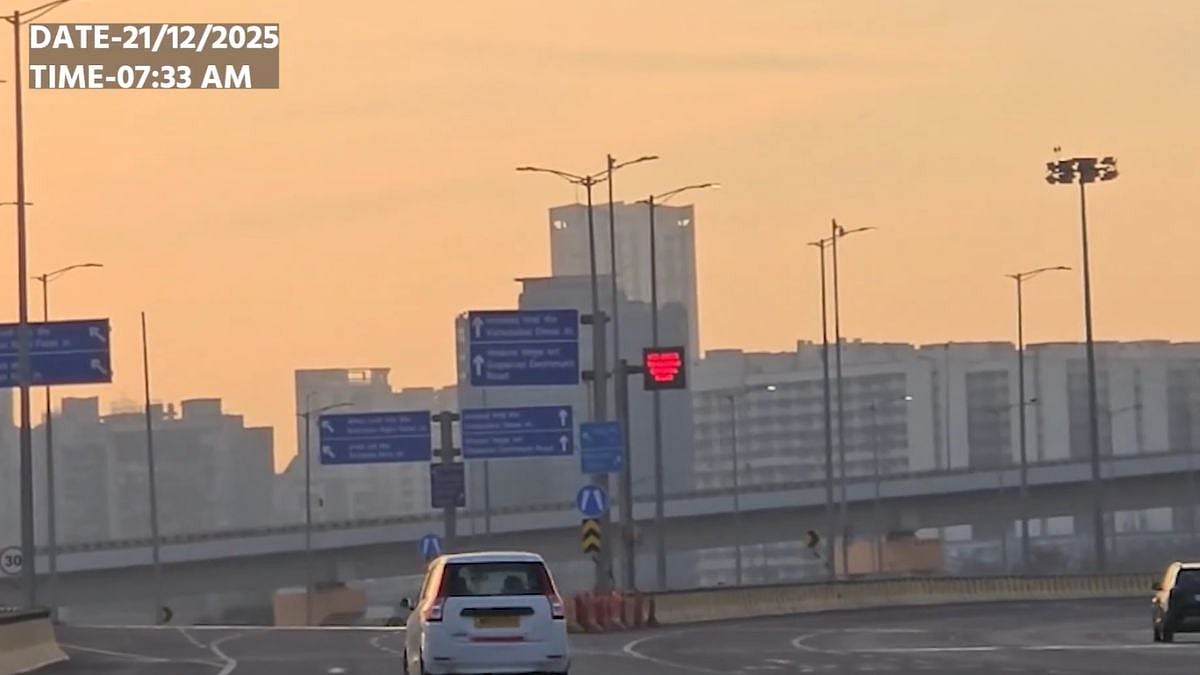
Mumbai: Mumbai experienced a refreshingly cool and pleasant start to Sunday, with clear skies, gentle winter winds and relatively low humidity providing residents brief relief from the city’s usual heat and discomfort. Early morning conditions felt almost ideal, encouraging outdoor activity and raising hopes of a comfortable day ahead. However, the respite proved short-lived as a thin layer of smog gradually enveloped the city, reducing visibility slightly and once again bringing Mumbai’s persistent air pollution problem into focus.
The India Meteorological Department (IMD) had forecast favourable weather for the financial capital, predicting a bright and largely dry day with temperatures ranging between 18°C and 33°C. While the weather conditions largely matched the forecast, worsening air quality quickly became the dominant concern, overshadowing the otherwise pleasant winter morning.
According to data from air quality monitoring platform AQI.in, Mumbai’s overall Air Quality Index (AQI) was recorded at 108 during the early hours of the day, placing it in the ‘poor’ category. Although this marked a slight improvement from the hazardous pollution levels seen in late November and early December, the air quality continued to pose health risks, particularly for children, the elderly and those with respiratory conditions.

Several factors are contributing to the city’s deteriorating air quality. Ongoing large-scale infrastructure projects, including metro rail construction, flyovers, coastal road extensions and extensive road-widening works, have majorly increased dust pollution across Mumbai. In addition, rapid private real estate development and a steady rise in vehicular emissions during peak traffic hours have further worsened air conditions, especially along major roads and congested intersections.
AQI In Concerning Range Citywide
Air quality varied sharply across different parts of the city, with several locations emerging as pollution hotspots. The Wadala Truck Terminal recorded a severe AQI of 312, a level considered dangerous even for healthy individuals. Jogeshwari reported an AQI of 153, while Bhandup West stood at 130, both in the ‘poor’ category. Chembur recorded an AQI of 127, and Worli, a major commercial and residential hub, reported 120.
Suburban areas showed comparatively better air quality, though conditions remained far from ideal. Charkop recorded an AQI of 65, while Govandi and Kandivali East reported readings of 72, placing them in the ‘moderate’ category. Other areas such as Parel-Bhoiwada and Malad West also remained in the ‘moderate’ range, with AQI levels of 78 and 88 respectively.
For context, AQI values between 0 and 50 are considered ‘good’, 51–100 ‘moderate’, 101–150 ‘poor’, 151–200 ‘unhealthy’, and readings above 200 are classified as ‘hazardous’.
To get details on exclusive and budget-friendly property deals in Mumbai & surrounding regions, do visit: https://budgetproperties.in/
