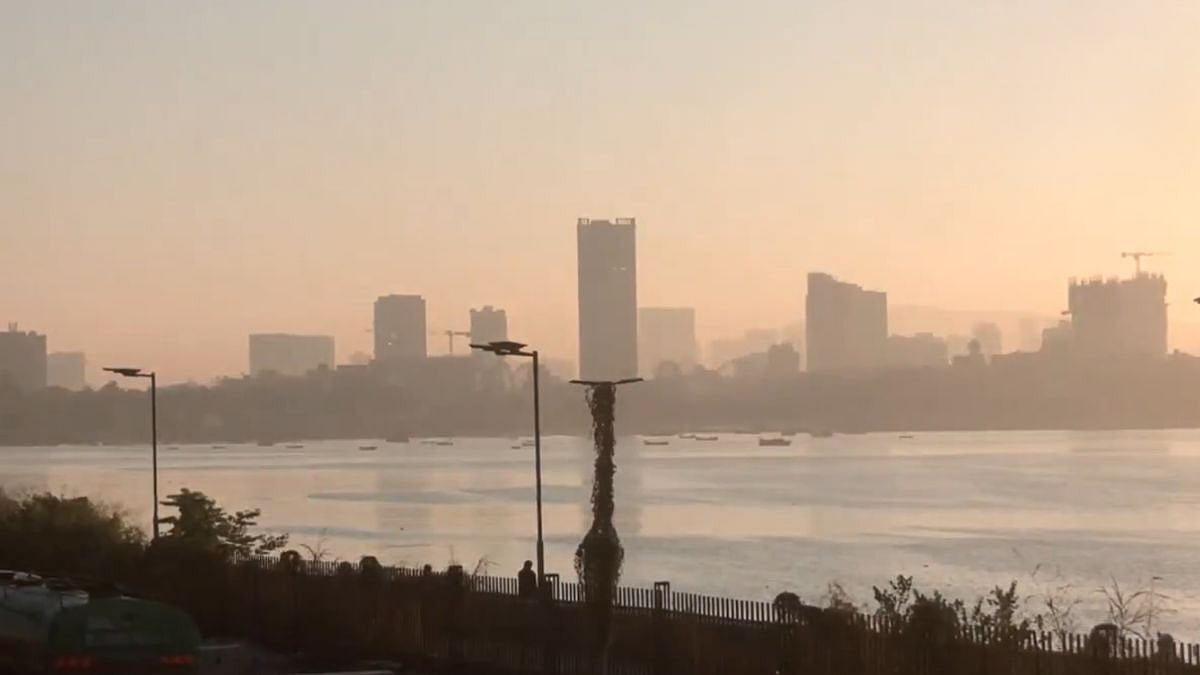
Mumbai: Mumbai woke up to a seemingly perfect winter morning on Monday, with clear blue skies, gentle winds and a noticeable chill in the air. However, the pleasant start was quickly overshadowed by a thick blanket of smog that hung over the city, dulling visibility and raising fresh concerns about deteriorating air quality. Despite favourable weather conditions, pollution once again emerged as Mumbai’s dominant challenge.
Today's Weather Update
The India Meteorological Department (IMD) had forecast a bright and comfortable day, with temperatures expected to range between 19°C and 34°C. Yet, residents stepping out early in the morning were met with hazy surroundings and an acrid smell in the air. Visibility dropped in several areas, turning what should have been a refreshing winter day into an uneasy one for commuters, morning walkers and schoolchildren.
According to the air quality monitoring platform AQI.in, Mumbai’s overall Air Quality Index (AQI) stood at 188 in the early hours, placing the city in the ‘poor’ category. While marginally better than the alarming readings recorded late last month, the air remains unhealthy, particularly for children, the elderly and those with respiratory ailments.
The persistent pollution is due to dust and fine particulate matter generated by Mumbai’s relentless construction activity. Large-scale government infrastructure projects, including metro corridors, flyovers, coastal road stretches and road-widening works, along with intensive private real estate development, continue to add to the city’s pollution load.
Several areas emerged as severe pollution hotspots. The Wadala Truck Terminal recorded an alarming AQI of 345, categorised as ‘severe’, posing serious health risks even to otherwise healthy individuals. In Goregaon and Chembur, AQI levels were recorded at 277 and 267 respectively, both falling in the ‘unhealthy’ category. Vashi also reported an AQI of 263, while Colaba registered 237.
Suburban areas showed comparatively better readings, though air quality remained far from ideal. Charkop recorded an AQI of 65, Kandivali East 82 and Govandi 93, all falling under the ‘moderate’ category. However, areas such as Malad West and Jogeshwari East registered AQI levels of 127 each, placing them back in the ‘poor’ bracket.
For reference, AQI levels between 0–50 are considered ‘good’, 51–100 ‘moderate’, 101–150 ‘poor’, 151–200 ‘unhealthy’, and above 200 ‘hazardous’. With large parts of Mumbai nearing or crossing unhealthy thresholds, concerns are growing over long-term health impacts.
To get details on exclusive and budget-friendly property deals in Mumbai & surrounding regions, do visit: https://budgetproperties.in/

