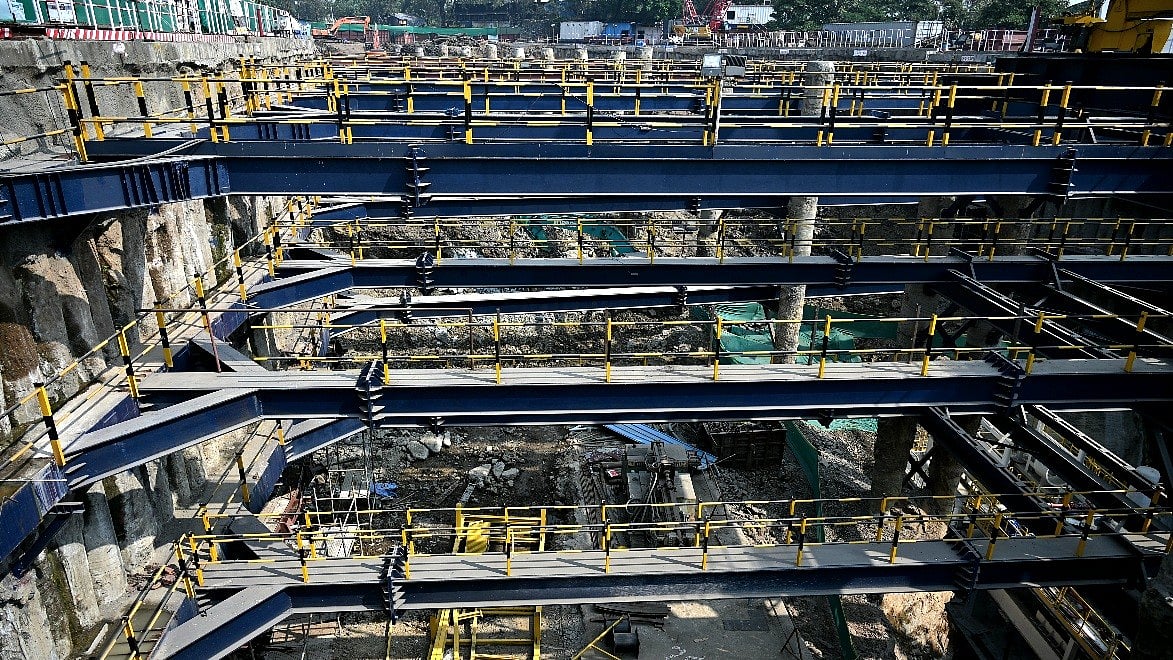
The Mumbai Metropolitan Region Development Authority (MMRDA) on Wednesday launched full-scale tunnelling work on what is set to become the city’s deepest and most complex urban road tunnel, connecting Orange Gate on the Eastern Freeway to Marine Drive. Chief Minister Devendra Fadnavis flagged off the Tunnel Boring Machine (TBM) at a ceremonial event attended by Deputy Chief Minister and MMRDA Chairman Eknath Shinde, along with senior ministers and officials.
A 10-km Corridor with 7 km of Underground Tunnelling
The launch marks the formal start of excavation for the 9.96-km corridor, which includes 7 km of underground tunnelling an engineering undertaking unprecedented in both scale and complexity in India.
State-of-the-Art TBM Deployed
“The project employs a state-of-the-art Slurry Shield TBM, the same high-precision tunnelling technology that proved successful on the Mumbai Coastal Road Project. The machine refurbished and re-manufactured locally under OEM supervision has a cutterhead diameter of 12.19 metres, stretches 82 metres in length, and weighs approximately 2,400 tonnes,” said an official.
Designed to Navigate Mumbai’s Most Challenging Terrain
The TBM has been engineered to navigate Mumbai’s coastal strata, zones with significant water ingress, and areas dense with high-rise buildings and heritage precincts.
“Designed at depths varying from 12 to over 50 metres, the tunnel’s alignment travels beneath multi-storeyed residential and commercial towers in South Mumbai, passes under iconic heritage buildings and protected architectural zones, and crosses below both the Central and Western Railway corridors. It even goes beneath Mumbai Metro Line 3 at an exceptional depth of over 50 metres,” the official added.
Tunnel Features and Safety Systems
According to MMRDA, the tunnel will offer two traffic lanes and one emergency lane per tube, with a speed limit of 80 km/hr and cross passages every 300 metres. Advanced ventilation systems, fire-safety frameworks, high-performance lighting, and an Intelligent Transport System (ITS) will support safe and seamless travel.
Project Status and Benefits
“The Rs 8,056-crore project, with a completion timeline of 54 months, has achieved 14% physical progress so far. Once operational, the tunnel is expected to cut travel time by 15–20 minutes, reduce fuel consumption, help lower air and noise pollution, and minimise surface disruption particularly vital in the congested and infrastructure-sensitive precincts of South Mumbai.
It will also integrate seamlessly with the Coastal Road and the Mumbai Trans Harbour Link (MTHL), forming a key part of a future-ready mobility backbone,” stated MMRDA.
Leaders Hail Project as a Milestone for Mumbai
Chief Minister Devendra Fadnavis described the launch as a “transformative leap” for Mumbai. “This tunnel will save thousands of commuter hours every day and redefine East–West connectivity. Maharashtra continues to lead in pioneering infrastructure,” he said.
Deputy Chief Minister Eknath Shinde called the start of excavation a “proud moment” for the city. “Navigating dense urban zones and heritage areas with advanced tunnelling technology is an achievement in itself. The project will ease congestion and significantly improve citizen mobility,” Shinde noted.
Beginning of a New Tunnelling Era
MMRDA Commissioner Dr. Sanjay Mukherjee termed the launch a landmark in Mumbai’s infrastructure evolution. “This project demonstrates our capability to execute one of India’s most complex underground works with global best practices. It represents the beginning of a new tunnel-based mobility era for Mumbai,” he said.
Budget Advertisement: To get details on exclusive and budget-friendly property deals in Mumbai & surrounding regions, do visit: https://budgetproperties.in/

