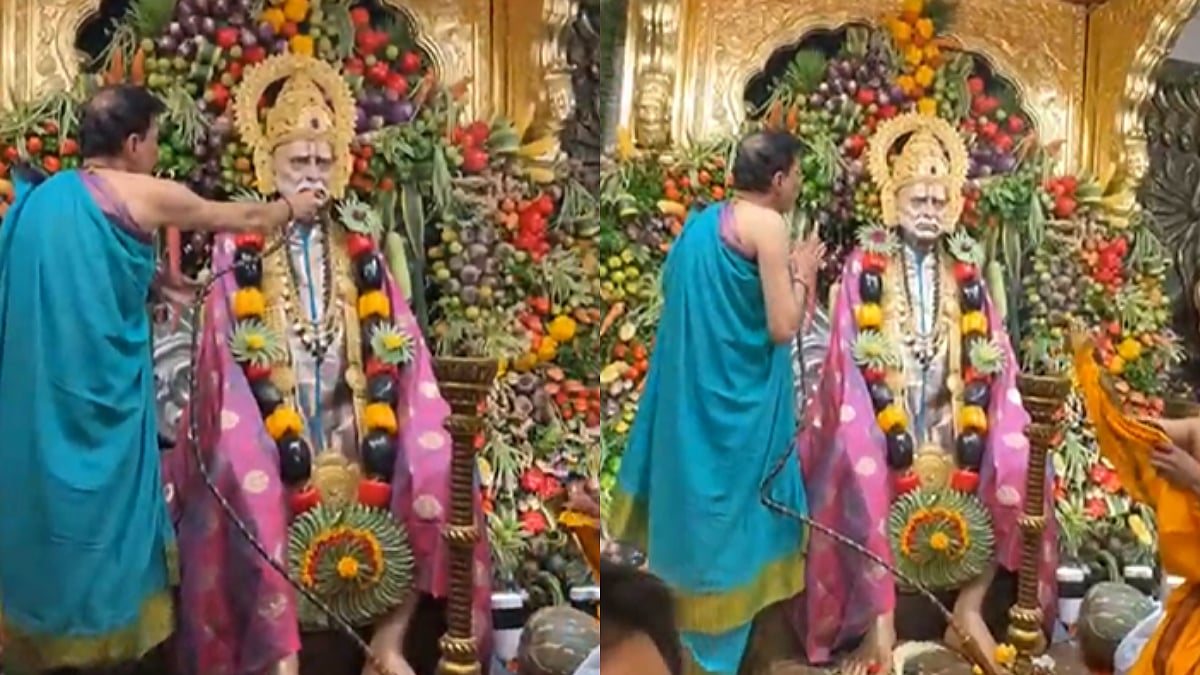
Mumbai’s Vijayadatta Shri Swami Samarth Math at Currey Road has been drawing massive attention on social media during Shakambhari Purnima celebrations, not just for its elaborate vegetable decorations but also for a ritual that has sparked curiosity online, the ‘Swami Samarth Hookah Aarti’.
A video shared on the temple’s official Instagram handle shows devotees performing aarti while a hookah pipe is placed near the idol of Shri Swami Samarth. The visuals quickly went viral, leaving many netizens intrigued about the meaning and origin of the ritual.
WATCH VIDEO:
What Is 'Swami Samarth Hookah Aarti'?
The Swami Samarth Hookah Aarti is a devotional practice observed by devotees of Shri Swami Samarth, particularly in parts of Maharashtra. Unlike conventional aartis, this ritual incorporates a hookah as part of the offering while devotional songs or aarti chants dedicated to Swami Samarth are played.
According to devotees, the hookah is symbolic and rooted in folklore associated with Swami Samarth, who is believed to have lived an ascetic life while remaining deeply connected to common people and their everyday practices. The offering is not viewed as an indulgence but as a gesture of devotion.
Why is it going viral now?
Videos of Hookah Aarti have surfaced online in the past, but the recent clip from the Currey Road math gained traction due to the scale of Shakambhari Purnima celebrations and the temple’s striking visual presentation.
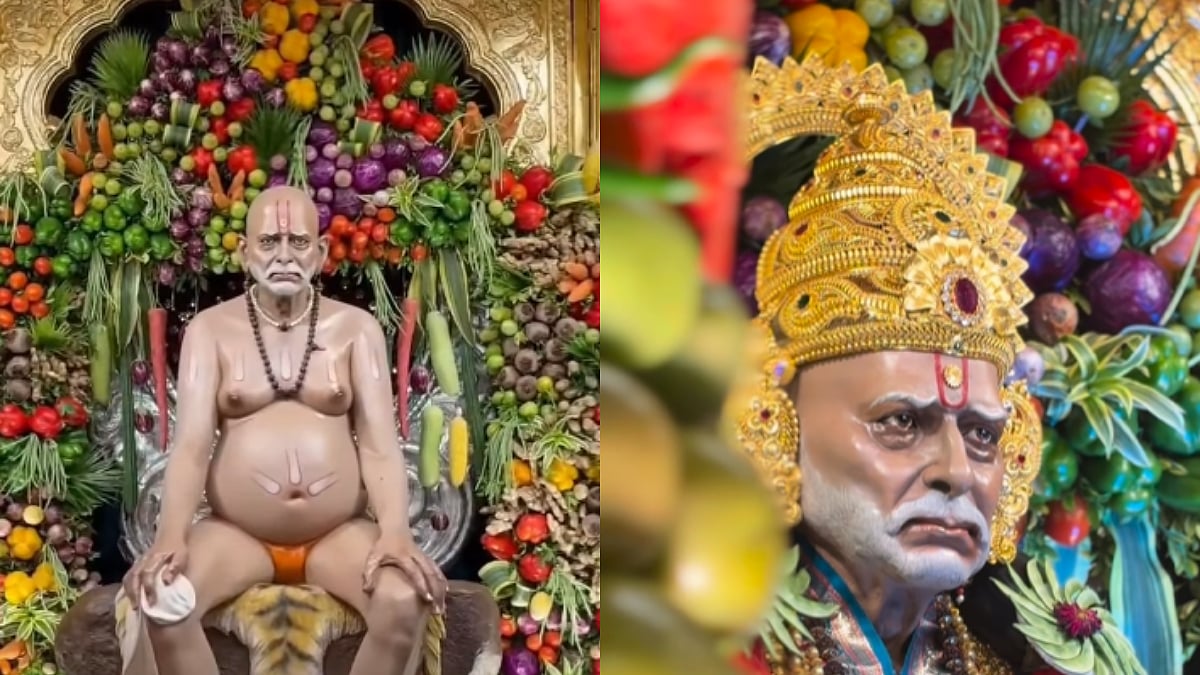
To honour Goddess Shakambhari, revered as the divine provider of nourishment and the creator of leafy vegetables, the entire monastery was uniquely decorated using 60 different varieties of vegetables. The vibrant arrangement symbolised abundance and nature’s blessings, transforming the temple into a sacred space that reflected the essence of the festival.

